What the Study Observed
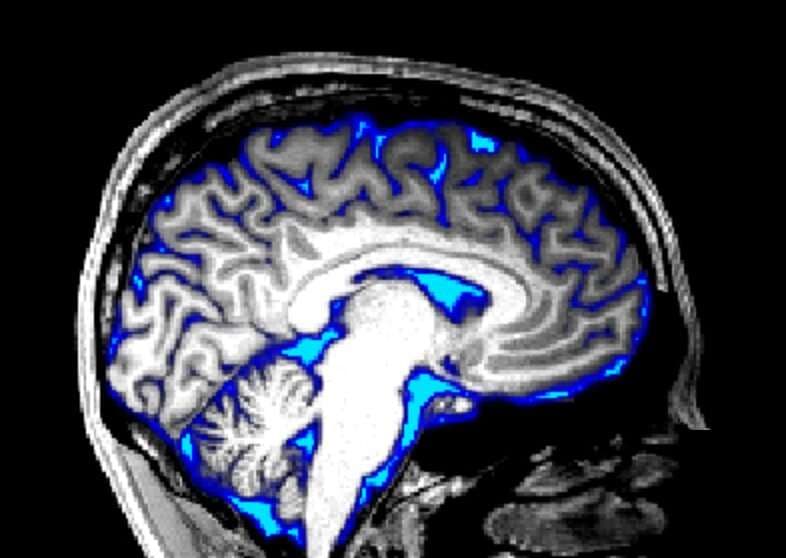
A research team at Boston University has captured direct evidence of a long-hypothesized brain maintenance process: the clearance of metabolic waste during deep sleep. Using advanced neuroimaging techniques, the team visualized how, during deep non-REM sleep, cerebrospinal fluid (CSF) flows into the brain in rhythmic, pulsating waves.
This process acts as a biological "nightly refresh," washing away toxic byproducts of neural activity that accumulate during waking hours. The study, shared via social media by AI commentator Rohan Paul, provides a mechanistic link between poor sleep and the buildup of waste products like beta-amyloid, a protein associated with Alzheimer's disease.
The Mechanism: CSF Waves During Deep Sleep
The core finding is the observation of coordinated, wave-like activity. During deep sleep, slow neuronal oscillations (a hallmark of non-REM sleep) are followed by changes in blood flow and volume. These changes, in turn, create a pressure gradient that pulls CSF into the brain's perivascular spaces—the fluid-filled channels surrounding blood vessels.
The CSF does not simply diffuse; it flows in synchronized pulses that correspond with specific brain wave patterns. This rhythmic flushing is far more efficient at removing soluble metabolic waste than the passive clearance mechanisms thought to occur during wakefulness.
The researchers describe this as the brain "refreshing the system," a necessary maintenance cycle for optimal cognitive function, including memory consolidation and learning readiness for the following day.
Context and Implications
This work builds upon the growing understanding of the glymphatic system, a brain-wide waste clearance network first described in 2012. Previous research in mice had shown that this system is most active during sleep. The Boston University study provides critical human data, visualizing the process in action and tying it directly to a specific sleep stage (deep non-REM).
The findings offer a concrete physiological explanation for the cognitive impairments seen with sleep deprivation. If deep sleep is disrupted, these cleansing CSF waves are likely diminished, allowing neurotoxic waste to accumulate. This provides a plausible pathway linking chronic poor sleep to an increased risk of neurodegenerative diseases.
While the study itself is a fundamental neuroscience discovery, it was highlighted within the AI community for its implications in understanding biological neural networks. The brain's need for an offline "reset" cycle stands in contrast to current artificial neural networks, which run continuously. This biological insight could eventually inspire new AI architectures that incorporate periodic maintenance or consolidation phases to improve long-term stability and learning.