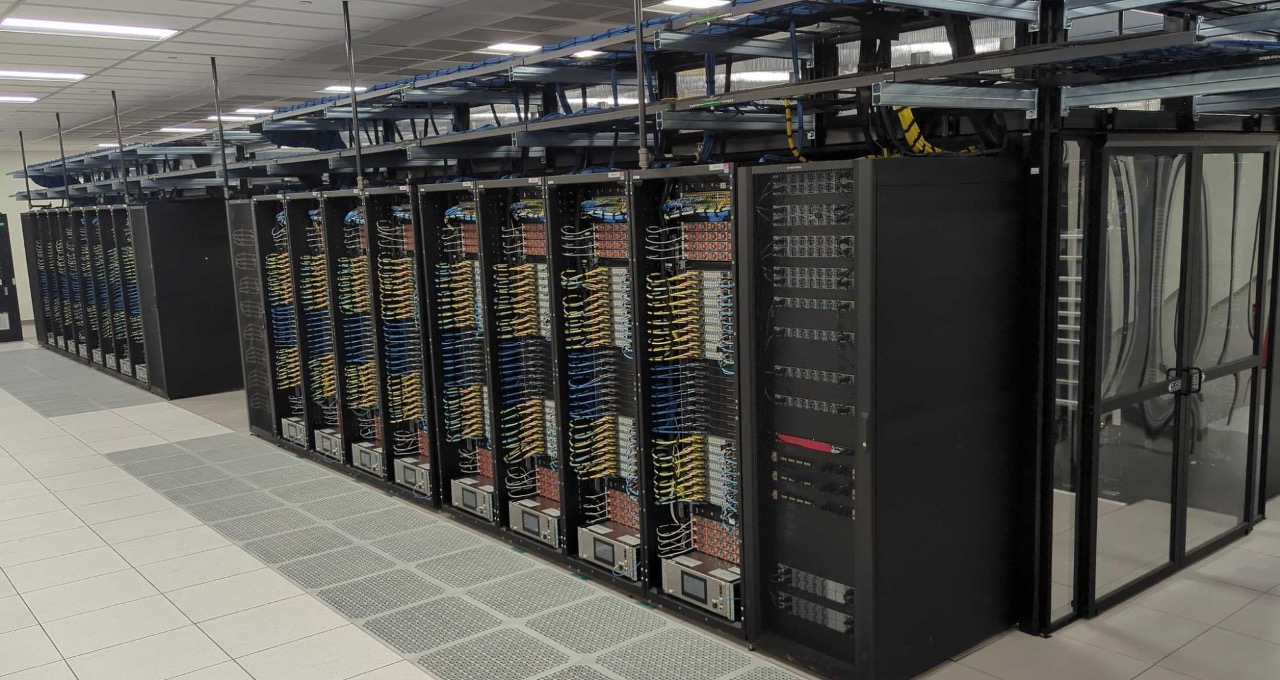
Microsoft has brought its Fairwater AI data center online ahead of its planned schedule, according to company statements. The launch represents a significant expansion of Microsoft Azure's high-performance computing (HPC) infrastructure, specifically engineered for artificial intelligence workloads. While the company did not release specific technical specifications or power consumption figures in the initial announcement, the "ahead of schedule" delivery is a notable operational achievement given the complex supply chain and construction challenges facing large-scale data center projects.
The Fairwater facility is designed to host thousands of the latest AI accelerators—primarily NVIDIA GPUs and potentially custom silicon like Microsoft's Maia chips—interconnected by high-bandwidth networking. This infrastructure is essential for training frontier large language models (LLMs) like GPT-4 and beyond, as well as for providing inferencing capacity for models powering services like Copilot.
Key Takeaways
- Microsoft has launched its Fairwater AI data center ahead of schedule.
- The facility adds significant high-performance computing capacity to Azure's AI infrastructure, crucial for training and running large models.
What's New: Accelerated Timeline for Critical Infrastructure

The primary news is the accelerated timeline. In the context of a severe, industry-wide shortage of AI compute capacity, bringing a major data center online even weeks early can translate to a meaningful increase in available training cycles and inferencing throughput for Microsoft's internal AI teams and its Azure customers. Delays have been common across the industry, making this early delivery a competitive logistical advantage.
Technical & Market Context
While the announcement lacks granular technical details, the strategic importance is clear. AI data centers differ significantly from traditional cloud facilities. They require:
- Extreme Power Density: AI server racks can consume 50-100+ kW, compared to ~10-20 kW for standard cloud racks, demanding advanced cooling solutions (likely liquid cooling).
- High-Bandwidth Networking: Clusters of thousands of GPUs require low-latency, high-throughput interconnects like NVIDIA's InfiniBand or Ethernet-based technologies to function as a single cohesive supercomputer for training.
- Power Procurement: These facilities have power demands comparable to small cities, requiring dedicated substations and long-term energy contracts.
The Fairwater launch directly supports Microsoft's sprawling AI ecosystem, which includes:
- OpenAI: The primary anchor tenant and partner, requiring vast compute for model training and API inference.
- Microsoft's AI Models: Development of in-house models like Phi and MAI-1.
- Azure AI Services: Providing GPU-as-a-service (GPUaaS) instances (NC, ND, NV series) to enterprise clients.
The Competitive Landscape

The race for AI compute supremacy is a three-way battle between Microsoft Azure, Google Cloud Platform (GCP), and Amazon Web Services (AWS). Each is racing to build and bring online specialized AI data centers:
- Google: Has been deploying its TPU v5p pods in its data centers and recently announced the Axion CPU for AI workloads.
- AWS: Continues to expand its capacity centered on custom Trainium and Inferentia chips, as well as NVIDIA GPUs.
- Microsoft: Is leveraging its partnership with OpenAI and its investment in custom Maia and Cobalt silicon to build a differentiated stack.
An early launch like Fairwater helps Microsoft capture demand from AI startups and enterprises that are often compute-bound, locking in customer loyalty and revenue.
gentic.news Analysis
This accelerated launch is a tactical win in the ongoing strategic war for AI infrastructure. It follows a pattern of intense investment from Microsoft, which has committed to building a "cloud-first" AI empire. The timeline acceleration is likely a response to overwhelming demand; our previous reporting in Q4 2025 highlighted that Azure AI capacity had waitlists stretching for months, with priority given to strategic partners like OpenAI and largest enterprise commitments.
The Fairwater facility is almost certainly a key node in Microsoft's plan to operationalize its Copilot Runtime, a system of distributed, high-performance inferencing we covered last month. Having dedicated, high-density data centers reduces latency and cost for running small language models (SLMs) and large language models (LLMs) on the edge of its cloud network.
Furthermore, this move puts pressure on competitors. Google's recent unveiling of its Trillium TPU and AWS's ramp of Trainium2 meant Microsoft needed a visible infrastructure win to maintain its narrative as the leading cloud for AI. Delivering hardware early is a more convincing argument than roadmap promises. The key question for practitioners is how quickly this new capacity will trickle down to general availability of GPU instances like the NC H100 v5 series, potentially easing the severe provisioning constraints that have hampered AI project timelines for the past 18 months.
Frequently Asked Questions
When will Fairwater's compute capacity be available to Azure customers?
Microsoft typically follows a phased rollout for new data center capacity. Initial capacity is almost always allocated to top-tier strategic partners (like OpenAI) and for Microsoft's internal product teams (for Copilot training). General availability for enterprise Azure customers on the pay-as-you-go portal may follow in the coming quarters, though the company may prioritize customers with large, committed spend contracts first.
What kind of AI chips does the Fairwater data center use?
The announcement did not specify. However, based on Microsoft's current public infrastructure, it is almost certainly a hybrid cluster containing thousands of NVIDIA H100 or H200 GPUs (and possibly the newly announced Blackwell B200s) for general AI training and inference. It is also highly likely to include racks dedicated to Microsoft's first-party Maia 100 AI Accelerator for running internal models and optimizing cost for specific workloads.
How does this affect the global AI chip shortage?
A single data center, even one as large as Fairwater, will not resolve the global shortage driven by limited semiconductor fab capacity for advanced packaging. However, every incremental increase in functional compute supply helps. It primarily benefits Microsoft's ecosystem directly, giving its partners and customers slightly more access than before. The shortage is expected to persist into 2027, making each new facility critical.
Why is launching a data center "ahead of schedule" a big deal?
Large-scale data center construction faces massive challenges: securing multi-megawatt power contracts, navigating local permitting, acquiring thousands of specialized components (transformers, chillers, servers) with long lead times, and specialized construction. Delays of 6-12 months are common. Delivering early suggests exceptional supply chain management and project execution, allowing Microsoft to start generating revenue and serving AI demand sooner than competitors who may be delayed.