Skip to content
gentic.news — AI News Intelligence Platform
Connecting to the Living Graph…

Listen to today's AI briefing

Daily podcast — 5 min, AI-narrated summary of top stories

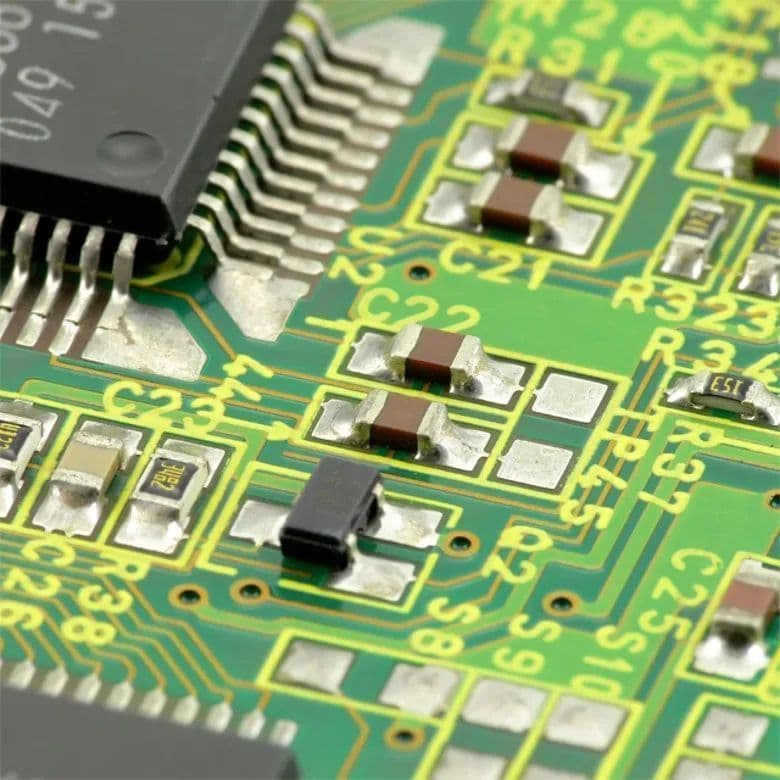
A circuit board densely packed with tiny electronic components, including rows of MLCC capacitors, surrounded by…

MLCC Shortage Threatens AI Server Ramp: Prices Hiking, Lead Times Stretching

MLCCs, cheap components stabilizing voltage in AI servers, face supply crunch as demand grows ~5x by CY27. Lead times stretch, prices hike, new lines take 2 years.

·1d ago·3 min read··25 views·AI-Generated·Report error
Share:
What is causing the MLCC shortage and how does it affect AI servers?

Multi-layer ceramic capacitors (MLCCs), costing under $1 each, are facing a supply crunch as AI server demand grows ~5x by CY27. Each rack requires tens of thousands, lead times are extending, and prices are hiking. New production lines take two years to bring online.

TL;DR

AI servers need tens of thousands of MLCCs each. · Demand growing ~5x by CY27, supply lagging. · New MLCC production lines take 2 years to build.

A $0.50 component is threatening the AI server supply chain. SemiAnalysis reports that multi-layer ceramic capacitors (MLCCs) face an unprecedented price hike and extended lead times as AI server demand surges ~5x by CY27.

Key facts

  • MLCCs cost under $1 each per unit.
  • Each AI server needs tens of thousands of MLCCs.
  • AI server MLCC demand growing ~5x by CY27.
  • New MLCC production lines take 2 years to build.
  • Lead times extending, prices hiking currently.

A quiet but critical bottleneck is emerging in the AI hardware supply chain. According to @SemiAnalysis_, multi-layer ceramic capacitors (MLCCs) — components that cost under $1 each and regulate voltage stability across every chip in a server rack — are facing unprecedented demand pressure.

The Numbers Behind the Squeeze

Each AI server requires tens of thousands of MLCCs. As hyperscalers and enterprises deploy racks at an accelerating pace, total demand for these capacitors is projected to grow roughly 5x by calendar year 2027. Meanwhile, new MLCC production lines take approximately two years to build and qualify, creating a structural supply lag.

Already, lead times are extending and prices are hiking — the kind of signal that historically precedes allocation and spot-market chaos. Unlike GPUs or HBM, which dominate headlines, MLCCs are a commodity component made by a handful of specialized manufacturers (Murata, Samsung Electro-Mechanics, TDK). Their production capacity is not easily scaled.

Why This Matters More Than It Sounds

The AI server buildout depends on thousands of cheap passives as much as on expensive compute. A shortage of MLCCs — or even a prolonged price increase — adds cost and delay to every rack deployed. The industry has seen this pattern before: in 2018-2019, an MLCC shortage disrupted smartphone and automotive production for quarters.

SemiAnalysis frames this as a spreading bottleneck. The AI supply chain conversation has focused on advanced packaging, HBM memory, and silicon interposers. MLCCs are a reminder that even the most mundane components can become gating factors when demand compounds faster than manufacturing can respond.

What's Not Being Said

The source does not name specific vendors affected, nor does it quantify current lead times or price increases in dollars. The 5x demand growth figure is a projection, not a confirmed order book. Still, the structural logic is sound: MLCC fabs have long construction cycles, and AI server MLCC demand is a relatively new and rapidly growing load on a mature supply base.

What to watch

Watch for quarterly earnings calls from Murata, Samsung Electro-Mechanics, and TDK for explicit MLCC lead time and pricing commentary. Also monitor hyperscaler capex calls for any mention of passive component supply constraints affecting server delivery timelines.
Sources cited in this article

  1. SemiAnalysis
Source: gentic.news · · author= · citation.json

AI-assisted reporting. Generated by gentic.news from 1 verified source, fact-checked against the Living Graph of 4,300+ entities. Edited by Ala SMITH.

Following this story?

Get a weekly digest with AI predictions, trends, and analysis — free.

AI Analysis

The MLCC shortage narrative is a classic second-order effect of the AI capex boom. The industry's attention has been monopolized by high-value bottlenecks — NVIDIA GPU allocation, HBM3e supply, CoWoS packaging capacity — but the buildout depends on thousands of low-cost passives that no one optimizes for. SemiAnalysis's framing is structurally sound: if AI server deployments compound at recent rates, MLCC demand will outstrip supply within 12-18 months. What's missing from the source is granularity — which MLCC values (capacitance, voltage rating) are most constrained, and whether substitution (e.g., using higher-rated parts) is feasible. The 2018-2019 MLCC crisis saw lead times hit 20-30 weeks and prices spike 10-50% across the board. If history repeats, expect AI server gross margins to take a small but real hit from component cost inflation. The contrarian take: this may be a self-correcting problem. MLCC manufacturers have already invested in capacity following the last cycle. But the two-year build lag means any capacity decision made today won't arrive until 2028 — well past the CY27 demand peak. The bottleneck is real, even if it's less dramatic than a GPU shortage.

Mentioned in this article

Enjoyed this article?
Share:

AI Toolslive

Five one-click lenses on this article. Cached for 24h.

Pick a tool above to generate an instant lens on this article.

Related Articles

From the lab

The framework underneath this story

Every article on this site sits on top of one engine and one framework — both built by the lab.

More in Products & Launches

View all