What Happened
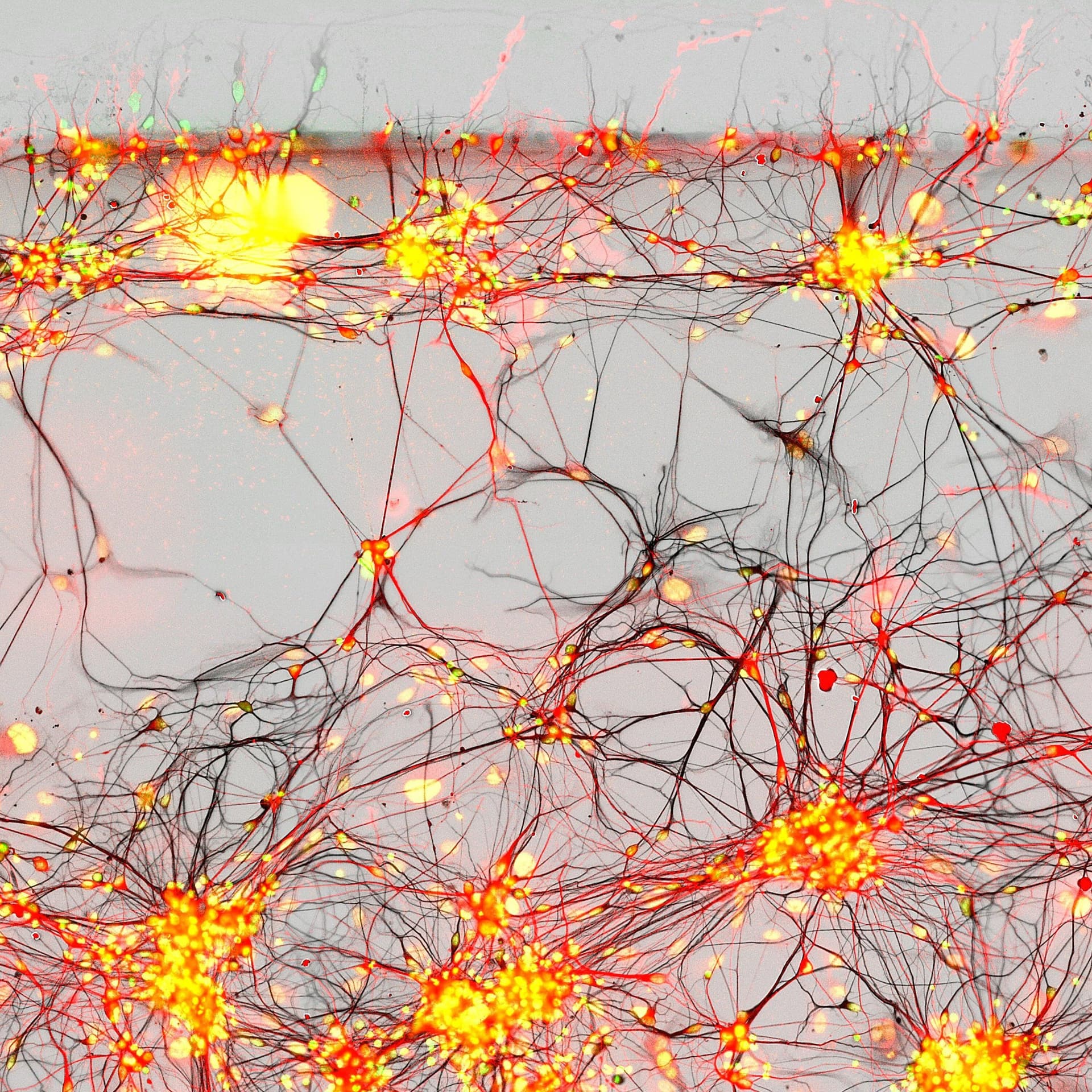
AI researcher Rohan Paul shared a time-lapse video on X (formerly Twitter) depicting actual brain cells (neurons) in a laboratory culture dish. The video shows the neurons actively attempting to form new synaptic connections—a process fundamental to learning and memory in biological systems.
The footage offers a rare, direct visualization of the physical substrate of biological intelligence. Unlike the abstract weights and activations of an artificial neural network, these are living cells extending structures called neurites (axons and dendrites) to communicate with each other.
Context
This visualization originates from the field of in vitro neuroscience, where neurons are grown in controlled laboratory environments. These cultures allow researchers to study neural development, connectivity, and electrophysiology in a simplified system. The process shown—neurite outgrowth and synaptogenesis—is the biological correlate of "training" or forming new pathways.
For the AI and machine learning community, such videos serve as a powerful reminder of the biological inspiration behind artificial neural networks. While today's large language models operate on mathematical principles of optimization, their foundational architecture was loosely inspired by the networked, signal-passing structure of the brain.
gentic.news Analysis
This visualization intersects with several key threads in contemporary AI research. First, it touches on the long-standing ambition of neuromorphic computing, which seeks to build hardware that more closely mimics the brain's efficient, low-power, and event-driven processing. Companies like Intel (with its Loihi chip) and research consortia like the Human Brain Project have pursued this path, though their engineering approaches remain far abstracted from the biological reality shown in this video.
Second, it provides context for the growing subfield of AI for neuroscience. Machine learning is increasingly used to analyze complex biological data, from sequencing to microscopy. For instance, algorithms can now track and segment neurons in such videos automatically, a task covered in our previous article, "Computer Vision Models Automate Neuron Tracing in Microscopy Images." The video shared by Paul is precisely the type of raw data that such AI tools are built to interpret.
Finally, this serves as a grounding counterpoint to the hype surrounding Artificial General Intelligence (AGI). While AI systems exhibit remarkable capabilities in narrow domains, this video underscores the vast gulf in complexity, robustness, and energy efficiency between a dish of living neurons and even the largest transformer models. The biological system self-assembles, repairs itself, and operates on milliwatts of power—engineering feats far beyond current silicon. As discussions about "brain-like" AI continue, references to actual neurobiology, as shown here, are essential for maintaining technical rigor.
Frequently Asked Questions
What are we seeing in the neuron time-lapse video?
You are seeing real mammalian neurons (likely from rodents) cultured in a petri dish. The cell bodies appear as bright spheres. The thin, branching filaments extending from them are neurites—either axons (which send signals) or dendrites (which receive them). The video is sped up, showing these structures growing over hours or days as they search for other neurons to connect with, forming the networks that process information.
How is this related to artificial intelligence (AI)?
Artificial Neural Networks (ANNs), the foundation of modern AI, were initially inspired by the simplified structure of biological neural networks. This video shows the biological original. While the connection is now largely metaphorical—today's ANNs rely on backpropagation and matrix math, not electrochemical signaling—the core idea of networked, adaptive units remains. The video is a reminder of the biological inspiration and highlights the different paths to creating intelligent systems.
Why do researchers grow neurons in a dish?
In vitro ("in glass") neuron cultures are a fundamental neuroscience tool. They allow scientists to study basic questions about neural growth, signaling, and connectivity in a controlled, simplified environment free from the immense complexity of a whole brain. This model system is used to study brain development, the effects of drugs or toxins, and the mechanisms of neurological diseases.
Could AI help analyze this kind of data?
Yes, this is a major application of AI in neuroscience. Computer vision models, particularly convolutional neural networks (CNNs), are trained to automatically identify neurons, trace their intricate branches, and quantify connection points in microscopy images and videos. This automates what was once a painstaking manual task, enabling the analysis of much larger datasets to uncover statistical patterns in neural growth and connectivity.