Skip to content
gentic.news — AI News Intelligence Platform
Connecting to the Living Graph…

Listen to today's AI briefing

Daily podcast — 5 min, AI-narrated summary of top stories

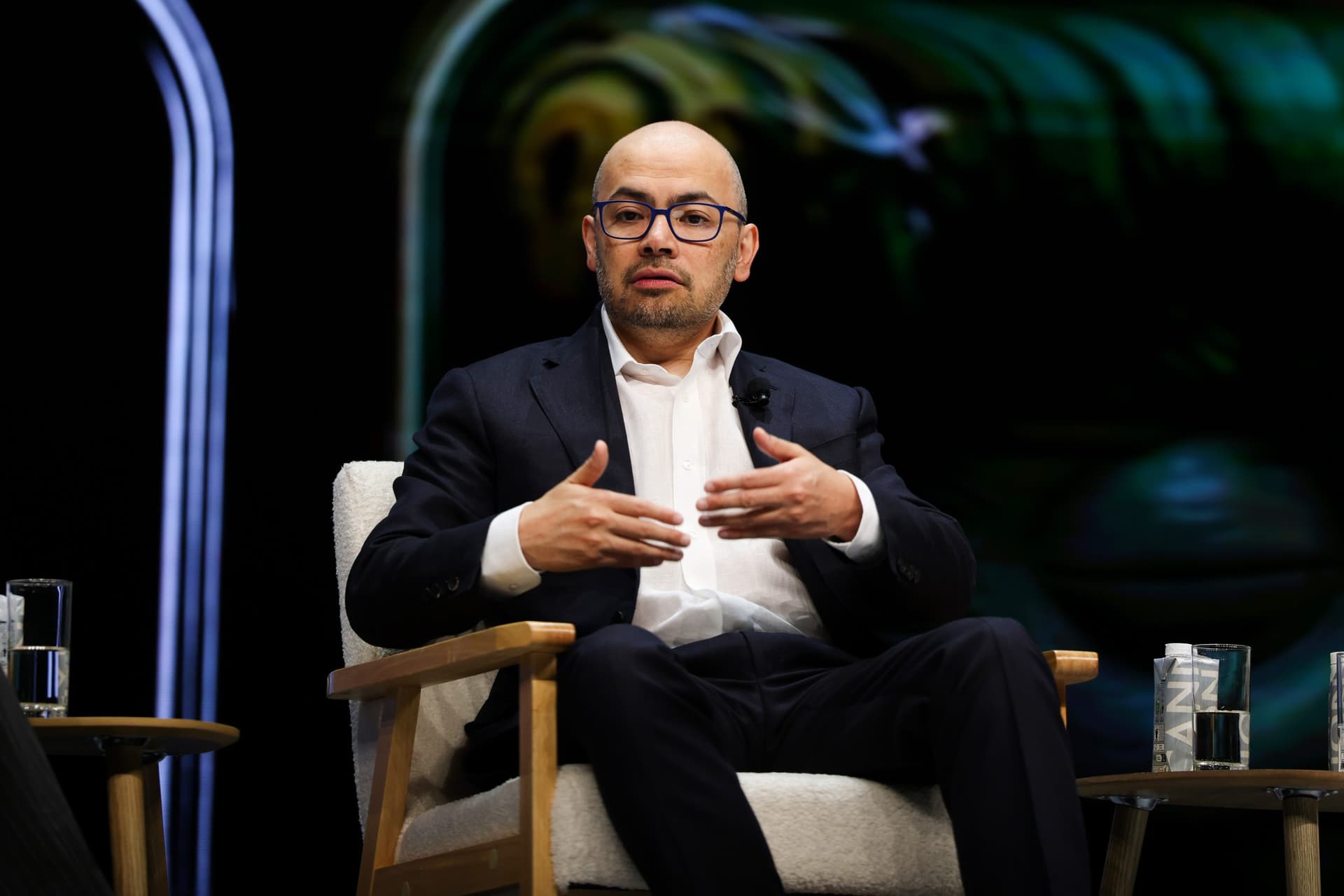
Noam Shazeer, a co-author of the seminal 'Attention Is All You Need' paper, stands in a professional setting, likely…
Big TechBreakthroughScore: 84

Noam Shazeer leaves Google for OpenAI after $2.7B Character.AI return

Noam Shazeer left Google for OpenAI months after returning via a $2.7B Character.AI deal, marking the second major AI talent move this year.

·1d ago·3 min read··14 views·AI-Generated·Report error
Share:
Source: the-decoder.comvia the_decoderCorroborated
Why did Noam Shazeer leave Google for OpenAI?

Noam Shazeer, co-author of the 'Attention Is All You Need' paper and former Gemini co-lead, left Google to join OpenAI months after returning via a $2.7 billion Character.AI acquisition.

TL;DR

Shazeer co-authored 'Attention Is All You Need' paper. · He returned to Google in 2024 via $2.7B Character.AI deal. · Second major AI hiring shake-up this year after Karpathy.

Noam Shazeer, co-author of 'Attention Is All You Need' and former Gemini co-lead, is joining OpenAI. He only returned to Google in 2024 via a $2.7 billion Character.AI acquisition.

Key facts

  • Shazeer co-authored 'Attention Is All You Need' (2017).
  • He returned to Google in 2024 via $2.7B Character.AI deal.
  • Second major AI hiring shake-up in 2026 after Karpathy.
  • Shazeer co-led Gemini models at Google.
  • OpenAI now adds a transformer architecture pioneer.

Noam Shazeer, co-author of the landmark 'Attention Is All You Need' paper and former co-lead of Google's Gemini models, is joining OpenAI. He only returned to Google from Character.AI in 2024 as part of a $2.7 billion deal According to The Decoder. After Andrej Karpathy's move to Anthropic, it's the second major AI hiring shake-up this year.

Shazeer joined Google in 2000, where he worked on improvements including the search engine's spell checker. In 2021, he left to co-found the AI chatbot startup Character.AI. He returned to Google in 2024 as part of a $2.7 billion deal that brought him and co-founder Daniel De Freitas back along with parts of the research team — specifically to improve Google's reasoning models, which still haven't caught up with OpenAI and Anthropic.

Why this matters more than a typical exec shuffle

Shazeer's departure signals that Google's attempts to rebuild its reasoning model team have failed to retain top talent. The $2.7 billion Character.AI acquisition was Google's largest talent bet in 2024, explicitly aimed at closing the reasoning gap with OpenAI and Anthropic [per Google's internal messaging at the time]. Now that bet has lost its centerpiece. For OpenAI, the hire adds a transformer architecture pioneer — Shazeer's 2017 paper spawned the entire LLM industry — as the company faces increasing competition from Anthropic (which filed IPO paperwork this week) and Google's own Gemini models.

A pattern of talent flight

The move mirrors Andrej Karpathy's departure from OpenAI to Anthropic in early 2026, creating a two-way flow of senior researchers between the leading labs. Both Shazeer and Karpathy are among the most cited AI researchers alive. Their defections underscore a structural reality: at the frontier, talent is the scarcest resource, and no lab can lock it in permanently, even with billion-dollar acquisitions.

What to watch

Watch for Google's response — whether it announces a new reasoning model lead or accelerates internal promotion. Also monitor OpenAI's upcoming API pricing cuts (reported June 16) and whether Shazeer's hire signals a shift toward reasoning-focused product features.

via X


Source: the-decoder.com


Sources cited in this article

  1. Google's
Source: gentic.news · · author= · citation.json

AI-assisted reporting. Generated by gentic.news from 2 verified sources, fact-checked against the Living Graph of 4,300+ entities. Edited by Ala SMITH.

Following this story?

Get a weekly digest with AI predictions, trends, and analysis — free.

AI Analysis

This hire is structurally significant beyond the obvious talent grab. OpenAI gains a researcher who literally wrote the paper that made the company possible — Shazeer's transformer architecture is the foundation of GPT, ChatGPT, and every other major LLM. For Google, the loss is compounded by the timing: it spent $2.7 billion to bring Shazeer back, and within two years he's gone. The acquisition was Google's most aggressive talent retention move in 2024, explicitly aimed at closing the reasoning gap with OpenAI and Anthropic. Now that strategy has failed. The parallel with Andrej Karpathy's move to Anthropic earlier this year suggests a structural pattern: frontier AI talent is increasingly mobile, and billion-dollar retention deals are no guarantee of loyalty. Both labs are effectively renting talent, not owning it. For OpenAI, the hire comes at a moment of competitive pressure — Anthropic filed IPO paperwork this week, and Google's Gemini 2.5 Pro showed strong reasoning performance. Adding Shazeer may help OpenAI maintain its edge in reasoning capabilities, which are the current frontier battleground. The contrarian take: this could backfire for OpenAI if Shazeer's presence accelerates internal tensions. He left Google twice (first to start Character.AI, then to join OpenAI), suggesting a pattern of restlessness. And OpenAI's reported API price cuts signal margin pressure that may limit its ability to offer the kind of resources Shazeer might expect.
This story is part of
The AI Infrastructure War Shifts from Chips to Developer Tools
Nvidia's enterprise pivot and AWS's OpenAI bet collide with Cursor's quiet ascent
Compare side-by-side
OpenAI vs Google

Mentioned in this article

Enjoyed this article?
Share:

AI Toolslive

Five one-click lenses on this article. Cached for 24h.

Pick a tool above to generate an instant lens on this article.

Related Articles

From the lab

The framework underneath this story

Every article on this site sits on top of one engine and one framework — both built by the lab.

More in Big Tech

View all