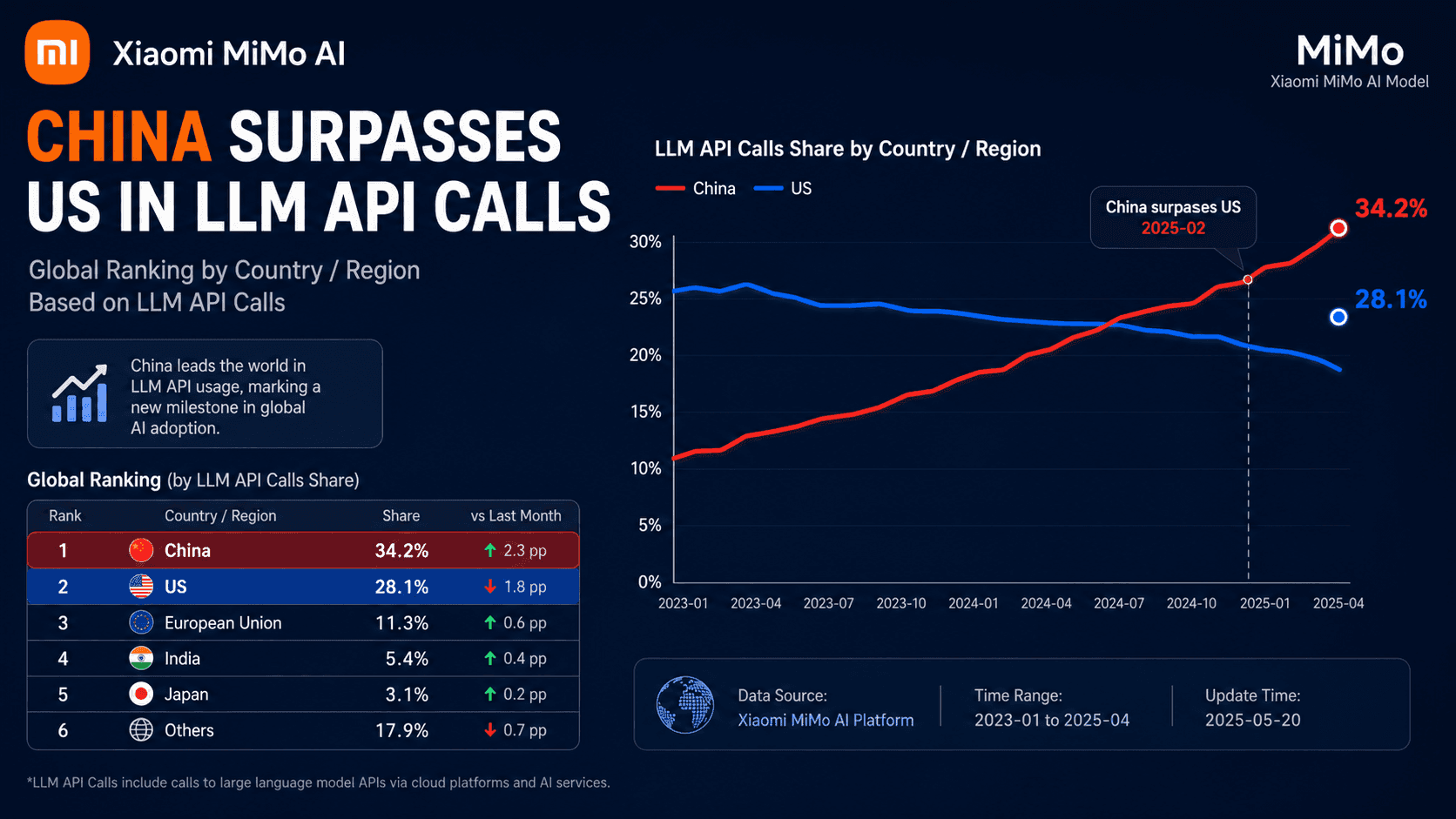
Xiaomi MiMo-V2.5 leads OpenRouter global call volume at 10.5T tokens/week and 31.2T/month as of July 2026. Chinese models collectively claim 63.5% share vs US 35.5%, according to data from the unified API gateway per Pandaily.
Key facts
- MiMo-V2.5: 10.5T tokens/week, 31.2T/month on OpenRouter.
- Chinese models: 63.5% global token share vs US 35.5%.
- Data period: week ending July 20, 2026.
- OpenRouter aggregates 300+ models from multiple providers.
- Xiaomi has not published MiMo-V2.5 technical details.
The OpenRouter rankings offer the first public, platform-level view of real-world LLM inference demand by geography and model. Xiaomi's MiMo-V2.5, a multimodal model first documented in early 2026, now processes more tokens weekly than any US-based competitor on the platform, which aggregates over 300 models from providers including Anthropic, OpenAI, and Google.
How the Token Share Breaks Down
Chinese models — including MiMo-V2.5, Alibaba's Qwen series, and ByteDance's Doubao — collectively hold 63.5% of global token volume on OpenRouter. US models account for 35.5%, with the remainder spread across European and other providers. The data covers the week ending July 20, 2026, and the rolling monthly window.
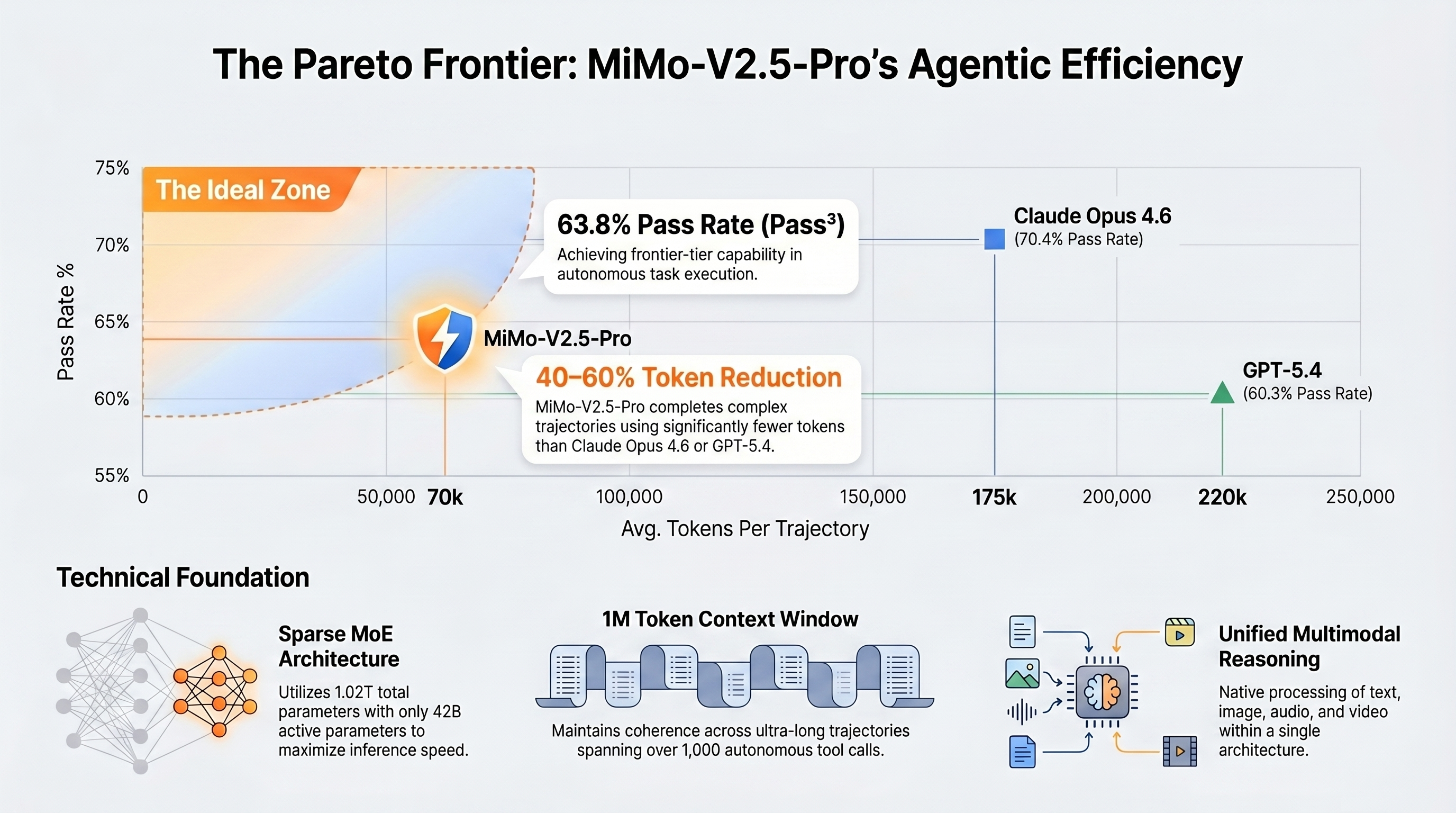
OpenRouter does not disclose whether MiMo-V2.5's volume comes from consumer chatbots, enterprise API calls, or device-side inference routed through its platform. Xiaomi has not published a technical report for MiMo-V2.5, so architectural details — parameter count, training compute, context window — remain unknown.
The shift mirrors earlier trends in open-weight model downloads and paper citations, where Chinese research groups have steadily gained share since 2024. But token consumption on a routing platform is a more direct measure of production inference load than downloads or benchmarks.
What the Numbers Don't Tell
OpenRouter's data is not a random sample. The platform routes traffic based on cost, latency, and availability — meaning price cuts or regional pricing by Chinese providers could inflate their share. US models like GPT-4o and Claude 3.5 Opus may serve more traffic through direct API endpoints that never touch OpenRouter.
Still, the magnitude is striking. Two years ago, US models commanded an estimated 85%+ of inference token volume on public routing services. The swing to 35.5% represents a structural rebalancing of AI inference geography, driven by aggressive Chinese model releases and competitive pricing.
What to watch
Watch for Xiaomi to release a technical report or benchmark results for MiMo-V2.5, which would clarify whether the token volume reflects genuine inference demand or subsidized routing. Also track whether US providers adjust pricing or release new models to reclaim share on OpenRouter in Q3 2026.
Source: pandaily.com
[Updated 29 Jul via the_decoder]
Moonshot AI has released Kimi K3's model weights and infrastructure tools, including MoonEP and FlashKDA, under an open-weight license that requires a separate agreement for Model-as-a-Service businesses exceeding $20M annual revenue [per The Decoder]. OpenRouter already lists K3 from 7 providers at $3/M input tokens [per Simon Willison]. The 2.8T-parameter MoE model with 896 routed experts and 1M context window adds a new Chinese contender to the platform, potentially shifting token share dynamics beyond Xiaomi's MiMo-V2.5.