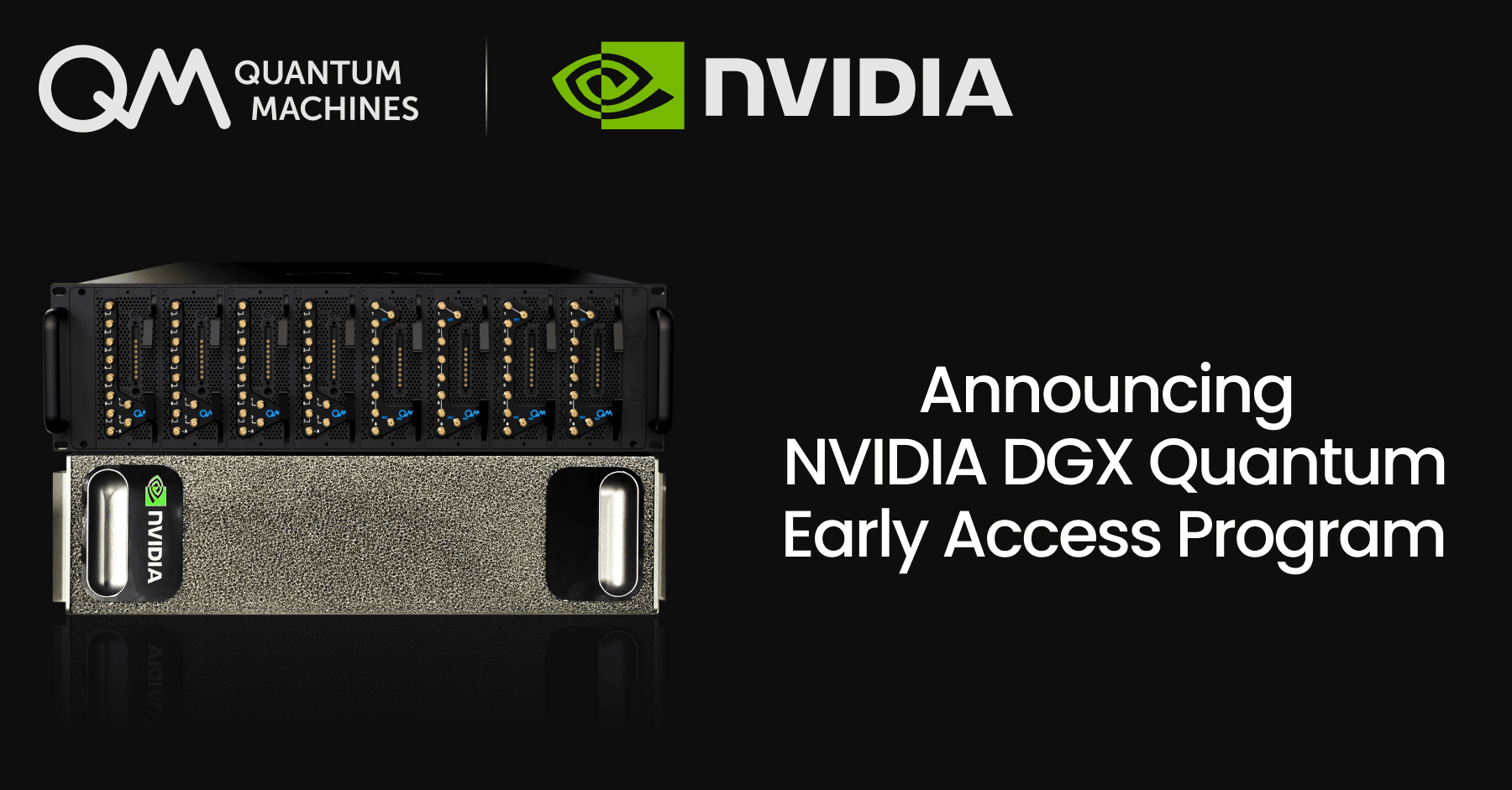
NVIDIA has framed its latest strategic move in quantum computing not as a new chip, but as a new software layer: an operating system. The announcement, made via a social media post from an AI-focused account, positions NVIDIA's existing AI and quantum software stack—centered on its cuQuantum-DGX platform—as the essential system software for managing the complex interplay between quantum processors and classical computing resources.
The core claim is that NVIDIA is addressing the "biggest bottleneck" in quantum computing today: the control, orchestration, and integration layer. As quantum processors (QPUs) advance, they remain reliant on powerful classical computers, primarily GPUs, for error correction, control sequencing, and hybrid algorithm execution. The inefficiency in this handoff and co-processing is a well-known scaling challenge.
Key Takeaways
- NVIDIA announced its AI software stack is evolving into an operating system for quantum computing, aiming to manage the complex workflow between quantum processors and classical GPUs.
- This targets a major integration bottleneck as quantum hardware scales.
What NVIDIA Is Proposing

While the source material is brief, the framing is clear. NVIDIA is not announcing a quantum processor. Instead, it is rebranding and extending its existing cuQuantum SDK and its integration with the NVIDIA DGX system software stack as a unified "operating system" for quantum-centric supercomputers.
In practice, this likely means:
- Unified Control Plane: A software layer that manages job scheduling, resource allocation, and data movement between QPUs (from partners like IQM, Quantinuum, or others) and NVIDIA GPUs.
- Orchestration of Hybrid Workflows: Seamlessly breaking down a quantum algorithm into parts that run on the QPU (e.g., preparing a quantum state) and parts that run on the GPU (e.g., error mitigation, classical optimization loops).
- Abstracted Hardware Access: Providing developers with a consistent API to write hybrid quantum-classical programs without manually managing the low-level communication between vastly different hardware architectures.
Technical Context: The cuQuantum-DGX Foundation
NVIDIA's play builds on years of software investment:
- cuQuantum: A software development kit containing optimized libraries and appliations for simulating quantum circuits on NVIDIA GPUs. It's the industry standard for high-performance quantum circuit simulation.
- NVIDIA DGX Systems: Integrated hardware and software platforms designed for AI and now quantum-accelerated computing. The software stack includes system management, containerized workloads, and cluster orchestration.
The "operating system" concept appears to be the next evolution: tying these tools together with new middleware specifically designed to manage real quantum hardware, not just simulations.
Why This Targets a Real Bottleneck
The vision for practical quantum computing is hybrid. A QPU acts as an accelerator for specific, hard-to-simulate tasks within a larger classical computation. The overhead of moving data, synchronizing processes, and correcting errors between the QPU and the classical host can dominate runtime and create complexity.
By offering a turnkey software solution for this integration, NVIDIA aims to become the indispensable platform vendor. Quantum hardware companies can focus on building better QPUs, while researchers and developers write to NVIDIA's software stack, which handles the messy details of hybrid execution. This mirrors NVIDIA's successful strategy in AI: CUDA and its associated libraries became the default programming model, locking in its hardware.
What to Watch
The announcement is high-level and strategic. Key questions remain:
- API & Partner Details: What specific new APIs or services are being offered? Which quantum hardware partners are officially integrated at launch?
- Performance Claims: What are the measurable reductions in latency or improvements in throughput for hybrid workflows using this "OS" compared to custom integration?
- Competitive Response: How will other players in the quantum software stack, like AWS Braket, Microsoft Azure Quantum, or Google's Cirq, respond to this positioning?
NVIDIA's move signals that the quantum computing stack is maturing beyond pure hardware performance. The battle for the software layer that manages the hybrid compute environment is now formally joined.
gentic.news Analysis
This announcement is a logical and aggressive extension of NVIDIA's platform dominance strategy into the quantum frontier. It follows NVIDIA's established pattern of moving up the stack from hardware (GPUs) to critical system software (CUDA, DGX OS) to lock in ecosystem value. This directly aligns with the trend we covered in late 2025 regarding the "Classical Bottleneck" in Quantum Scaling, where experts identified control and integration software as the next major hurdle after qubit count and fidelity.
The move also strategically counters efforts by cloud hyperscalers—Amazon (AWS Braket), Microsoft (Azure Quantum), and Google—who are building their own quantum-cloud middleware layers. NVIDIA is leveraging its unparalleled installed base of high-performance GPUs in scientific computing clusters to position its stack as the on-premises or hybrid-cloud standard for quantum-classical systems, contrasting with the public-cloud-first approach of the hyperscalers. This creates a fascinating bifurcation in the market.
For practitioners, the key implication is vendor lock-in consideration. Writing to a proprietary NVIDIA quantum OS could offer performance and simplicity but may reduce portability across different quantum hardware backends not integrated into NVIDIA's ecosystem. The development mirrors the early days of AI, where the convenience of CUDA eventually cemented NVIDIA's dominance. Quantum developers and infrastructure buyers must now weigh the benefits of a turnkey solution against long-term architectural flexibility.
Frequently Asked Questions
What is NVIDIA's quantum operating system?
It is a software layer, built upon NVIDIA's existing cuQuantum and DGX platform software, designed to manage and orchestrate the workflow between quantum processing units (QPUs) and classical NVIDIA GPUs. It aims to handle job scheduling, data movement, and error correction coordination in hybrid quantum-classical computers, simplifying development and improving efficiency.
Is NVIDIA building a quantum computer?
No, this announcement is not about NVIDIA building its own quantum processor (qubits). NVIDIA's strategy remains focused on being the classical computing platform for quantum computers. They are providing the GPUs and, now, the critical system software that allows quantum processors from other companies to work effectively within a larger computing system.
How does this compare to AWS Braket or Azure Quantum?
AWS Braket and Azure Quantum are quantum computing services from public cloud providers. They offer access to various quantum hardware backends through a cloud API. NVIDIA's "OS" is targeting a lower level of the stack: the system software that would run on-premises or in a hybrid cloud on a server containing both GPUs and a QPU. It's more analogous to the operating system on a supercomputer than a cloud service portal.
What is the biggest bottleneck in quantum computing?
As quantum processors scale, a major challenge is the "classical bottleneck" or "control bottleneck." This refers to the immense difficulty and overhead in precisely controlling thousands of qubits, reading their outputs, correcting errors in real-time, and integrating their computations with classical algorithms. The supporting classical computing infrastructure (often GPUs) and the software to manage this integration is not keeping pace with qubit count growth, hindering practical utility.