What Happened
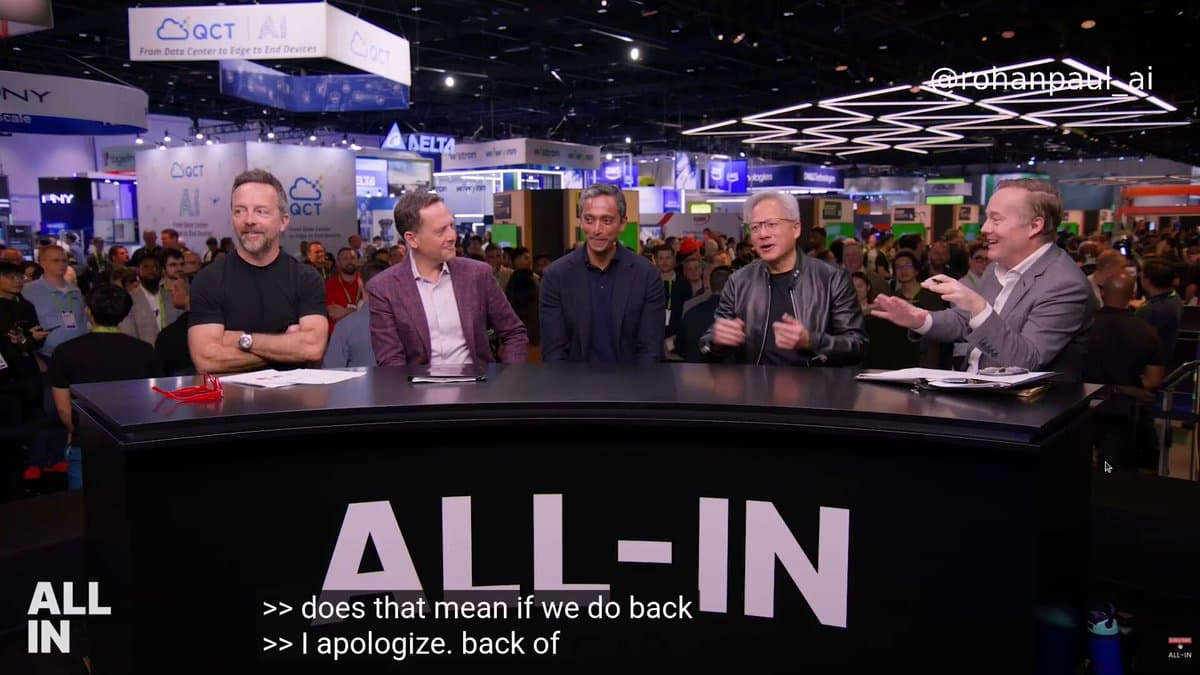
According to a report cited by AI researcher Rohan Paul, NVIDIA is spending roughly $75,000 in "tokens" per engineer annually. This internal allocation for AI compute resources suggests the company's total annual budget for these development tokens reaches the multi-billion dollar range for the organization as a whole.
The information originates from a discussion on the All-In Podcast, though the specific episode and context were not detailed in the source tweet. The term "tokens" in this context almost certainly refers to internal credits or budget allocations for accessing and running AI models on NVIDIA's infrastructure, not to be confused with linguistic tokens in large language models.
Context
This spending figure provides a rare, concrete glimpse into the internal resource allocation of a leading AI hardware and software company actively developing its own AI models and platforms. NVIDIA has significantly expanded beyond its core GPU manufacturing business into full-stack AI solutions, including its own foundation models (like the Nemotron and ChatQA families), the NVIDIA AI Enterprise software platform, and the DGX Cloud service.
A per-engineer token budget of this magnitude underscores the immense computational cost of modern AI research and development, even for the company that manufactures the underlying hardware. It reflects the scale of experimentation, training runs, and inference testing required to stay at the forefront of the field.
While $75,000 per engineer might represent a list price or an internal transfer cost rather than pure external expenditure, it establishes a benchmark for the compute intensity of cutting-edge AI work. For comparison, training a single large frontier model like GPT-4 or Gemini Ultra is estimated to cost between $50 million and $100 million in compute alone.
What This Indicates
- Scale of Internal AI Development: The multi-billion dollar implied total budget highlights that NVIDIA is operating one of the largest corporate AI R&D programs globally, commensurate with its position and ambitions in the AI ecosystem.
- Compute as the Primary Currency: The use of a token system emphasizes that within AI labs, access to GPU hours (or specific cluster time) is the fundamental, scarce resource driving progress.
- High Operational Costs: Even with vertical integration advantages (designing its own chips, systems, and software), the cost of AI development for NVIDIA remains extraordinarily high, setting a baseline for the capital required to compete at the highest levels.
This data point, while limited, quantifies the previously abstract understanding that state-of-the-art AI development is phenomenally expensive, and that leading players are investing at a scale that creates significant barriers to entry.