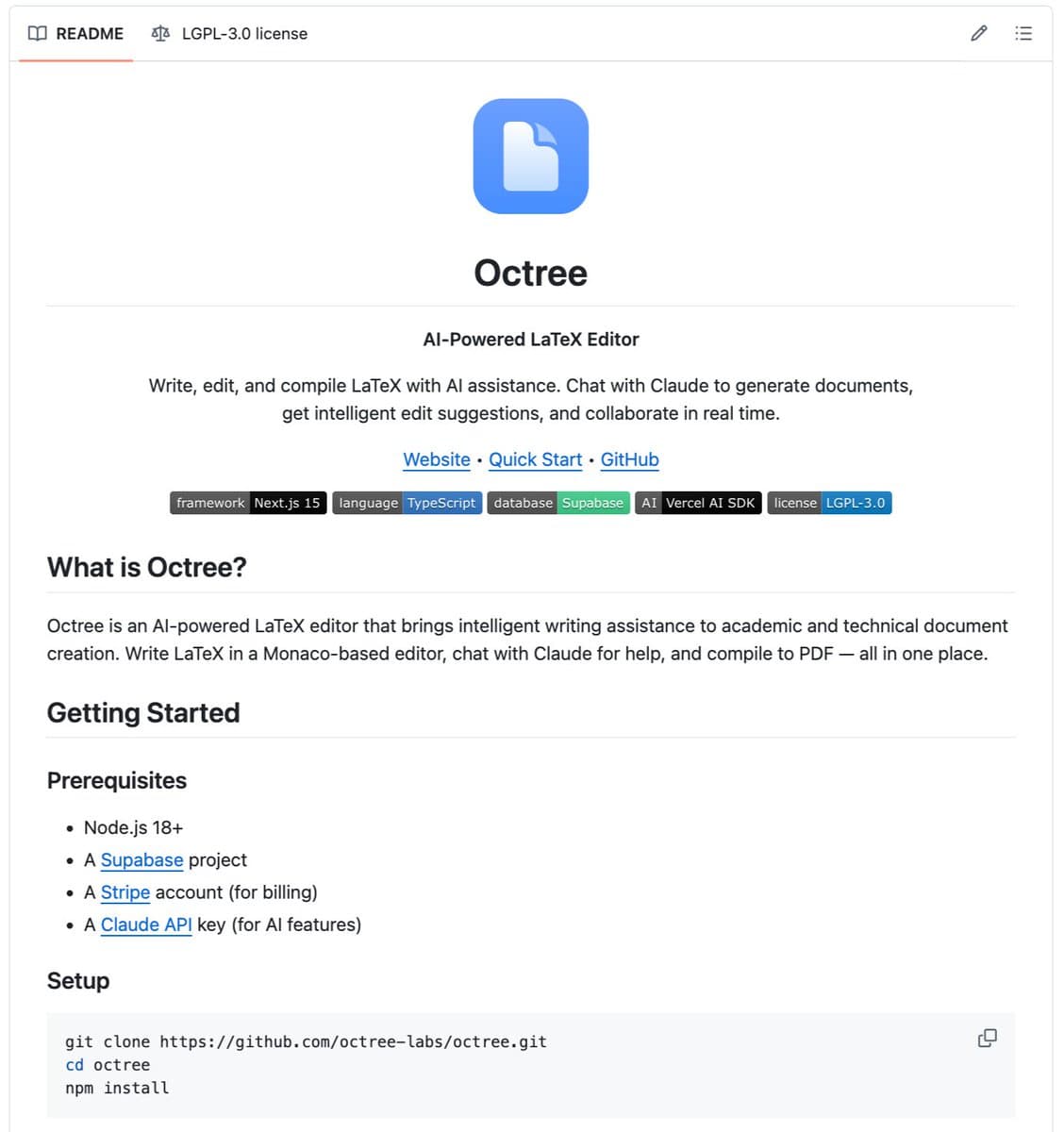
In a move that could reshape the landscape of academic and technical writing tools, an open-source project called Octree has emerged as a fully-featured AI-powered LaTeX editor. The platform, which leverages Claude AI for intelligent writing assistance and offers real-time compilation, represents a significant challenge to established commercial services like Overleaf by eliminating monthly fees and enabling complete user control through self-hosting.
What Octree Brings to the Table
Octree isn't just another LaTeX editor—it's a comprehensive solution built with modern web technologies and artificial intelligence at its core. The platform features AI-powered LaTeX writing with Anthropic's Claude model integrated directly into the editing environment. This allows users to receive intelligent suggestions, corrections, and content generation assistance while working on complex technical documents.
The real-time compilation and preview functionality addresses one of the most persistent pain points in LaTeX workflows. Traditionally, users must manually compile documents to see changes, creating a disruptive editing experience. Octree's live preview system eliminates this friction, providing immediate visual feedback as users type and edit their LaTeX code.
Technical Architecture and Self-Hosting Capabilities
Built on a Next.js frontend with a Supabase backend for authentication and cloud storage, Octree represents a modern, full-stack web application. This architecture choice provides several advantages: Next.js enables server-side rendering for improved performance, while Supabase offers an open-source alternative to Firebase with PostgreSQL database capabilities.
Perhaps most significantly, Octree is designed to be self-hostable in minutes on your own infrastructure. This addresses growing concerns about data privacy, vendor lock-in, and subscription fatigue in the academic and research communities. Users can deploy Octree on their own servers, maintaining complete control over their documents and workflow without recurring costs.
The Overleaf Comparison and Market Implications
Overleaf, the dominant commercial LaTeX editor, has become a standard tool in academic circles but operates on a subscription model with tiered pricing. Octree's emergence as a 100% open-source alternative with comparable features—plus AI integration—creates pressure on the existing market structure. The project's rapid growth to 93 stars on GitHub shortly after announcement suggests strong community interest in alternatives to proprietary solutions.
For individual researchers, students, and institutions, Octree offers potential cost savings while providing enhanced functionality through AI assistance. The ability to self-host also addresses specific needs in regulated industries or organizations with strict data governance requirements where cloud-based solutions like Overleaf may present compliance challenges.
The Future of AI-Enhanced Academic Tools
Octree represents more than just another open-source project—it signals a broader trend toward democratizing AI-enhanced productivity tools in specialized domains. By combining established technologies (LaTeX) with cutting-edge AI (Claude) in an accessible, open-source package, the project lowers barriers to advanced document preparation.
As the project evolves, potential developments could include expanded AI model options, collaborative editing features, template libraries, and integration with reference management systems. The open-source nature means the community can drive development in directions that best serve actual user needs rather than commercial priorities.
Source: @hasantoxr on X/Twitter