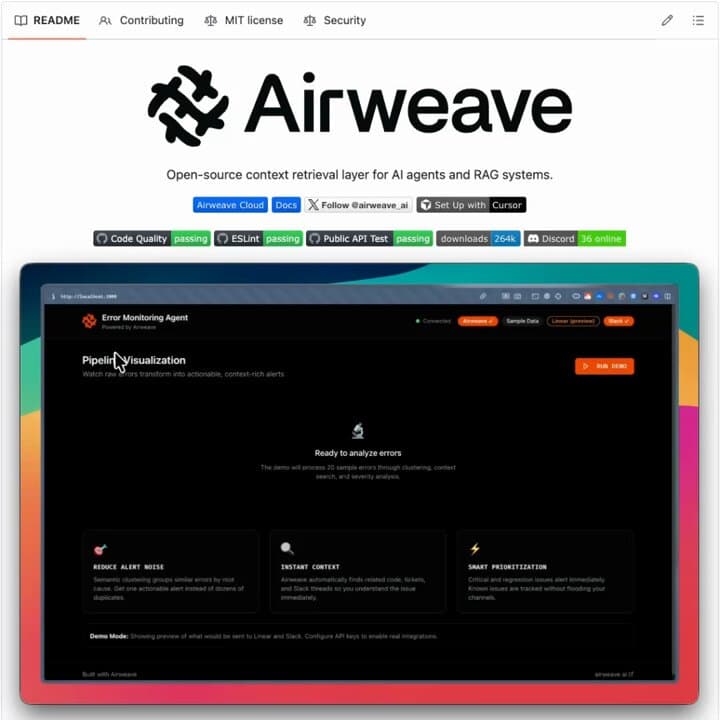
Software engineers may soon find themselves freed from the tedious, reactive task of manually sifting through production logs to diagnose system failures. A new open-source AI agent has emerged that autonomously monitors production environments, identifies error root causes, and delivers comprehensive alerts directly to collaboration platforms like Slack—often before human teams even detect that something has broken.
According to developer Akshay Pachaar, who announced the tool on social media platform X, this AI-driven approach can reduce production downtime by an astonishing 95%. The agent operates continuously in the background, scanning logs, metrics, and system traces to detect anomalies and correlate them with potential root causes.
How the AI Agent Works
The error monitoring agent employs machine learning algorithms trained on vast datasets of production failures and debugging patterns. Unlike traditional monitoring tools that simply alert engineers when thresholds are breached, this AI system:
- Continuously analyzes production logs in real-time
- Identifies patterns that precede or accompany system failures
- Correlates multiple signals to determine root causes
- Generates contextual reports with relevant code snippets, recent deployments, and system metrics
- Delivers actionable alerts directly to engineering teams via Slack or other collaboration tools
The system reportedly goes beyond simple error detection to provide what Pachaar describes as "full context"—including which specific code changes likely triggered the issue, which users were affected, and what the business impact might be.
The Shift from Reactive to Proactive Debugging
Traditional error monitoring typically follows a reactive pattern: something breaks, alerts fire, engineers scramble to investigate logs, and eventually—sometimes hours or days later—a root cause is identified and fixed. This new AI agent flips that model entirely.
"Before you even notice something broke," Pachaar notes, the agent has already completed its analysis and delivered findings. This represents a fundamental shift in how engineering teams approach system reliability, moving from reactive firefighting to proactive prevention.
The 95% reduction in downtime claim, while dramatic, aligns with research showing that the majority of production incident resolution time is spent not on fixing code, but on identifying what needs to be fixed. By automating the diagnostic phase, the AI agent potentially saves engineering teams countless hours of investigative work.
Open-Source Advantage and Community Development
Perhaps most significantly, this tool is being developed as open-source software. This approach offers several advantages:
- Transparency: Engineers can inspect exactly how the AI reaches its conclusions
- Customizability: Teams can adapt the agent to their specific tech stack and needs
- Community improvement: The global developer community can contribute enhancements
- Cost accessibility: Unlike proprietary AI monitoring solutions that can cost thousands monthly, this tool remains freely available
The open-source nature also addresses one of the primary concerns with AI-driven development tools: the "black box" problem. By making the code publicly accessible, developers can understand and trust the agent's decision-making process.
Implications for Software Engineering Roles
This development raises important questions about the evolving role of software engineers. While some might fear that AI tools could replace human developers, a more likely scenario—exemplified by this error monitoring agent—is that AI will augment engineers' capabilities, freeing them from repetitive tasks to focus on more complex, creative work.
Engineers might spend less time digging through logs and more time designing robust architectures, implementing new features, or optimizing system performance. The AI handles the detective work while humans provide the strategic thinking and creative problem-solving.
Integration with Existing Development Workflows
The agent's Slack integration represents a thoughtful approach to adoption. Rather than forcing engineers to learn a new interface or constantly switch contexts, the tool delivers insights directly into an environment where many engineering teams already collaborate. This reduces friction and increases the likelihood of timely responses to potential issues.
Future iterations could potentially integrate with other platforms like Microsoft Teams, Discord, or even directly into IDEs and code repositories, creating a seamless debugging experience throughout the development lifecycle.
Challenges and Considerations
Despite its promise, AI-powered error monitoring faces several challenges:
- False positives: Overly sensitive detection could lead to alert fatigue
- Complex architectures: Highly distributed systems with microservices may present unique monitoring challenges
- Security concerns: Production log access requires careful permission management
- Learning curve: Teams must learn to trust and effectively utilize AI-generated insights
The open-source approach helps mitigate some of these concerns by allowing community scrutiny and adaptation, but successful implementation will still require thoughtful integration into existing security and operational protocols.
The Future of AI in Software Operations
This error monitoring agent represents just one example of how AI is transforming software development and operations. Similar approaches could soon be applied to:
- Performance optimization: AI identifying inefficiencies before they impact users
- Security vulnerability detection: Proactive identification of potential exploits
- Capacity planning: Predictive analysis of resource needs
- Code review assistance: AI identifying potential bugs during development rather than after deployment
As these tools mature, we may see entire categories of software engineering work automated or augmented, fundamentally changing how digital products are built and maintained.
Getting Started with the Tool
For engineers interested in experimenting with this approach, the tool is available at the GitHub repository linked in Pachaar's announcement. Early adopters recommend starting with non-critical systems to build confidence in the agent's capabilities before deploying it to monitor mission-critical production environments.
Implementation typically involves configuring log access, setting up Slack webhooks, and defining which types of issues warrant immediate alerts versus periodic reports. The open-source community appears to be actively developing documentation and examples to ease the onboarding process.
Source: Akshay Pachaar on X