OpenAI's new research shows a model’s future failures can be estimated by replaying real past chats. The method identifies failure patterns from historical interaction logs without requiring additional labeled data.
Key facts
- Method uses replay of real past chats
- No additional labeled data required
- Correlates historical patterns with deployment errors
- No benchmark numbers disclosed yet
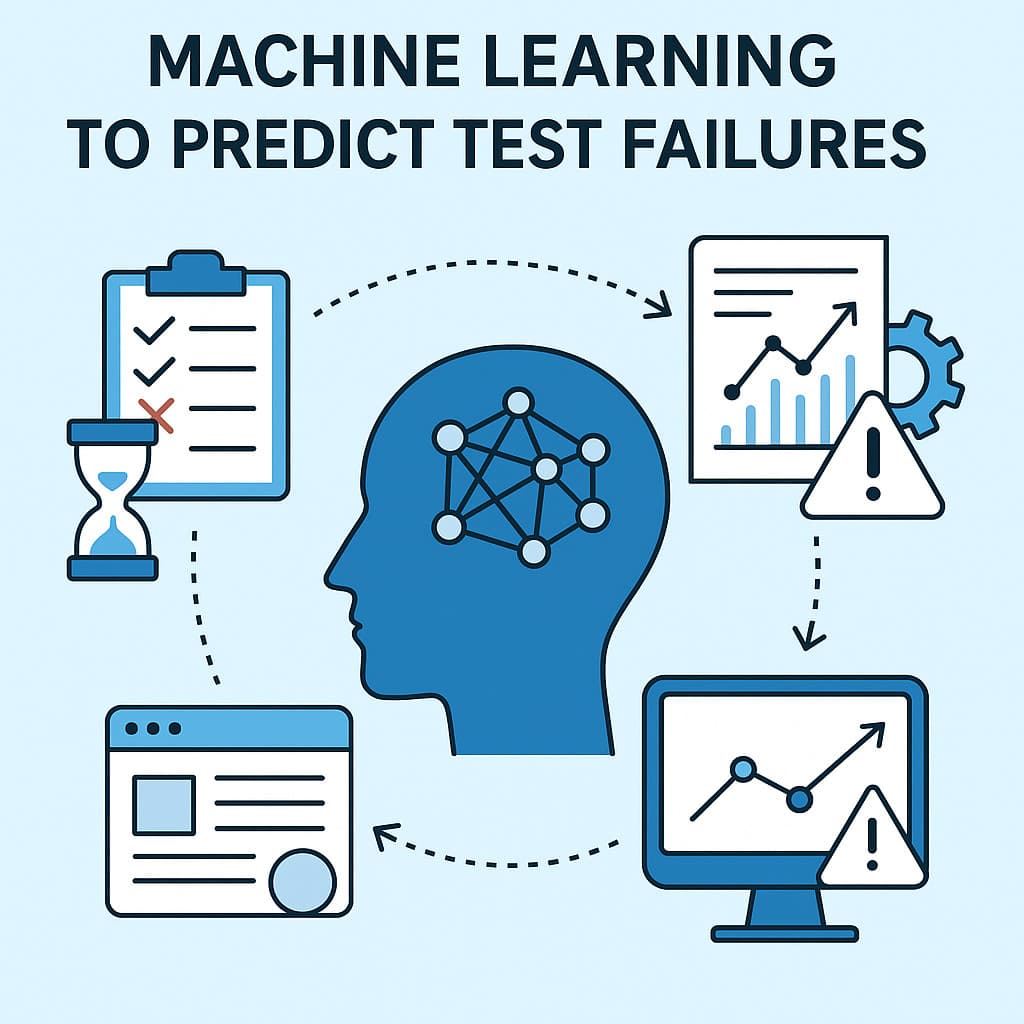
OpenAI has developed a technique to predict a model's future failures by replaying real past chats, according to a post by @rohanpaul_ai on X. The approach uses historical user interaction logs to identify patterns that correlate with deployment errors, potentially allowing earlier detection of issues like hallucinations or safety violations.
How the method works
The core insight is that failure modes often leave traces in prior conversations—repeated misunderstandings, edge-case queries, or subtle misalignments. By systematically replaying these chats through the model and analyzing output deviations, OpenAI can estimate where future failures are likely. This is a departure from traditional red-teaming or static benchmark testing, which often misses long-tail failures.
The research, according to @rohanpaul_ai, suggests that deployment errors correlate with patterns in historical user interactions. This means the method does not require new labeled data, relying on existing logs—a significant efficiency gain for safety teams.
Implications for model safety
This work aligns with a broader industry push toward proactive safety evaluation. Anthropic recently published research on "interpretability from scratch" to detect harmful behaviors before deployment, and Google DeepMind has explored "failure prediction via internal activations." OpenAI's approach is distinct because it leverages the natural distribution of user interactions rather than synthetic adversarial examples.
However, the initial announcement lacks specific numbers: no benchmark scores, no false-positive rates, and no model-specific results. Without these, it's unclear how well the method scales to frontier models like GPT-5 or whether it can catch novel failure modes that don't appear in historical data.
What's next
The research has not yet been published as a paper or preprint. OpenAI typically releases technical reports alongside such findings—watch for an arXiv submission or blog post detailing the methodology and quantitative results. The key metric to track is the correlation coefficient between predicted and actual failure rates on held-out deployment data.
Key Takeaways
- OpenAI can estimate model failures by replaying past chats, enabling proactive error detection without new labeled data.
- No benchmark numbers disclosed.
What to watch
Watch for OpenAI's full technical report or arXiv preprint detailing the method's quantitative performance, particularly the correlation between predicted and actual failure rates on held-out deployment data. A benchmark comparison against existing red-teaming or interpretability methods would validate the approach.
[Updated 19 Jun via the_decoder]
Separately, OpenAI researchers demonstrated that reinforcement learning on desired behavioral traits—such as truthfulness and corrigibility—generalizes across domains. Training on health data improved deception detection, and the model scored better on 44 out of 53 benchmarks. The approach differs from Anthropic's constitution-based method [per The Decoder].