A new arXiv preprint provides quantitative evidence that aggregate LLM benchmarks are poor predictors of individual user satisfaction. Analyzing 115 active Chatbot Arena users, researchers found personalized model rankings show near-zero correlation with aggregate leaderboards, challenging the foundation of current LLM evaluation.
Key Takeaways
- A new study of 115 Chatbot Arena users finds personalized LLM rankings diverge dramatically from aggregate benchmarks, with an average Bradley-Terry correlation of only ρ=0.04.
- This challenges the validity of one-size-fits-all model evaluations.
What the Researchers Measured
The team, led by Cristina Garbacea, analyzed real-world preference data from LMSYS Chatbot Arena—a platform where users vote on blind model comparisons. Instead of computing a single global ranking, they calculated personalized ELO ratings and Bradley-Terry coefficients for each individual user based on their voting history.
They then compared these personalized rankings to the aggregate Arena leaderboard that dominates public discourse. The divergence was stark.
Key Results: The Aggregate-Illusion Gap
The core finding is that aggregate benchmarks fail to capture individual preferences for most users.

"When you look at individual users, their ideal model ranking looks nothing like the public leaderboard," the researchers note. "For more than half of users, the correlation is essentially zero or negative."
How Personalization Works: Topics and Style Matter
The study didn't just measure divergence—it identified why preferences vary. Through topic modeling and linguistic style analysis of user queries, they found:

- Topical heterogeneity: Users have specialized interests (coding, creative writing, technical analysis) that different models handle better
- Style preferences: Some users prefer concise answers, others prefer detailed explanations; some prefer formal tone, others prefer casual
- Predictable patterns: A compact combination of topic and style features creates a useful feature space for predicting user-specific model rankings
Think of it as a personalized performance profile: User A (a programmer asking technical questions) might rank Claude 3.5 Sonnet highest, while User B (a creative writer) might prefer GPT-4o, even though the aggregate ranking places them in reverse order.
Why This Matters for LLM Deployment
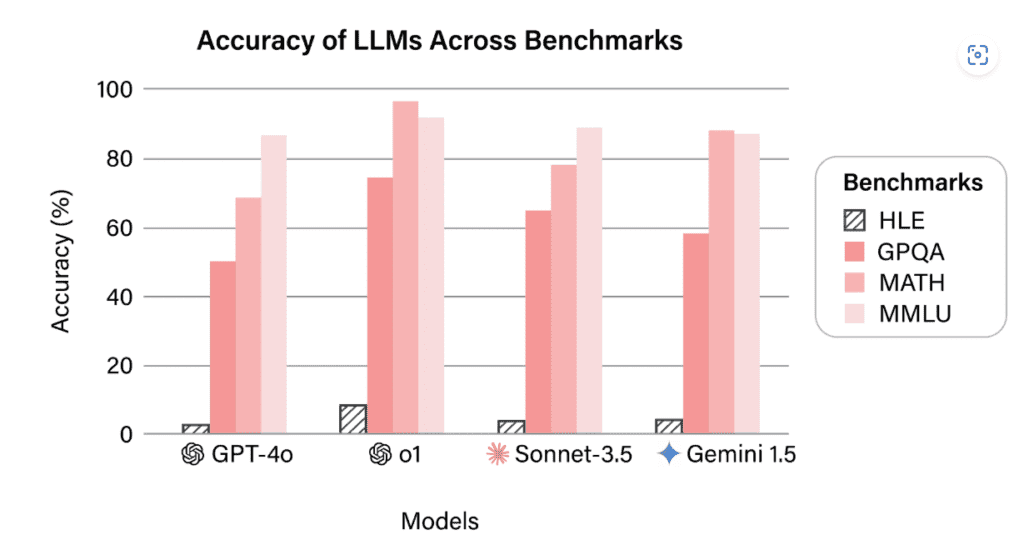
This research directly challenges the benchmark-driven model selection that dominates enterprise LLM procurement. Companies often choose models based on aggregate scores on MMLU, HumanEval, or Chatbot Arena—but these scores may poorly predict satisfaction for their specific use cases and users.

The findings suggest:
- Personalized benchmarking should become standard for serious LLM evaluation
- Model selection tools should incorporate user query analysis to recommend optimal models
- Benchmark transparency needs improvement—aggregate scores should come with variance metrics showing how they perform across different user segments
This aligns with broader trends in AI alignment research, which aims to steer AI systems toward individual user goals and preferences rather than optimizing for average performance.
gentic.news Analysis
This paper arrives amid intense scrutiny of LLM evaluation methodologies. Just yesterday, we covered a Columbia professor's argument that [LLMs are fundamentally limited for scientific discovery](slug: columbia-prof-llms-can-t-generate) due to their interpolation-based architecture—another critique of how we measure LLM capabilities. The personalized benchmarking approach offers a more nuanced alternative to the one-dimensional ranking systems currently dominating the field.
The research also connects to the ongoing RAG vs. fine-tuning debate we analyzed this week. If model performance varies dramatically by user, then personalization strategies—whether through retrieval augmentation, fine-tuning, or simply better model selection—become critical. The study's finding that topic and style features predict preferences suggests that hybrid retrieval systems (like the reference architecture for agentic hybrid retrieval [we covered yesterday](slug: a-reference-architecture-for)) could be adapted for personalized model recommendation, not just content retrieval.
Notably, this work uses Chatbot Arena data—the same platform that produces the widely cited LMSYS leaderboard. The fact that the platform's own data reveals the limitations of its aggregate rankings creates a compelling self-critique of current evaluation practices. As LLMs become more specialized (coding models, reasoning models, creative models), personalized evaluation will likely become standard, much like personalized recommendations revolutionized e-commerce and content platforms.
Frequently Asked Questions
What does ρ=0.04 correlation mean in practice?
A correlation coefficient of 0.04 indicates essentially no relationship between individual user preferences and the aggregate model ranking. For a typical user, knowing which model ranks #1 on Chatbot Arena tells you almost nothing about which model they would personally prefer. This is why personalized testing matters more than leaderboard positions.
How many users were studied, and is that enough?
The research analyzed 115 active Chatbot Arena users with sufficient voting history for statistical analysis. While not enormous, this sample size is adequate to detect the dramatic effects shown (p < 0.001 for the divergence findings). The key limitation is that Chatbot Arena users may not represent all LLM user populations, though they likely represent the technically engaged users who care most about model comparisons.
Can I implement personalized benchmarking for my team?
Yes, though it requires collecting preference data. The paper suggests a straightforward approach: have team members conduct blind comparisons between models on their actual tasks, collect votes, and compute personalized ELO ratings. The researchers found that even a compact set of features (topics and writing style) provides predictive power for model preferences, so you don't need thousands of votes per person.
Does this mean aggregate benchmarks are useless?
Not useless, but incomplete. Aggregate benchmarks remain valuable for tracking overall progress and identifying models with fundamental capability gaps. However, they should be supplemented with variance metrics (how performance varies across user types) and, for serious deployment decisions, replaced with personalized evaluations that match models to specific use cases and user preferences.