In a landmark funding round that signals a seismic shift in digital marketing, AI startup Profound has raised $96 million at a $1 billion valuation, positioning itself at the forefront of what many consider the next evolution of online discovery. The Series C round, led by Lightspeed Venture Partners with participation from Sequoia Capital, Kleiner Perkins, and other prominent investors, brings the 18-month-old company's total funding to $155 million.
The AI Search Revolution
The core premise behind Profound's rapid ascent is simple yet revolutionary: as AI chatbots like ChatGPT and Google's Gemini increasingly provide direct answers instead of traditional search results, brands need new strategies to remain visible. Where search engine optimization (SEO) once focused on ranking highly in Google's blue links, Profound's platform helps companies understand and influence how AI systems describe their products, services, and reputation in conversational responses.
"We're witnessing the beginning of the end of the traditional search results page," said a Profound executive familiar with the funding. "When users ask ChatGPT 'What's the best running shoe for flat feet?' or 'Compare budget smartphones under $300,' brands need to ensure they're represented accurately and favorably in those AI-generated summaries."
The Changing Competitive Landscape
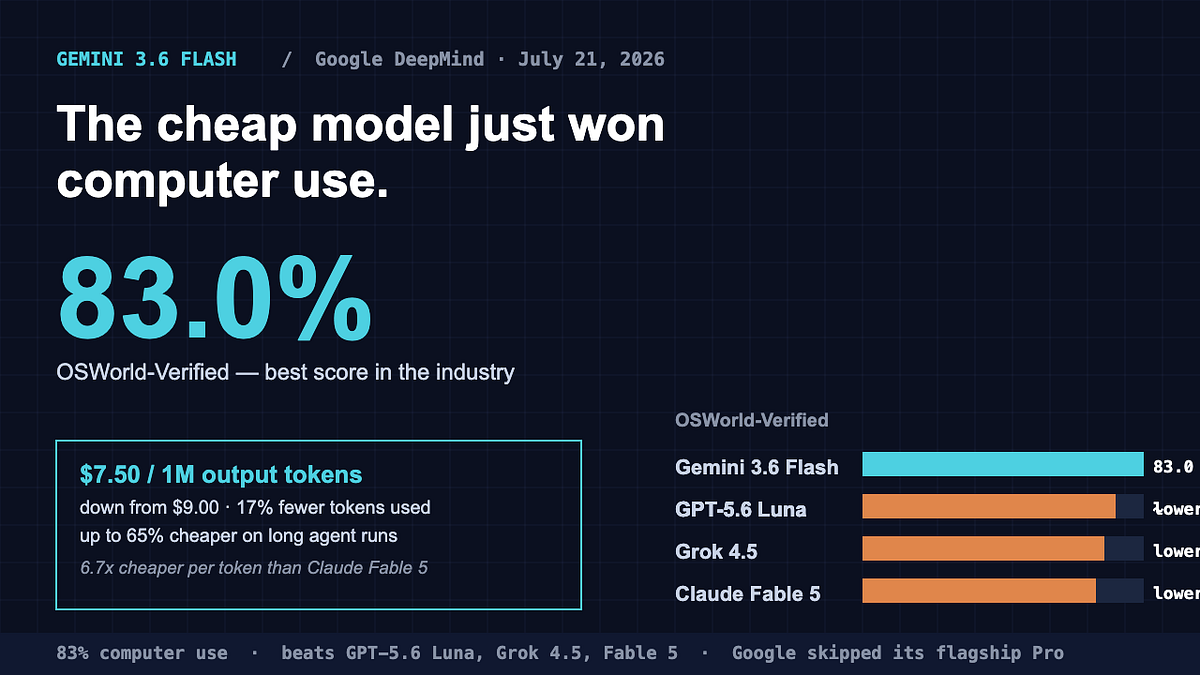
This funding arrives amid intense competition in the AI space. Google has been aggressively developing its AI capabilities, recently announcing Gemini 3.1 with claims of 10x lower costs than competitors, while simultaneously challenging Adobe's creative software dominance with new AI tools like Veo and Imagen 3. Meanwhile, OpenAI's ChatGPT continues to evolve, creating what industry analysts describe as a "bifurcated discovery ecosystem" where traditional search and AI chatbots coexist—for now.
Recent Google developments, including the open-sourcing of the TimesFM foundation model for time series forecasting and the introduction of the Deep-Thinking Ratio metric for AI reasoning efficiency, demonstrate how rapidly the underlying technology is advancing. These innovations aren't just technical milestones—they're reshaping how information is organized, retrieved, and presented to users.
How Profound's Technology Works
Profound's platform analyzes how various AI models—including ChatGPT, Gemini, Claude, and others—respond to queries relevant to specific brands and industries. Using proprietary algorithms, the system identifies patterns in how AI systems synthesize information from across the web, then provides recommendations for how companies can improve their "AI visibility."
This might involve:
- Optimizing website content for AI comprehension rather than just keyword density
- Ensuring factual accuracy across authoritative sources that AI systems frequently reference
- Monitoring how AI describes competitors to identify strategic opportunities
- Testing how different phrasing in AI prompts affects brand representation
Unlike traditional SEO tools that track search rankings, Profound's dashboard shows brands how they appear in AI-generated answers across different platforms and query types.
The Investor Perspective
The substantial investment from top-tier venture firms reflects growing consensus about AI's disruptive potential. "Search as we know it is being reimagined," said a Lightspeed partner involved in the deal. "Profound is building essential infrastructure for this new paradigm. Just as SEO became mandatory in the Google era, AI optimization will become critical in the chatbot era."
The participation of repeat investors like Sequoia and Kleiner Perkins suggests strong confidence in Profound's trajectory. The company's previous Series B round, also covered exclusively by Fortune, established its early momentum in what was then an emerging category.
Implications for Marketers and Businesses
For marketing departments worldwide, Profound's rise signals urgent changes ahead:
1. Budget Reallocation: Marketing budgets historically heavy on SEO and search advertising will need to shift toward AI optimization strategies.
2. Content Strategy Overhaul: The type of content that performs well in AI systems differs from traditional SEO content—more factual, comprehensive, and structured for machine comprehension.
3. Reputation Management Evolution: With AI summarizing brand information from multiple sources, controlling narrative across the entire web becomes more critical than ever.
4. New Metrics: Click-through rates and keyword rankings will be supplemented by metrics tracking brand representation in AI responses.
The Broader Context
This development occurs alongside Google's own AI advancements, creating an interesting dynamic. While Google develops AI products that potentially disrupt its search business, companies like Profound help brands navigate that disruption. It's a reminder that in technology ecosystems, disruption creates opportunities at multiple levels.
Google's recent unveiling of its AI creative suite and Gemini API, plus developments in Cloud Vertex AI, show the company's commitment to an AI-first future, even as that future may diminish the importance of traditional search results.
Looking Ahead
As AI chatbots become more sophisticated and integrated into daily digital experiences, the need for Profound's solutions will likely grow. The company plans to use the new funding to expand its engineering team, develop additional AI model integrations, and grow its enterprise customer base.
The race to shape AI's representation of brands is just beginning. With $96 million in new capital and unicorn status, Profound has positioned itself as a leader in what may become one of the most significant marketing shifts since the advent of search engines themselves.
Source: Fortune exclusive reporting on Profound's $96 million Series C funding round.