A new research paper, "Rethinking the Necessity of Adaptive Retrieval-Augmented Generation through the Lens of Adaptive Listwise Ranking," challenges a core assumption in modern AI systems: that dynamically retrieving external information is always necessary for large language models (LLMs). As LLMs grow more robust, the paper asks whether the constant fetch-and-inject cycle of Retrieval-Augmented Generation (RAG) is always the optimal approach. The authors respond with AdaRankLLM, a novel framework that doesn't just retrieve smarter—it decides if retrieval is needed at all.
Key Takeaways
- Researchers propose AdaRankLLM, a framework that dynamically decides when to retrieve external data for LLMs.
- It reduces computational overhead while maintaining performance, shifting adaptive retrieval's role based on model strength.
What Happened: The Core Innovation of AdaRankLLM
The central thesis is that the utility of "adaptive retrieval"—where a system decides on-the-fly whether to query a knowledge base—changes with the underlying LLM's capability. For less capable models, adaptive retrieval is a crucial crutch to filter out noise and find relevant information. For state-of-the-art reasoning models, its primary value shifts to being a cost-saving measure, preventing unnecessary computation by avoiding retrievals when the model already "knows" enough.
To test this, the researchers built an adaptive ranker using a zero-shot prompt combined with a "passage dropout" mechanism. This setup allows the system to simulate scenarios with varying amounts of retrieved context and compare the resulting generation quality against static, fixed-depth retrieval strategies. The goal is to find the most efficient point where performance plateaus, minimizing the context (and thus cost) fed to the LLM.
The second major contribution is a method to distill this adaptive, listwise ranking capability into smaller, open-source LLMs. Using a two-stage progressive distillation paradigm enhanced by data sampling and augmentation, the team enabled more accessible models to perform sophisticated relevance ranking and adaptive filtering, which are typically strengths of much larger, proprietary models.
Extensive experiments across three datasets and eight different LLMs demonstrated that AdaRankLLM consistently achieves optimal or near-optimal performance in most scenarios while significantly reducing the context overhead—the amount of text the LLM must process. This directly translates to lower latency and cost.
Technical Details: How AdaRankLLM Works
The framework operates on a principle of adaptive listwise ranking. Traditional RAG might retrieve a fixed number of passages (e.g., the top 5 from a vector database) and feed them all to the LLM. A listwise approach evaluates the entire set of candidate passages together, understanding their relative relevance to each other and the query.

AdaRankLLM's adaptive ranker employs a clever prompt that asks the LLM to assess whether the provided passages are sufficient to answer the query. The "passage dropout" mechanism is key: by iteratively testing the model's output with different subsets of retrieved passages, the system learns the minimal context required for a high-quality answer. This process determines the "necessity" of retrieval for that specific query and model.
The two-stage progressive distillation is designed for efficiency. First, a powerful "teacher" LLM (like GPT-4) generates training data by performing the adaptive ranking task. This data is then used to fine-tune a smaller "student" model. The second stage uses data augmentation and sampling techniques to further refine the student's ability, allowing it to mimic the teacher's complex decision-making process without the computational burden.
Retail & Luxury Implications: Smarter, Cheaper Customer AI
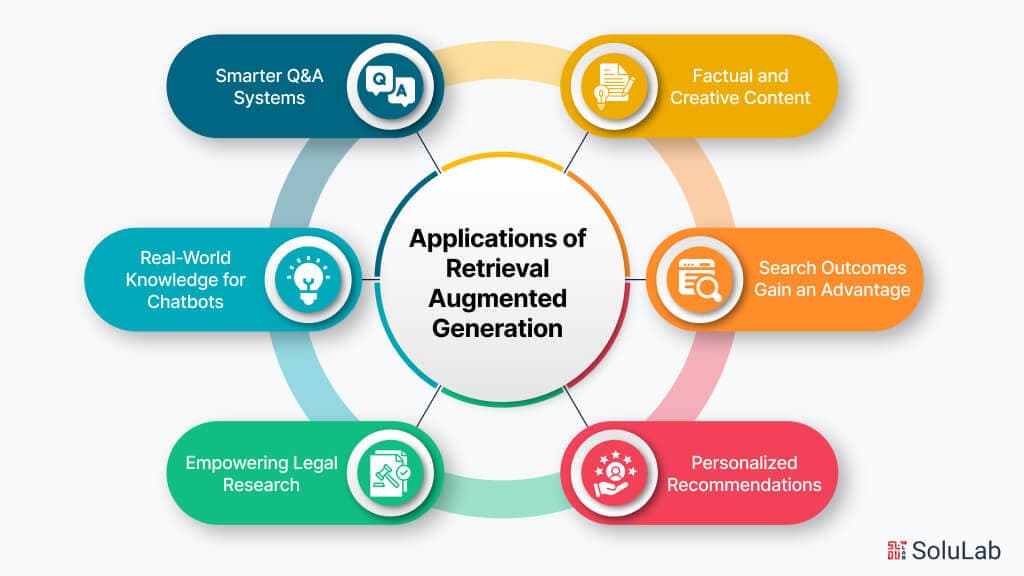
While the paper is not retail-specific, its implications for the industry are direct and significant. Luxury and retail companies are increasingly deploying RAG systems for critical functions: powering conversational customer service agents, internal knowledge bases for store associates, and personalized shopping advisors. These systems often rely on retrieving product information, brand heritage, inventory data, and policy documents.
The primary application is cost and latency optimization. For a global brand running thousands of concurrent customer service chats, the computational cost of processing long retrieved contexts for each query is substantial. AdaRankLLM’s ability to reduce context overhead by dynamically determining retrieval necessity could lead to major savings, especially when using premium, powerful LLMs for final answer generation. The system ensures you only pay for the retrieval and processing you actually need.
Secondly, it enables more robust performance with smaller, specialized models. The distillation paradigm means a brand could fine-tune a smaller, domain-specific model (e.g., one trained on its own product catalog and customer service logs) to have sophisticated retrieval judgment. This reduces dependency on massive, general-purpose APIs, potentially lowering costs, improving data privacy, and allowing for more tailored responses.
Scenario: The High-Touch Concierge Chatbot. A luxury brand's chatbot uses RAG to pull from a database of product materials, craftsmanship notes, and styling guides. For a simple query like "What are your store hours in Paris?", a standard RAG might still retrieve and process several marginally relevant passages about Parisian boutiques. AdaRankLLM could correctly identify that the base LLM already knows this factual answer or that only one specific document is needed, skipping unnecessary steps and responding faster.
For complex, nuanced queries like "Suggest a gift for a client who appreciates rare horology and modern art," the system would recognize the necessity for a deep retrieval, pulling and intelligently ranking passages from watch specifications, artist collaborations, and gifting archives to construct a sophisticated response.
Business Impact: Quantifying the Efficiency Gain
The paper provides a technical metric: "significantly reduced context overhead." In business terms, this translates to:
- Reduced Inference Cost: Less context means fewer tokens processed by the LLM. For cloud-based LLM services billed by token, this is a direct cost saving.
- Lower Latency: Faster processing leads to quicker chatbot responses, improving customer experience.
- Resource Efficiency: Enables the deployment of more complex AI agents within existing computational budgets.

The "role shift" identified is crucial for planning. Brands using mid-tier or older LLMs for cost reasons would deploy AdaRankLLM as a noise filter to boost accuracy. Those using cutting-edge models (like GPT-4o or Claude 3.5) would use it primarily as an efficiency optimizer, maintaining top-tier quality while cutting waste.
Implementation Approach & Governance
Implementing a system like AdaRankLLM requires mature MLOps and LLMops pipelines. The steps would involve:
- Assessment: Profiling your current RAG system's performance and cost, identifying queries where retrieval is superfluous.
- Model Selection: Choosing a suitable powerful LLM as the "teacher" and a target smaller model as the "student" for distillation.
- Data Pipeline: Creating a high-quality dataset of queries and documents from your domain (e.g., customer service logs, product databases) for the distillation process.
- Integration: Embedding the adaptive ranker as a decision layer between your retriever and your primary LLM.
Governance & Risk: The core risk lies in the ranker making incorrect necessity judgments, leading to hallucinations (if it skips retrieval when needed) or irrelevant responses (if it retrieves poorly). Rigorous testing on domain-specific data is non-negotiable. Furthermore, the distillation process must be carefully monitored to ensure the student model does not inherit or amplify biases present in the teacher's outputs or the training data. As with any system that reduces human-in-the-loop oversight, establishing clear performance guardrails is essential.
gentic.news Analysis
This research arrives amidst a significant week of activity on arXiv concerning Retrieval-Augmented Generation and large language models, with both entities appearing in over a dozen articles recently. This underscores a concentrated research push to solve RAG's practical limitations—cost, latency, and accuracy. The paper's focus on "adaptive" retrieval directly follows a clarification article published on April 16 distinguishing RAG from fine-tuning, highlighting the community's effort to refine foundational concepts.
The finding that adaptive retrieval's role changes with model capability has strategic implications. It suggests a bifurcated vendor landscape: providers of high-end reasoning models will market efficiency, while those offering smaller, specialized models will market accuracy enhancement. The Knowledge Graph shows Retrieval-Augmented Generation is heavily utilized by major tech entities like Google, GitHub, and in retail-adjacent products like IKGR and VLM4Rec. This paper provides a technical blueprint those teams could adopt to improve their offerings.
Connecting to our recent coverage, this work on making RAG systems more efficient and autonomous complements the broader theme of building reliable AI Agents (which heavily use LLMs and RAG). As explored in our article "Your AI Agent Is Only as Good as Its Harness", the infrastructure and decision-making logic around an LLM are critical. AdaRankLLM can be seen as a sophisticated "harness" component, making the core agent more cost-effective and precise. For luxury retailers investing in AI concierges and sales assistants, this represents a tangible path to higher ROI on AI deployments, moving beyond prototype stage to scalable, economical production systems.