A groundbreaking study published on arXiv introduces a novel approach to robot learning that could dramatically reduce the cost and complexity of training robotic systems. The research, titled "Cross-Embodiment Offline Reinforcement Learning for Heterogeneous Robot Datasets," addresses one of the most persistent challenges in robotics: how to efficiently train robots with different physical forms without collecting expensive expert demonstrations for each individual platform.
The Core Innovation: Merging Two Learning Paradigms
The research team has successfully united two previously separate approaches: offline reinforcement learning and cross-embodiment learning. Offline RL allows robots to learn from existing datasets of robot behavior, including both expert demonstrations and more abundant suboptimal examples. Cross-embodiment learning enables robots with different morphologies (physical forms) to learn from each other's experiences.
Traditionally, robot training has been platform-specific, requiring extensive data collection for each robot design. This new approach creates what the researchers call "universal control priors"—fundamental movement principles that can be applied across different robotic bodies.
Experimental Validation with 16 Robot Platforms
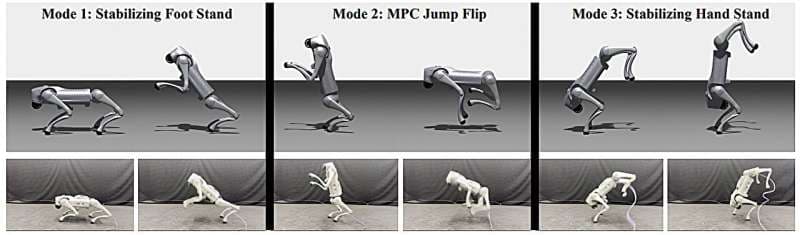
To test their approach, the researchers constructed a comprehensive suite of locomotion datasets spanning 16 distinct robot platforms. This diverse collection allowed them to systematically analyze how well different robot types could learn from each other's experiences.
The results were promising but revealed important limitations. The combined offline RL and cross-embodiment approach excelled at pre-training with datasets rich in suboptimal trajectories, significantly outperforming traditional behavior cloning methods. However, as the proportion of suboptimal data increased and more robot types were included in training, the researchers observed a phenomenon they termed "conflicting gradients."
The Challenge of Conflicting Gradients
When robots with very different physical forms attempt to learn from each other, their optimal movement strategies can conflict. A learning signal that helps a bipedal robot might hinder a quadrupedal one, creating what the researchers describe as "conflicting gradients across morphologies" that impede learning.
This discovery highlights a fundamental tension in cross-embodiment learning: while pooling data from diverse robots increases training efficiency, too much diversity can actually degrade performance as robots receive contradictory learning signals.
A Simple but Effective Solution: Morphological Grouping
To address this challenge, the researchers developed an embodiment-based grouping strategy. Rather than training all robots together, they clustered robots by morphological similarity and updated the model with what they call a "group gradient."
This surprisingly simple, static grouping approach substantially reduced inter-robot conflicts and outperformed existing conflict-resolution methods. The grouping strategy allows robots to benefit from similar platforms' experiences while avoiding the contradictory signals from very different morphologies.
Implications for the Robotics Industry
This research has significant implications for the future of robotics development:
Reduced Training Costs: By enabling robots to learn from each other, the need for expensive platform-specific expert demonstrations could be dramatically reduced.
Faster Development Cycles: New robot designs could leverage existing datasets from similar platforms, accelerating development and deployment.
Scalable Learning Systems: The approach provides a pathway toward truly scalable robot learning systems that can efficiently incorporate new platforms.
Foundation Models for Robotics: This work contributes to the growing field of foundation models for robotics—general-purpose models that can be adapted to specific tasks and platforms.
Limitations and Future Directions
While promising, the approach has limitations. The researchers note that their grouping strategy is static and may not adapt well to robots with novel morphologies that don't fit existing categories. Additionally, the study focused primarily on locomotion tasks, and further research is needed to determine how well the approach generalizes to manipulation and other robotic skills.
The paper, submitted to arXiv on February 20, 2026, represents an important step toward more efficient and scalable robot learning systems. As robotics continues to advance, methods that reduce the data requirements for training will become increasingly valuable.
Source: arXiv:2602.18025