In a recent statement, AI safety researcher Roman Yampolskiy presented a starkly pragmatic view of the path to Artificial General Intelligence (AGI). His core argument, distilled from a social media post, is that the central question is no longer if or when AGI will be developed, but rather how much it will cost to build.
What Happened
Yampolskiy, a computer scientist known for his work on AI safety and security, made a concise but significant claim on social media. He stated: "AGI is no longer a question of when, but how much it costs. The scaling laws, they work."
He elaborated that the field is witnessing "the early stages of recursive self-improvement" and concluded, "It's not when AGI, it's how much to AGI."
This perspective shifts the debate from a speculative timeline to a resource-based calculation, grounded in the empirical observation of AI scaling laws.
Context: The Scaling Law Framework
Yampolskiy's statement is a direct reference to the well-documented phenomenon in large language model (LLM) development known as scaling laws. Pioneered by research from OpenAI and others, these laws describe predictable, power-law relationships between model performance and three key variables:
- Model size (number of parameters)
- Dataset size (tokens of training data)
- Compute budget (FLOPs used for training)
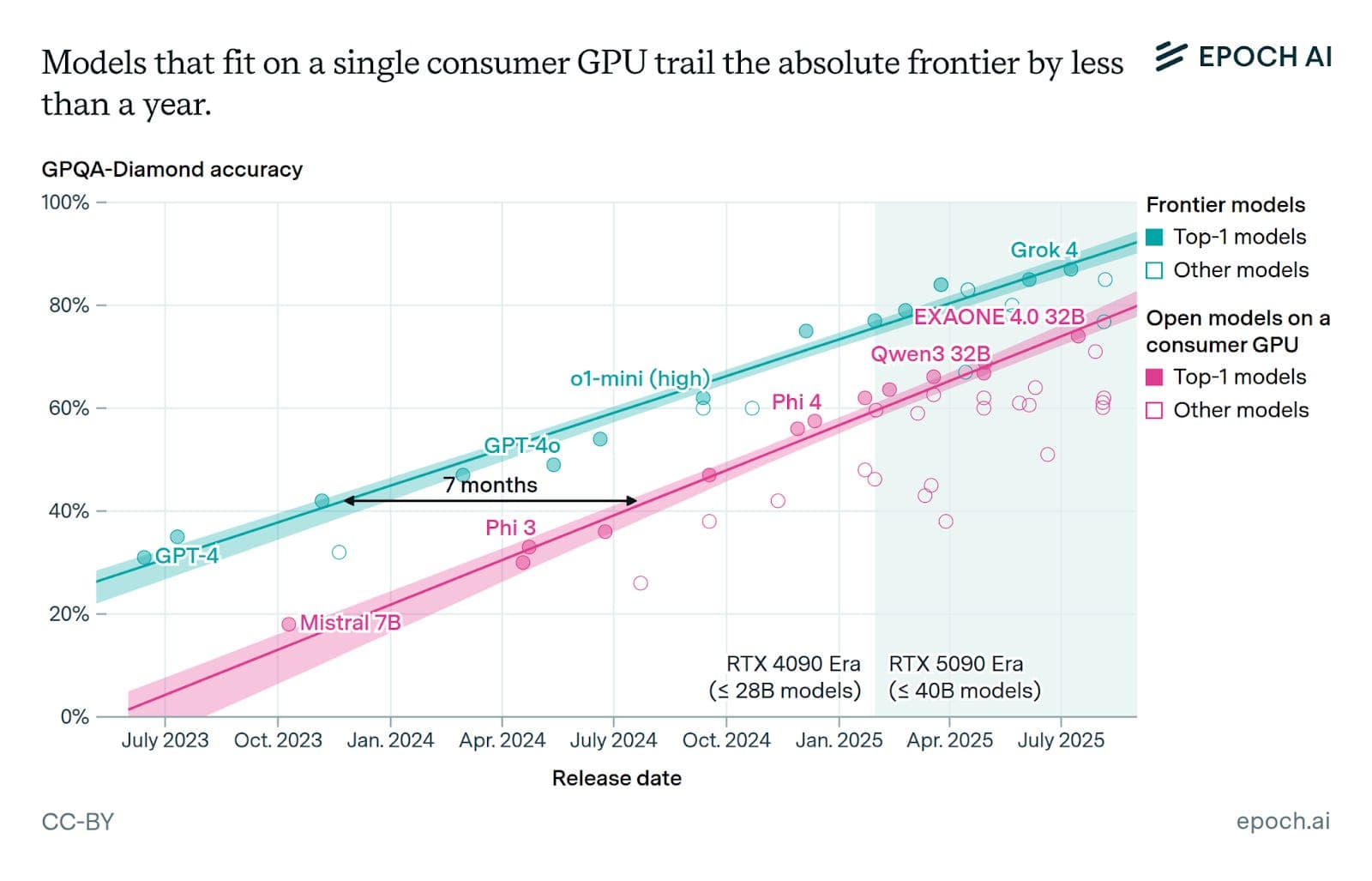
Historically, increasing any of these factors has led to measurable, predictable improvements in capabilities across a wide range of benchmarks. Yampolskiy's assertion that "they work" implies this trend shows no signs of hitting a fundamental wall for capabilities relevant to AGI. The implication is that simply applying more compute, data, and parameters along the current trajectories could be sufficient to reach AGI-level performance.
The Emergence of Recursive Self-Improvement
The mention of "early stages of recursive self-improvement" is particularly notable. This concept, long a staple of theoretical AGI scenarios, refers to an AI system improving its own architecture, algorithms, or training processes. Recent industry developments provide concrete examples:
- AI-assisted coding for AI development: Models like GPT-4, Claude 3, and DeepSeek-Coder are used to write and debug code for new AI models and training infrastructures.
- Synthetic data generation: LLMs are used to create high-quality training data for subsequent model generations, potentially bootstrapping improvement cycles.
- Automated hyperparameter tuning and architecture search: AI systems are increasingly used to optimize the design of other AI systems.
While these are human-directed loops rather than fully autonomous self-improvement, they represent a tangible step toward the recursive acceleration of AI progress.
The 'Cost to AGI' Calculation
Framing AGI as a cost problem transforms it from a scientific mystery into an engineering and economic challenge. The question becomes: what is the compute budget (and by extension, the financial cost) required to train a model that crosses the AGI threshold?
Recent history provides a scale:
- GPT-4: Estimated training cost in the range of $50-$100 million.
- Gemini Ultra / GPT-5 (speculated): Estimates range into the hundreds of millions to billions of dollars.
If scaling laws hold, the "cost to AGI" could be extrapolated from these points. The primary constraints are not theoretical but practical: availability of advanced chips (GPUs/TPUs), energy infrastructure, capital investment, and dataset curation. This view suggests that the entity or consortium that can mobilize the necessary resources—likely measured in tens of billions of dollars—could directly purchase the compute needed to build an AGI.
gentic.news Analysis
Yampolskiy's cost-centric framing is a logical, if unsettling, conclusion from a decade of empirical AI research. The success of scaling laws has systematically dismantled many prior assumptions that AGI would require fundamental, unknown algorithmic breakthroughs. Instead, we have a clear, compute-driven roadmap. The real uncertainty lies in the objective function and benchmark. We don't have a consensus definition or reliable test for AGI, so we can't pinpoint the exact compute threshold. However, the continuous expansion of capabilities from GPT-3 to GPT-4 to the latest frontier models suggests we are climbing a predictable slope, not searching for a hidden door.
The mention of recursive self-improvement is the critical multiplier. If scaling laws give us a baseline cost, recursive improvement could drastically reduce it or accelerate the timeline. The current "human-in-the-loop" self-improvement—using AI to design better chips, write more efficient training code, and generate training data—is already compressing development cycles. The transition to more autonomous loops would represent a phase change, making cost projections even more dynamic and unpredictable.
This perspective also highlights a profound geopolitical and strategic dimension. The "race to AGI" is increasingly resembling a classic arms race, where victory may be determined by compute manufacturing capacity, energy sovereignty, and capital reserves as much as by research talent. It validates the massive infrastructure investments by leading companies and nations, framing them not as speculative bets but as direct purchases of capability along a known curve.
Frequently Asked Questions
What are AI scaling laws?
Scaling laws are empirical observations in machine learning that show model performance improves predictably as you increase the model size (parameters), the amount of training data (tokens), and the compute budget used for training. They were formally detailed in research like OpenAI's "Scaling Laws for Neural Language Models" and have held remarkably true across successive generations of large language models, providing a roadmap for capability advancement.
What does 'recursive self-improvement' mean in AI?
In this context, it refers to the process where an AI system is used to improve subsequent versions of AI systems. This includes using AI to write and optimize training code, design more efficient neural architectures, generate synthetic training data, and even aid in the design of better hardware (like AI-optimized chips). While not yet a fully autonomous loop, this creates a positive feedback cycle that accelerates progress beyond simple linear scaling.
Who is Roman Yampolskiy?
Roman V. Yampolskiy is a tenured computer science professor at the University of Louisville and a leading researcher in the fields of AI safety, security, and alignment. He is the author of numerous papers and books, including Artificial Superintelligence: A Futuristic Approach, and is known for his focus on the existential risks posed by advanced AI. His work often analyzes the capabilities and failure modes of AI systems.
If AGI is a matter of cost, who is most likely to build it first?
Under this framework, the first AGI would most likely be built by the entity that can mobilize the largest amount of capital, compute, and engineering talent. This points to well-resourced private companies like OpenAI (backed by Microsoft), Google DeepMind, Anthropic (backed by Amazon), or Meta, which control vast computational infrastructure. It could also be a state-level actor like China, which can direct national resources toward a strategic goal. The race is increasingly seen as one of resource consolidation.