Pauliusztin open-sourced a 2-year project that turns 10,994 notes into an AI agent's living research memory. The system integrates Obsidian, Readwise, Notion, Google Drive, GitHub, and the web.
Key facts
- 10,994 notes unified from 6 tools.
- 2-year development timeline.
- Open source on GitHub.
- Keynote at AI Engineer World's Fair SF.
- Google OKF standardizes similar ideas.
Pauliusztin spent two years building a system that transforms personal notes into an active, searchable memory for AI agents. The project, now open-source, ingests 10,994 notes from six tools — Obsidian, Readwise, Notion, Google Drive, GitHub, and the web — into a unified architecture.
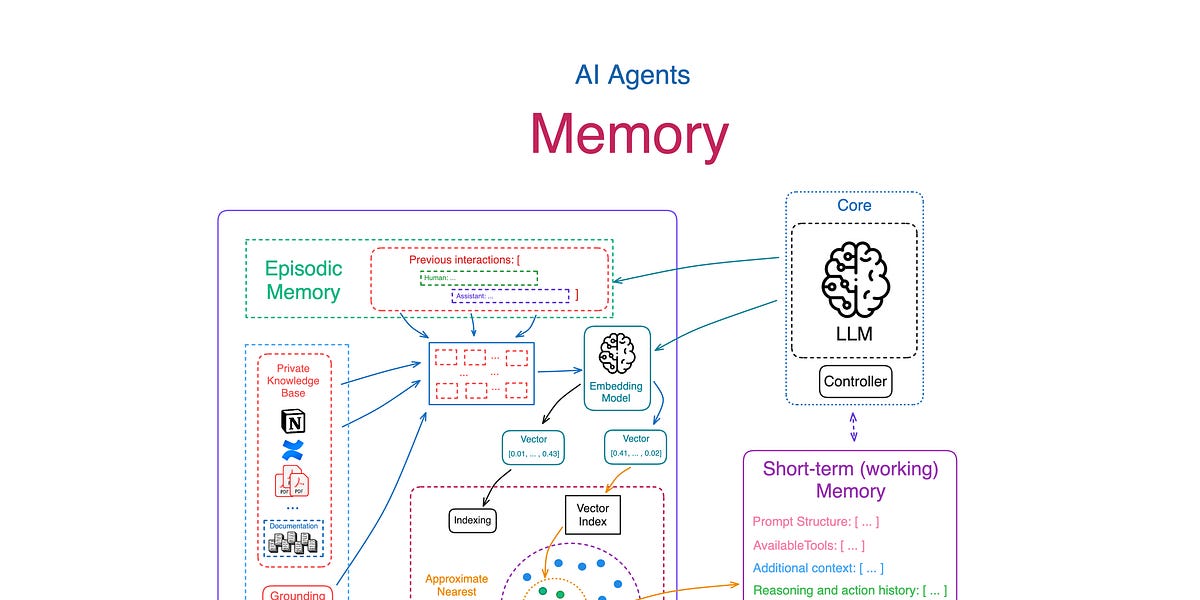
According to @pauliusztin_, the system powers his daily work: researching topics, writing articles, building courses, shipping AI products, and creating content. The core idea: "Instead of treating your notes as an archive, you can turn them into a living memory that your AI agent can continuously search, reason over, and expand."
The repository includes four components: a deep research workflow across personal knowledge and the public web, a living LLM wiki that compounds over time, Claude Code skills adaptable to individual workflows, and a lightweight architecture built around plain files rather than heavyweight infrastructure.
Google's Open Knowledge Format Alignment
Shortly after Pauliusztin's talk at the AI Engineer World's Fair SF, Google introduced its Open Knowledge Format (OKF), which standardizes many of the same ideas behind the living LLM wiki approach. Pauliusztin noted, "It's exciting to see this pattern becoming more widely adopted."
Why This Matters
The project addresses a persistent challenge in AI agent development: long-term memory beyond stateless context windows. By using plain files and a modular architecture, it avoids the complexity of vector databases or custom infrastructure, making it accessible to individual developers. The alignment with Google's OKF suggests the pattern is gaining industry traction, potentially leading to interoperability between personal knowledge systems and enterprise AI tools.
What's Included
The open-source repository provides code, architecture documentation, and a keynote talk breakdown. Pauliusztin delivered the talk as the keynote for the online edition of the AI Engineer World's Fair SF, alongside Louis-François Bouchard.
Key Takeaways
- Pauliusztin open-sourced a 2-year project turning 10,994 notes into a living AI agent memory system.
- The architecture aligns with Google's new OKF standard.
What to watch
Watch for Google's OKF adoption across personal knowledge tools and whether enterprise platforms like Notion or Obsidian integrate the format natively. Also track Pauliusztin's repository stars and forks as a proxy for developer interest in plain-file memory architectures.