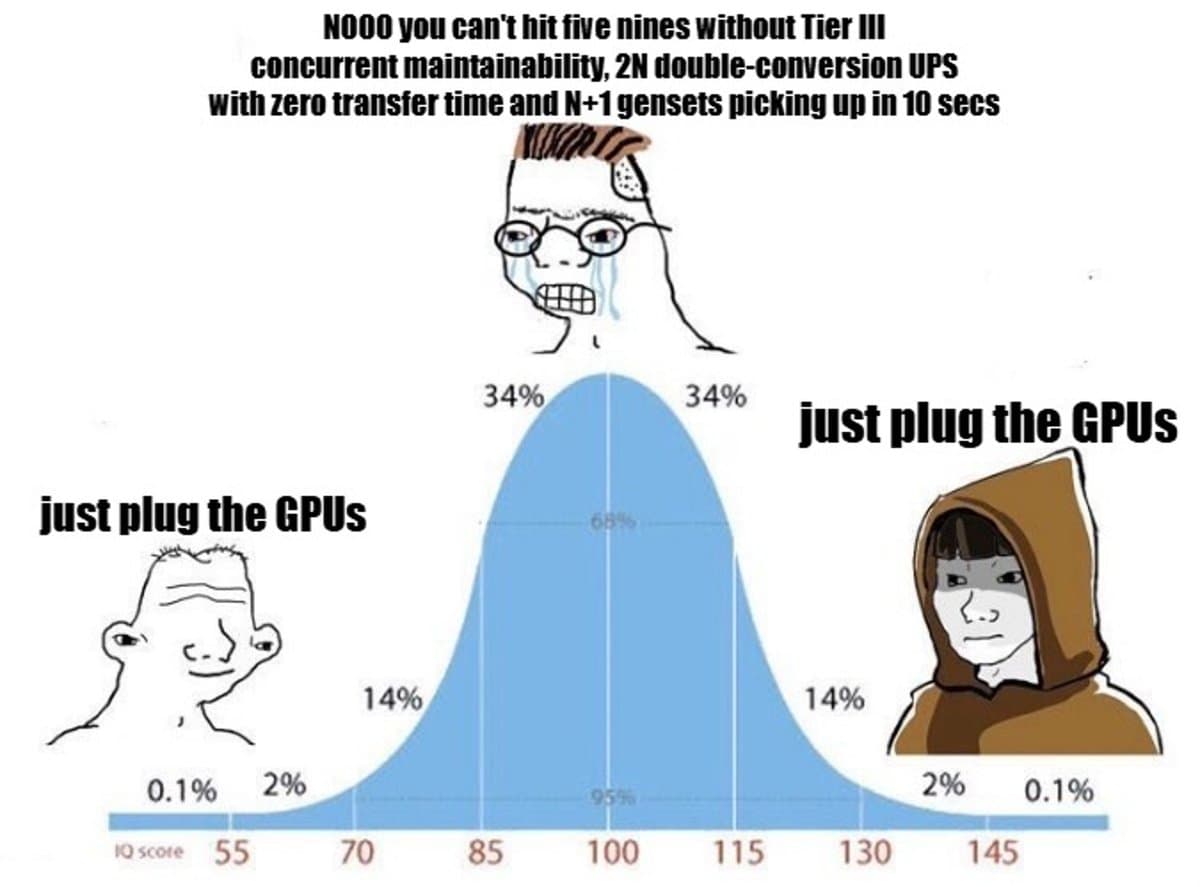
SemiAnalysis's datacenter team now tracks 15GW+ of new capacity with no gensets, no central UPS, or neither. The firm's Industrials Model flagged the pattern, signaling a structural bet on grid reliability over on-site backup.
Key facts
- 15GW+ new capacity tracked with no gensets or UPS
- SemiAnalysis Industrials Model flagged the pattern
- Builds missing gensets, central UPS, or both
- Thread is part 1 of 3, more detail expected
SemiAnalysis's datacenter team, which tracks all datacenter sites, started noticing new builds missing gensets. According to @SemiAnalysis_, the team checked the Industrials Model and now tracks 15GW+ of capacity with no gensets, no central UPS, or neither. The thread is part of a series (1/3) suggesting more detail to come.
The structural read: grid as the new backup
The 15GW figure is not a rounding error. It represents a significant share of the current AI datacenter buildout. For context, the largest hyperscale campuses top out around 1-2GW each; 15GW is equivalent to roughly 10-15 new mega-campuses. The omission of gensets — historically standard for Tier III and Tier IV designs — signals a deliberate engineering choice, not an oversight.
This is a departure from the legacy model where on-site diesel gensets and central UPS were non-negotiable for uptime guarantees. Operators skipping them are implicitly betting that grid power will be more reliable than the cost of maintaining redundant backup. That bet is exposed to grid instability, especially in regions like Northern Virginia or Texas where interconnection queues are already strained.
The SemiAnalysis thread does not specify which operators or regions are involved, nor the timeline for these builds. The firm did not disclose whether the 15GW is spread across hyperscalers, colocation providers, or a mix. What is clear is that the datacenter industry's risk posture is shifting — and the Industrials Model is now tracking it as a structural trend, not an anomaly.
What this means for equipment suppliers
The genset and UPS market is a multi-billion-dollar annual spend. Caterpillar, Cummins, and Vertiv are the primary beneficiaries of traditional datacenter backup requirements. A structural decline in genset attach rates would pressure their datacenter revenue forecasts. Conversely, grid-tied power purchase agreements and on-site battery storage — like Tesla Megapacks — become more attractive substitutes.
The SemiAnalysis call is early-stage, but it aligns with a broader industry push toward grid-scale reliability. The question is whether the bet pays off. If a major outage hits a genset-less facility, expect a rapid reversal and a scramble to retrofit.
The data gap
SemiAnalysis has not published the underlying site-level data or the methodology behind the Industrials Model's 15GW estimate. The firm's credibility in datacenter analysis is established, but the absence of a public breakdown limits independent verification. The thread's promise of more detail (1/3) suggests a follow-up may address this.
What to watch

Watch for SemiAnalysis's follow-up posts (2/3 and 3/3) for site-level breakdowns. Also track quarterly earnings calls from Caterpillar and Vertiv for datacenter backup revenue guidance — a downward revision would confirm the trend is real, not just a tracking artifact.