Key Takeaways
- Shopify Engineering has previewed a 2026 perspective suggesting 'autoresearch'—automated research processes—will have applications extending beyond just training AI models.
- This signals a broader operational automation strategy for the e-commerce giant.
What Happened
Shopify Engineering has released a brief, forward-looking teaser titled "Autoresearch isn't just for training models (2026)." While the full article content is not accessible from the provided source snippet (which appears to be a Google RSS feed interface with language selection options), the title alone is a significant statement of intent from one of the world's largest e-commerce platforms.
The term "autoresearch" typically refers to the automation of research processes using AI—traditionally associated with tasks like hyperparameter optimization, literature reviews for model development, or automated data analysis pipelines during the model training phase. Shopify's title explicitly challenges this narrow view, suggesting that by 2026, the utility of automated research systems will permeate other, unspecified areas of their business and technology stack.
This announcement appears alongside unrelated content in the feed, including an article from Lloyds Banking Group about rebuilding their ML platform, Atlas, for responsible scaling in regulated environments. This juxtaposition is coincidental but highlights a broader industry trend: major enterprises are strategically overhauling their AI infrastructure not just for capability, but for governance, scale, and expanded application.
Technical Interpretation of "Autoresearch"
While details are scarce, we can infer the technical direction from the terminology and Shopify's known challenges. In machine learning operations (MLOps), "research" often constitutes the experimental phase—testing hypotheses, architectures, and data approaches. Automating this (autoresearch) could involve:
- Automated Experimentation: Systems that design, run, and analyze A/B tests or multivariate tests for website features, recommendation algorithms, or pricing models without human intervention.
- Competitive & Market Intelligence: AI agents that continuously research competitor pricing, product assortments, marketing campaigns, and social sentiment, synthesizing insights for merchant dashboards.
- Supply Chain & Demand Forecasting Research: Automated systems that research and integrate disparate data signals (weather, events, social trends, logistics delays) to continuously refine inventory and demand models.
- Customer Support & Policy Research: Automating the synthesis of customer interaction logs, return reasons, and policy queries to research and propose updates to help content or terms of service.
The key shift hinted at by Shopify is moving this automation from the "lab" (model training) into the ongoing, operational heartbeat of the business.
Retail & Luxury Implications
If Shopify, a platform powering millions of merchants including many direct-to-consumer luxury brands, is betting on the expansion of autoresearch, it has direct implications for the retail ecosystem.
For Brands on Shopify: Merchants could gain access to more sophisticated, automated insights tools within the platform. Imagine a "Brand Autoresearch" module that automatically analyzes the performance of similar brands, tracks the emergence of design trends from social media, and recommends inventory or marketing adjustments—all as a native platform service.
Operational Efficiency: The largest cost in data science is often the human time spent on exploratory data analysis and research. Extending autoresearch into areas like customer lifetime value prediction, churn analysis, or personalized marketing journey optimization could allow brands to iterate faster with smaller data teams.
Strategic Intelligence: For luxury houses, protecting brand equity and pricing power is paramount. An autoresearch system tuned for luxury could automatically monitor gray market activity, counterfeit listings across global marketplaces, and unauthorized discounting, providing real-time alerts and consolidated reports.
The Competitive Moat: Shopify's move, if realized, would represent a platform-level capability upgrade. Competing platforms (Adobe Commerce, Salesforce Commerce Cloud) and luxury brands with custom-built tech stacks would need to consider how to develop or acquire similar automated research competencies to avoid falling behind in decision-making speed and insight depth.
The gap between this teaser and production reality is significant—2026 is the stated horizon. This suggests Shopify is in the early stages of defining this vision, likely building on internal tools developed for their own use, which may later be productized.
Implementation & Governance Considerations
Implementing "autoresearch" beyond model training introduces new complexities:
- Data Quality & Breadth: Operational research requires feeding AI systems with high-quality, real-time data from many sources (ERP, CRM, web analytics, social APIs, third-party market data). Building and maintaining these pipelines is a major undertaking.
- Actionability & Trust: The output of an operational autoresearch system must be actionable and trustworthy. This requires robust guardrails, explainability features, and clear integration points with human decision-makers (e.g., "here are three pricing adjustment options based on competitor research, with confidence intervals").
- Bias & Brand Safety: Automated research into areas like trend forecasting or customer sentiment must be carefully calibrated to avoid amplifying biases or leading a brand toward short-term, brand-dilutive trends. Governance frameworks are non-negotiable.
gentic.news Analysis
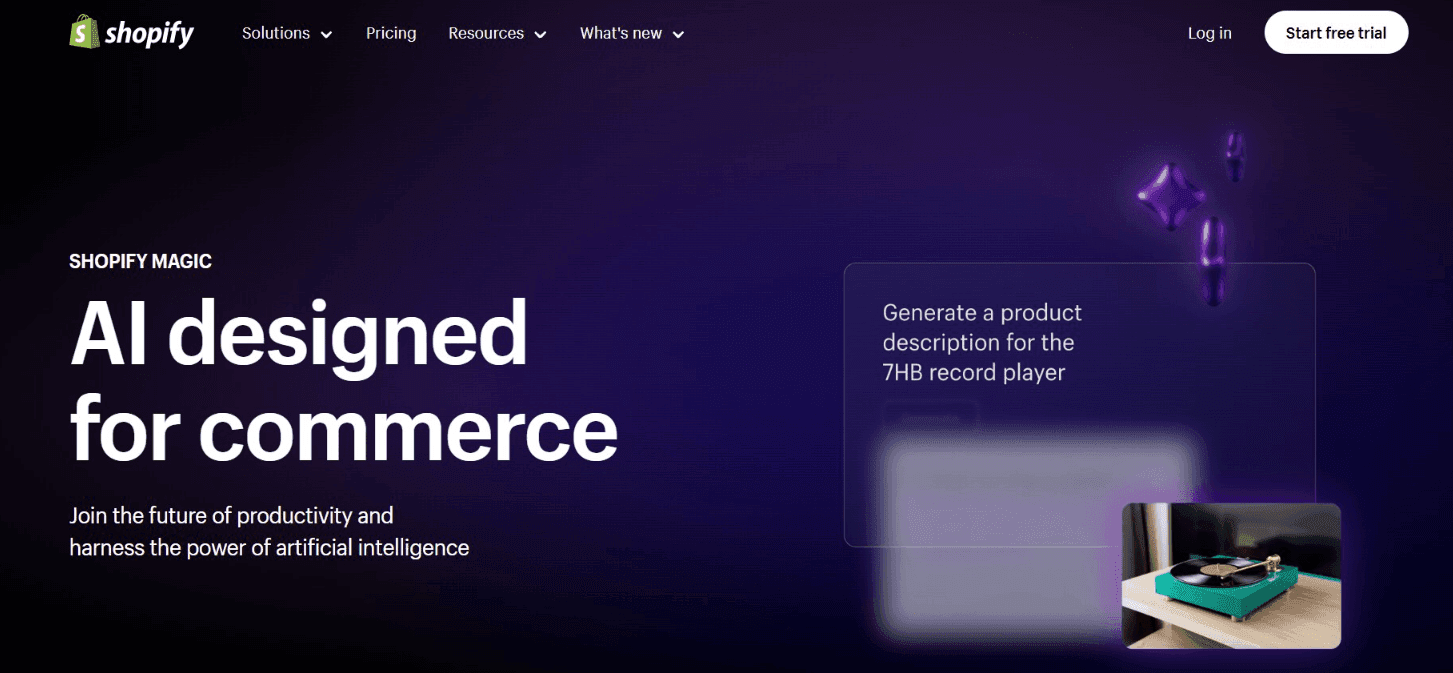
This teaser from Shopify is a classic move from a dominant platform: signaling a long-term strategic direction to shape market expectations and attract enterprise clients planning their 3-5 year roadmaps. It follows a pattern of Shopify aggressively embedding AI across its platform, from "Shopify Magic" AI features for merchants to internal efficiency tools.
The mention of Lloyds Banking Group in the same feed, though unrelated, is instructive. It underscores a sector-wide trend where large, data-rich enterprises are not just adopting AI models but are rebuilding their core data and ML platforms (like Lloyds' Atlas) to enable responsible scaling. For luxury retail, this mirrors the journey of leaders like LVMH and Burberry, who have moved from point solutions to building centralized AI/Data platforms to serve multiple brands and functions.
Shopify's focus on expanding autoresearch aligns with the competitive frontier in retail tech: moving from descriptive analytics (what happened) to prescriptive automation (what to do and why). The 2026 timeline suggests they view this as a multi-year engineering challenge, not a feature release. For luxury brands, especially those on Shopify Plus, this development is worth monitoring closely. It promises deeper, automated insights but also raises questions about dependency on platform-provided intelligence versus building proprietary, brand-specific research capabilities—a key strategic choice for houses where unique insight is a competitive advantage.
The success of this vision will depend on Shopify's ability to execute on the complex data infrastructure and governance required, a challenge as significant as the AI research itself.