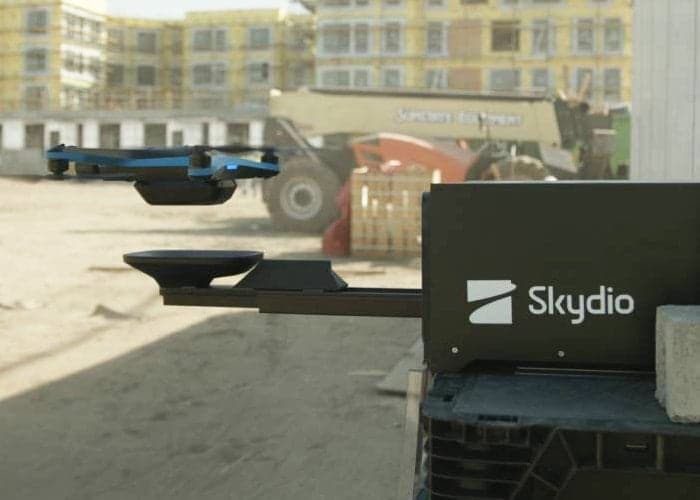
Skydio, the U.S.-based autonomous drone manufacturer, has announced the release of its Robotic Takeoff and Landing system. The product is a robotic arm apparatus designed to automatically launch and catch Skydio drones, enabling a vehicle to become a fully mobile operational base.
What Happened
The system, announced via a social media post by AI researcher Rohan Paul, consists of a robotic arm mounted to a vehicle. Its primary function is to handle the launch and recovery phases of a drone mission without human intervention. According to the announcement, this is intended to enable rapid deployment, wider coverage, and hands-free recovery of drones.
The core value proposition is operational automation. Instead of an operator manually launching a drone, the robotic arm extends and releases it. Upon mission completion, the drone autonomously returns to the vehicle, where the arm catches and stows it, ready for the next mission. This cycle aims to minimize downtime and allow the drone-and-vehicle platform to cover more ground.
Context
Skydio is best known for its consumer and enterprise drones that leverage advanced computer vision and AI for obstacle avoidance and autonomous flight. This move into robotic integration represents a logical expansion into the autonomous mobile system space, where the drone is one component of a larger automated workflow.
Automated launch and recovery is a significant technical hurdle for integrating drones into continuous operations, especially in mobile or remote scenarios. Manual recovery requires a clear landing zone and operator attention. A robotic catcher allows for recovery on a moving or uneven platform, dramatically expanding potential use cases in logistics, public safety, defense, and infrastructure inspection.
Technical Details & Potential Use Cases
While the initial announcement lacks detailed specifications on arm reach, weight capacity, or environmental tolerances, the concept is clear. The system is designed to work with Skydio's own drone platforms, leveraging their native autonomy for precise landing approaches.
Potential applications highlighted by the capability include:
- First Responder Vehicles: A fire truck or police SUV could deploy a reconnaissance drone immediately upon arrival at an incident, with automatic recovery as the vehicle moves.
- Military Reconnaissance: Armored vehicles could launch and recover small UAVs for perimeter scanning without soldiers exiting the vehicle.
- Infrastructure Inspection: A service truck could autonomously deploy a drone to inspect miles of power lines or pipelines, with the drone returning to the moving truck after each segment.
gentic.news Analysis
Skydio's Robotic Takeoff and Landing system is a concrete step toward the fully integrated robotic team concept, where multiple autonomous systems (ground and air) operate in concert. This isn't just a product launch; it's a systems integration play that moves Skydio further up the value chain from selling drones to selling automated mission solutions.
This development aligns with a clear industry trend we've been tracking: the shift from standalone drone autonomy to multi-agent, heterogeneous autonomy. Companies like Shield AI (with its V-BAT teams) and Kodiak Robotics (integrating perception across truck and drone platforms) are exploring similar concepts where different robotic platforms share data and coordinate physically. Skydio's approach is distinctive in its focus on the critical physical handoff—the launch and catch—which has been a major operational friction point.
For practitioners, the key takeaway is the emphasis on closing the operational loop. Many autonomy projects stop at the drone completing its flight. Skydio is addressing the often-overlooked but vital steps of preparation and recovery, which are essential for high-tempo, repeatable operations. The success of this system will hinge on its reliability in non-perfect conditions (wind, vehicle motion, low light) and its integration ease with standard vehicles—details we expect to emerge as early adopters deploy it.
Frequently Asked Questions
What is Skydio's Robotic Takeoff and Landing system?
It is a robotic arm system designed to be mounted on a vehicle. It automatically launches a Skydio drone for a mission and then catches it when it returns, enabling fully mobile, hands-free drone operations.
What are the main benefits of this system?
The primary benefits are rapid deployment, wider area coverage, and hands-free recovery. It eliminates the need for an operator to manually launch or land the drone, reduces downtime between missions, and allows the drone to operate from a moving vehicle, significantly extending its effective range.
Which Skydio drones does this system work with?
The announcement does not specify compatible models. However, it is almost certainly engineered to work with Skydio's current and recent enterprise-grade drone platforms, leveraging their precise autonomous flight and landing capabilities. Compatibility details will be a key factor for potential customers.
Who is the target customer for this product?
The system is targeted at professional and enterprise users who require continuous, mobile drone operations. This likely includes public safety agencies (fire, police, search & rescue), the defense sector, and critical infrastructure inspection teams (energy, utilities, transportation) that operate from vehicles over large geographic areas.