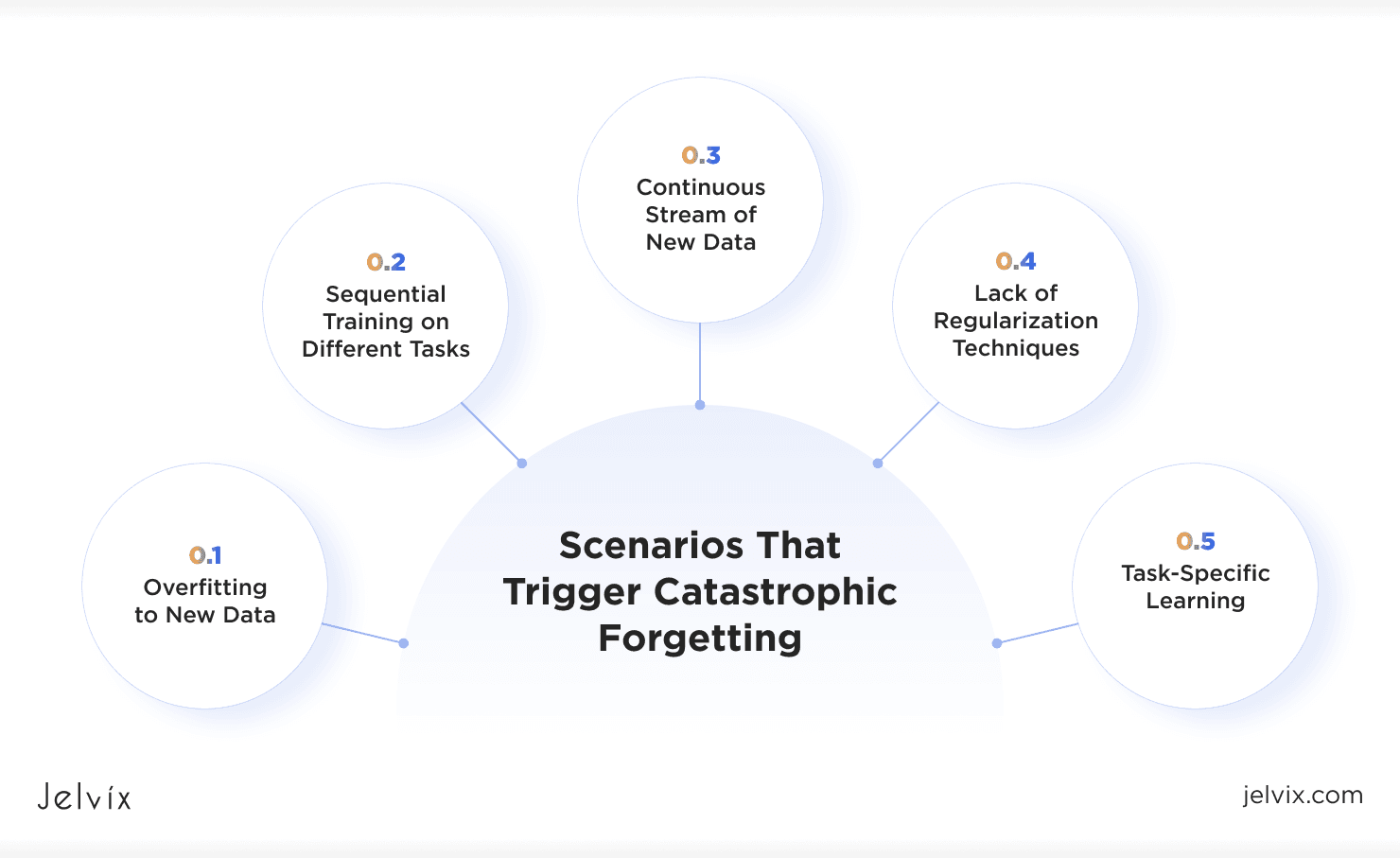
A team of researchers has introduced a groundbreaking solution to one of artificial intelligence's most persistent challenges: catastrophic forgetting in lifelong learning systems. The new framework, called SPREAD (Subspace Representation Distillation), represents a significant advance in enabling AI agents to acquire new skills from expert demonstrations while retaining previously learned knowledge.
The Lifelong Learning Challenge
Lifelong imitation learning (LIL) aims to create AI systems that can continuously learn new tasks from expert demonstrations over extended periods, much like humans accumulate skills throughout their lives. However, current systems suffer from catastrophic forgetting—when learning new information causes previously acquired knowledge to be overwritten or lost. This limitation has prevented the development of truly adaptive AI agents that can function in dynamic, real-world environments.
Existing approaches to this problem have relied on distillation methods that use L2-norm feature matching in raw feature space. According to the research paper published on arXiv, these methods are "sensitive to noise and high-dimensional variability, often failing to preserve intrinsic task manifolds." Essentially, they struggle to maintain the underlying geometric structures that represent different tasks, leading to inefficient knowledge transfer and forgetting.
How SPREAD Works
The SPREAD framework introduces two key innovations that fundamentally change how AI systems preserve knowledge across sequential learning tasks.

First, SPREAD employs singular value decomposition (SVD) to align policy representations across tasks within low-rank subspaces. This approach focuses on preserving the essential geometric relationships between different task representations rather than trying to match raw features directly. By operating in these compressed subspaces, SPREAD maintains the underlying geometry of multimodal features, which facilitates more stable knowledge transfer, improved robustness, and better generalization to new tasks.
Second, the researchers developed a confidence-guided distillation strategy that applies a Kullback-Leibler divergence loss restricted to the top-M most confident action samples. This selective approach emphasizes the most reliable modes of behavior and improves optimization stability during the learning process. By focusing distillation efforts on high-confidence samples, SPREAD avoids the noise and uncertainty that can undermine traditional distillation methods.
Experimental Results and Performance
The research team evaluated SPREAD on the LIBERO benchmark, a standard testing ground for lifelong imitation learning systems. The results demonstrate substantial improvements across multiple metrics:

- Enhanced knowledge transfer: SPREAD showed significantly better ability to apply previously learned skills to new tasks
- Reduced catastrophic forgetting: The framework maintained prior knowledge more effectively than existing approaches
- State-of-the-art performance: SPREAD achieved superior results compared to current methods on the LIBERO benchmark
These improvements are particularly notable given the timing of this research. Recent analysis (March 11, 2026) has shown that compute scarcity makes AI development increasingly expensive, forcing prioritization of high-value tasks over widespread automation. Efficient lifelong learning systems like SPREAD could help address this challenge by creating more versatile AI agents that require less retraining and specialization.
Broader Implications for AI Development
The SPREAD framework arrives at a critical moment in AI development. Just days before its publication, research revealed that AI is creating a workplace divide—boosting experienced workers' productivity while blocking hiring of young talent (March 9, 2026). More adaptable AI systems that can learn continuously might help bridge this gap by enabling more sophisticated human-AI collaboration.

Furthermore, the approach aligns with broader trends in AI research toward more efficient learning systems. Recent publications from arXiv include advances in image-based shape retrieval using pre-aligned multi-modal encoders (March 10, 2026) and verifiable reasoning frameworks for LLM-based recommendation systems (March 10, 2026). SPREAD contributes to this movement toward more robust, interpretable, and efficient AI systems.
Future Directions and Applications
The SPREAD framework opens several promising avenues for future research and practical applications:
Robotics and autonomous systems: Lifelong learning capabilities could enable robots to adapt to changing environments and task requirements without constant reprogramming
Personalized AI assistants: Systems that can learn continuously from user interactions while maintaining core functionality
Educational technology: Adaptive learning systems that build on previous knowledge without forgetting fundamental concepts
Healthcare applications: Diagnostic systems that can incorporate new medical knowledge while retaining established diagnostic protocols
The researchers note that while SPREAD represents a significant advance, challenges remain in scaling the approach to extremely large task sequences and ensuring compatibility with various neural network architectures. Future work will likely focus on extending the subspace alignment approach to more complex learning scenarios and integrating it with other lifelong learning techniques.
Conclusion
The SPREAD framework marks a substantial step forward in addressing one of artificial intelligence's fundamental limitations. By preserving the geometric structure of learned representations across sequential tasks, SPREAD enables more stable and efficient lifelong learning. As AI systems become increasingly integrated into dynamic real-world environments, approaches like SPREAD will be essential for creating truly adaptive and capable artificial intelligence.
The research paper, "SPREAD: Subspace Representation Distillation for Lifelong Imitation Learning," was submitted to arXiv on March 9, 2026, and represents the latest development in a rapidly evolving field of machine learning research.