What Happened
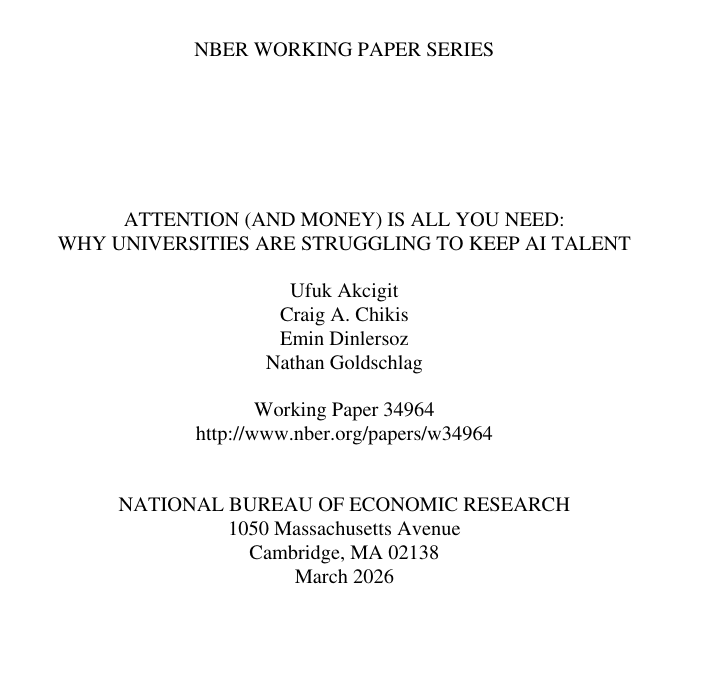
A study analyzing the career movements and output of 42,000 AI researchers has quantified a long-observed trend: top AI talent is being pulled from academia into industry by significantly higher compensation, with a corresponding shift from public research to private, proprietary work.
The key findings from the study, as reported, are:
- Compensation: The top 1% of AI scientists working in the private sector now earn approximately $2 million per year.
- Career Shift Impact: When researchers move from universities to tech companies, their publication of public academic papers decreases substantially.
- Shift to Secrecy: Concurrently, these researchers begin filing 530% more patents, a mechanism often used to protect intellectual property while disclosing inventions.
The study's scale—tracking tens of thousands of researchers—provides robust data to confirm the scale of the brain drain and its direct effect on the openness of AI research.
Context
The competition for elite AI talent between major tech companies (often referred to as "Big Tech") and academia has been a defining feature of the field's recent expansion. Companies like Google, Meta, OpenAI, and Anthropic have built large, well-funded research labs that directly compete with universities for PhDs and faculty.
This dynamic creates a tension between two models of research:
- Academic Model: Driven by publication in peer-reviewed conferences and journals, with an emphasis on open science, reproducibility, and broad dissemination of knowledge.
- Industry Model: Often driven by product development and competitive advantage, leading to work protected by patents or kept as trade secrets, with selective publication.
The study's finding of a 530% increase in patent filings alongside a drop in paper publication quantifies this shift in output modality. Patents require public disclosure of an invention but grant the filer a temporary monopoly on its use, aligning with corporate strategy. The decline in papers reduces the flow of new ideas and methods into the public scientific commons.
While the source does not name the specific study or its authors, the reported metrics highlight a significant structural change in where and how frontier AI research is conducted.