What Happened
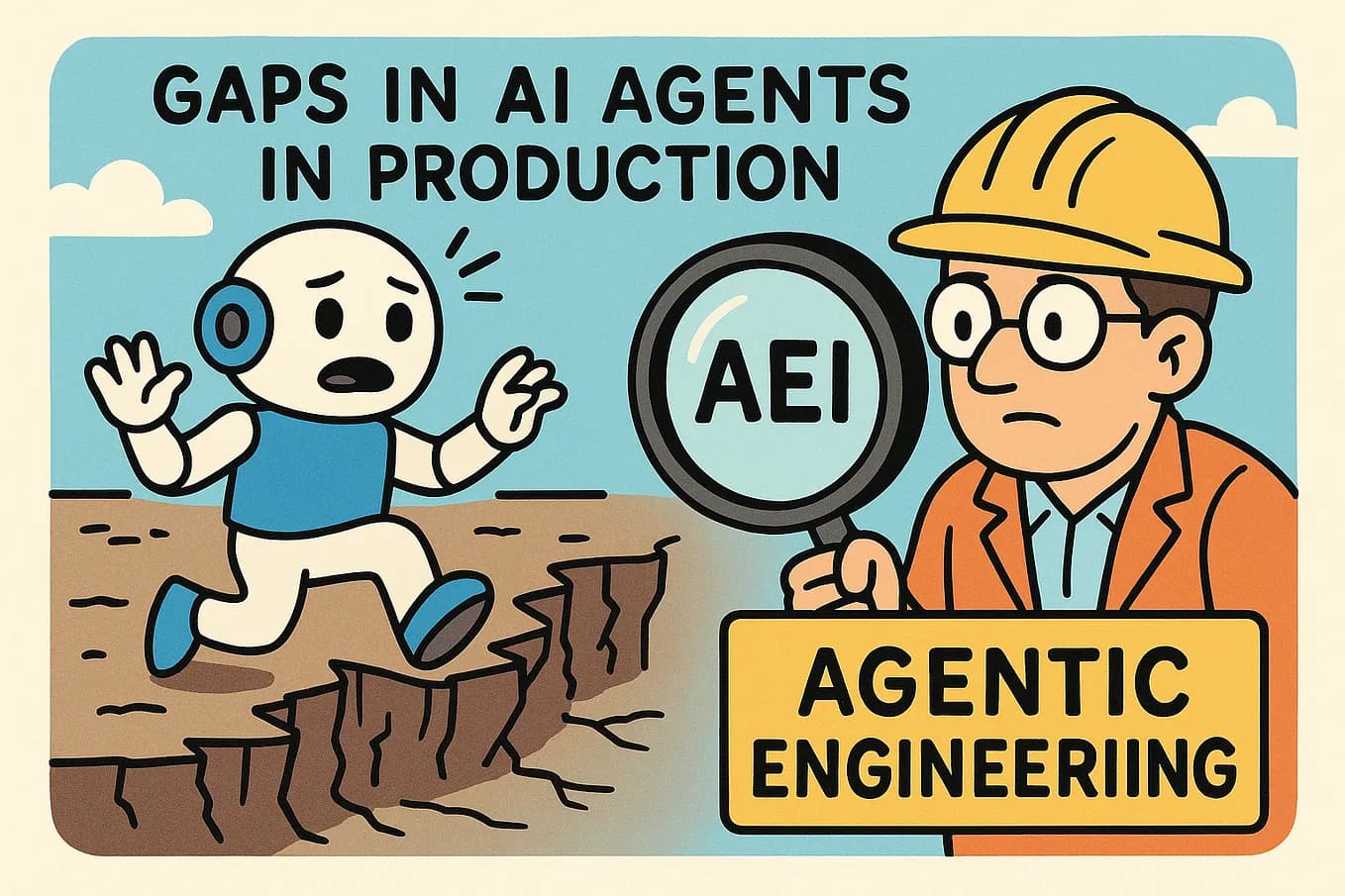
A technical article published on Medium by Harsh Khetpal examines the persistent challenge of moving AI agents from promising prototypes to reliable production systems. The piece highlights that despite the proliferation of dazzling demos—agents that can route customer tickets, summarize documents, and call external APIs—the vast majority (86%) never progress beyond the pilot stage. This follows closely on the heels of a March 30th industry analysis that revealed an 88% failure rate for AI agents reaching production, suggesting this is a systemic industry problem rather than an isolated observation.
The article positions itself as a practical guide for engineers and technical leaders who have experienced the "demo-to-production valley of death," where agents that perform flawlessly in controlled environments fail under real-world conditions.
Technical Details: The Core Challenges
The Medium piece identifies several critical barriers that prevent AI agent deployment:
Reliability Gaps: Demo environments are typically clean, well-structured, and predictable. Production environments introduce noise, edge cases, and unexpected inputs that can cause agents to fail catastrophically or produce unreliable outputs.
Tool Integration Complexity: While agents can be demonstrated calling APIs in isolation, production requires robust error handling, authentication management, rate limiting, and fallback mechanisms when external services fail.
Cost Management: Prototypes often ignore the economic reality of production-scale LLM usage. The article suggests that many promising agents become financially unsustainable when scaled.
Monitoring and Observability: Unlike traditional software, AI agents require specialized monitoring for hallucination detection, prompt drift, and tool usage patterns—capabilities that are rarely built into pilot projects.
Governance and Safety: Production deployment requires guardrails, content filtering, audit trails, and compliance controls that are typically absent from demonstration systems.
The article suggests that many organizations are engaging in what it terms "agent washing"—rebranding simple automation or chatbot workflows as AI agents without the autonomous decision-making and tool-using capabilities that define true agents.
Retail & Luxury Implications
For retail and luxury companies experimenting with AI agents, this production gap has direct consequences:
Customer Service Agents: Many luxury brands have piloted AI agents for handling customer inquiries, returns, or personalized recommendations. The transition from a demo that handles 10 perfect queries to a system that manages thousands of varied, nuanced customer interactions—while maintaining brand voice and accuracy—represents the exact gap described.
Supply Chain and Inventory Agents: Agents that promise to autonomously manage inventory levels, predict demand, or optimize logistics face the harsh reality of integrating with legacy ERP systems, handling incomplete data, and making high-stakes financial decisions with imperfect information.
Personal Shopping Assistants: The dream of an AI personal shopper that browses catalogs, checks inventory, and makes style recommendations requires production-grade reliability. A single hallucination (recommending an out-of-stock item or misrepresenting product details) can damage customer trust and brand reputation.
Creative and Design Agents: Tools that assist with design iteration, trend analysis, or content creation must move from generating interesting prototypes to producing consistently brand-aligned, production-ready assets.
The key insight for retail leaders is that the challenge isn't in building a working prototype—it's in building a system that works reliably at scale, integrates with existing infrastructure, and operates within brand and compliance constraints.
Implementation Approach: Bridging the Gap
The article implies (though doesn't detail) several strategies for improving production success rates:
Start with Production in Mind: Design pilots with production constraints (latency, cost, reliability) as first-class requirements rather than afterthoughts.
Invest in Agent Infrastructure: Build or adopt platforms that provide the monitoring, evaluation, and governance tools needed for production deployment.
Progressive Complexity: Begin with agents that have limited, well-defined action spaces before attempting fully autonomous systems.
Human-in-the-Loop Design: Design agents that can gracefully escalate to human operators when confidence is low or novel situations arise.
For technical teams in retail, this means moving beyond proof-of-concept demos to address the unglamorous but critical aspects of production AI: evaluation frameworks, continuous testing pipelines, robust error handling, and comprehensive observability.
Governance & Risk Assessment
The production gap represents significant risk for retail organizations:
Financial Risk: Failed agent deployments represent sunk R&D investment without operational return.
Brand Risk: Unreliable agents interacting with customers can damage brand perception, particularly for luxury brands where customer experience is paramount.
Operational Risk: Agents making poor autonomous decisions in supply chain, pricing, or inventory management could have direct financial consequences.
Compliance Risk: Agents operating in regulated environments (such as handling customer data or making financial recommendations) must meet compliance standards that are often overlooked in pilot phases.
The maturity level for production-ready AI agents in retail remains low, with most successful deployments likely in controlled, narrow domains rather than as fully autonomous general-purpose agents.