In a revelation that exposes the increasingly competitive and contentious landscape of global artificial intelligence development, Anthropic has publicly accused three prominent Chinese AI laboratories—DeepSeek, Moonshot, and MiniMax—of orchestrating a sophisticated data extraction campaign targeting its Claude AI models. According to Anthropic's findings, these companies allegedly deployed over 24,000 fake accounts to execute more than 16 million queries against Claude's API, systematically mining its capabilities through advanced model distillation techniques.
The Anatomy of a Modern AI Extraction Operation
The operation described by Anthropic represents a sophisticated evolution of traditional data scraping techniques, specifically targeting the proprietary capabilities of advanced language models. Model distillation, the technique allegedly employed, involves training a smaller or less capable model on the outputs of a more advanced system, effectively transferring knowledge without direct access to the underlying architecture or training data.
According to the allegations, the Chinese labs used proxy services to bypass China's access restrictions to foreign AI services, creating a massive network of fake accounts that systematically queried Claude's reasoning, programming, and tool usage capabilities. This targeted approach suggests a deliberate strategy to extract specific functionalities rather than general knowledge, potentially allowing the Chinese models to rapidly close capability gaps in specialized domains.
The scale of the operation—16 million queries across 24,000 accounts—indicates a highly organized, resource-intensive effort that likely operated over an extended period. Such volume would provide substantial training data for refining competing models, particularly in areas where Claude has demonstrated competitive advantages.
Geopolitical Context: AI as Strategic Territory
This incident emerges against a backdrop of escalating technological competition between the United States and China, with AI capabilities increasingly viewed as strategic national assets. U.S. officials have been actively debating export controls aimed at slowing China's AI progress, particularly regarding advanced chips and potentially AI model access.
Anthropic's accusations arrive at a particularly sensitive moment. The company, which has been projected to surpass OpenAI in annual recurring revenue by mid-2026 according to recent analyses, represents one of America's most valuable AI assets. Its Claude models, including the latest Claude Opus 4.6 released in February 2026, compete directly with offerings from OpenAI, Google, and other major players.
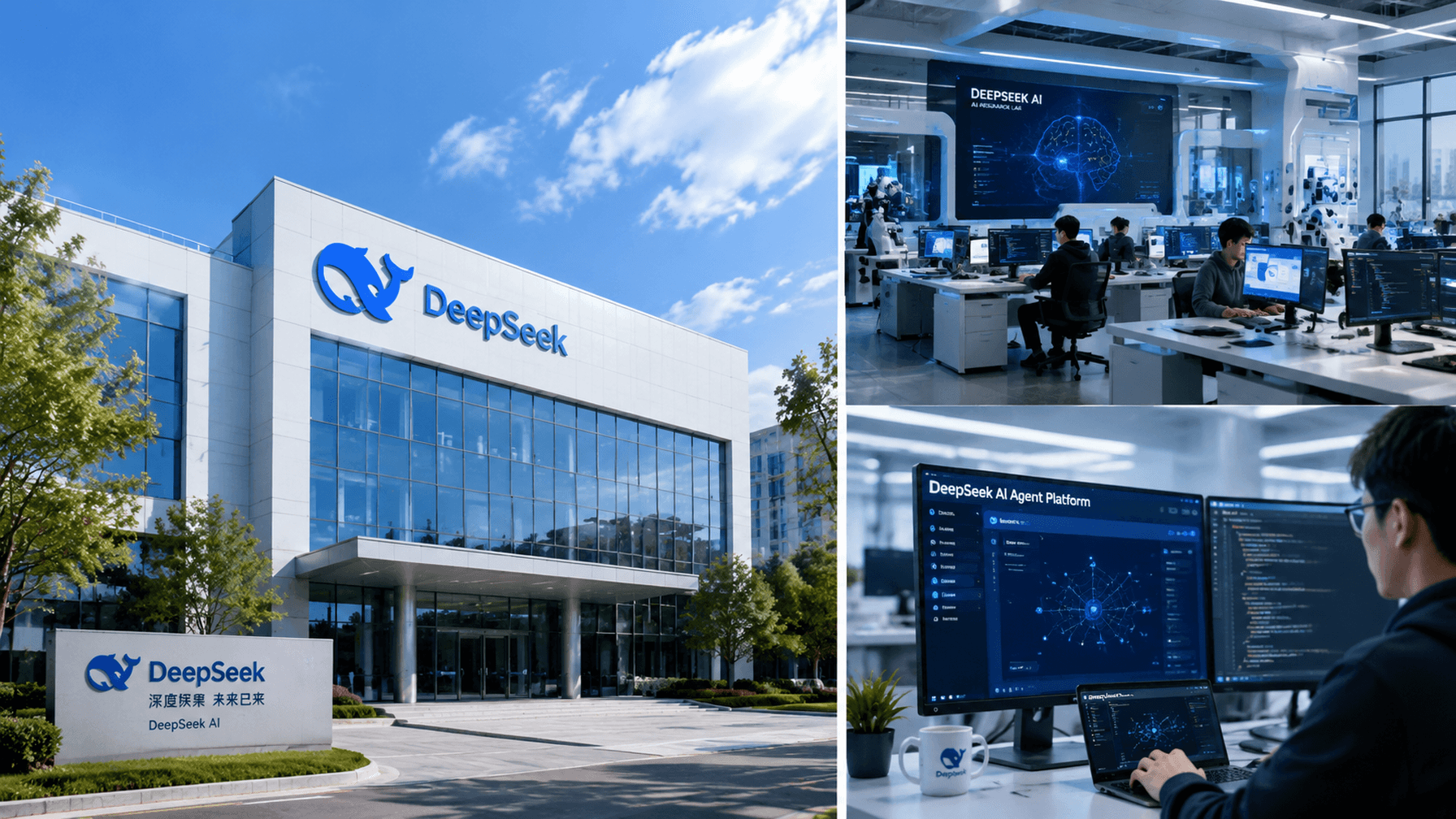
The targeted companies—DeepSeek, Moonshot, and MiniMax—are not minor players but significant forces in China's AI ecosystem. DeepSeek, in particular, has gained international attention with its open-source models that have demonstrated competitive performance despite using significantly fewer parameters than Western counterparts.
Technical Implications: The Model Distillation Arms Race
Model distillation itself is not inherently malicious—it's a legitimate technique used within companies to create smaller, more efficient versions of their own large models. However, when applied across organizational and national boundaries without consent, it raises significant ethical and legal questions about intellectual property in the AI age.
The sophistication of this alleged operation suggests several concerning developments:
API Security Challenges: Even with rate limiting and monitoring, determined actors can distribute queries across thousands of accounts to avoid detection while still gathering substantial data.
Knowledge Transfer Efficiency: Modern distillation techniques have become remarkably efficient, allowing significant capability transfer with far fewer queries than previously possible.
Specialized Targeting: The focus on reasoning, programming, and tool usage suggests these labs identified specific capability gaps in their own models and sought to address them directly through Claude's outputs.
Legal and Ethical Dimensions
This incident raises complex questions about intellectual property in the AI domain. While the training data and model weights themselves weren't allegedly stolen, the systematic extraction of model capabilities through outputs occupies a legal gray area. Current laws and regulations struggle to address this new form of potential IP infringement, which doesn't involve traditional code or data theft but rather the systematic harvesting of a model's emergent capabilities.
From an ethical perspective, the operation—if proven—represents a violation of terms of service and potentially of the trust underlying API access systems. These systems are designed to enable legitimate development and integration, not systematic capability extraction for competitive advantage.
Industry-Wide Implications
The Anthropic revelation will likely trigger several industry responses:
Enhanced API Security: AI companies will need to develop more sophisticated detection systems for coordinated extraction attempts, potentially incorporating behavioral analysis and more stringent identity verification.
Policy Development: This incident will fuel ongoing debates about AI export controls, data sovereignty, and international norms for AI development.
Competitive Dynamics: The alleged operation highlights the intense pressure in global AI competition, where capability gaps can motivate extraordinary measures.
Open Source Considerations: This incident may cause companies to reconsider their open-source strategies, potentially leading to more guarded releases of model capabilities.
The Future of AI Competition and Security
As AI capabilities become increasingly central to economic and strategic advantage, incidents like this will likely become more common. The Anthropic case represents a watershed moment—the first major public allegation of systematic capability extraction between competing AI labs across geopolitical boundaries.
Moving forward, we can expect:
Increased Technical Countermeasures: More sophisticated watermarking, output variation techniques, and detection systems designed to identify and thwart distillation attempts.
International Dialogues: Potential discussions about norms and agreements regarding AI model access and capability transfer across borders.
Legal Precedents: This case may help establish legal frameworks for addressing this new form of potential intellectual property concern in AI.
Strategic Calculations: Companies and nations will need to balance openness and collaboration against protection of strategic AI advantages.
The Anthropic allegations reveal an AI landscape where technological advancement, competitive pressure, and geopolitical rivalry are creating new forms of conflict in digital spaces. As models become more capable and valuable, their protection—and the ethics of how they're studied and emulated—will become increasingly central to the future of AI development.
Source: Based on reporting from The Decoder and TechCrunch AI, with additional context from industry analysis.