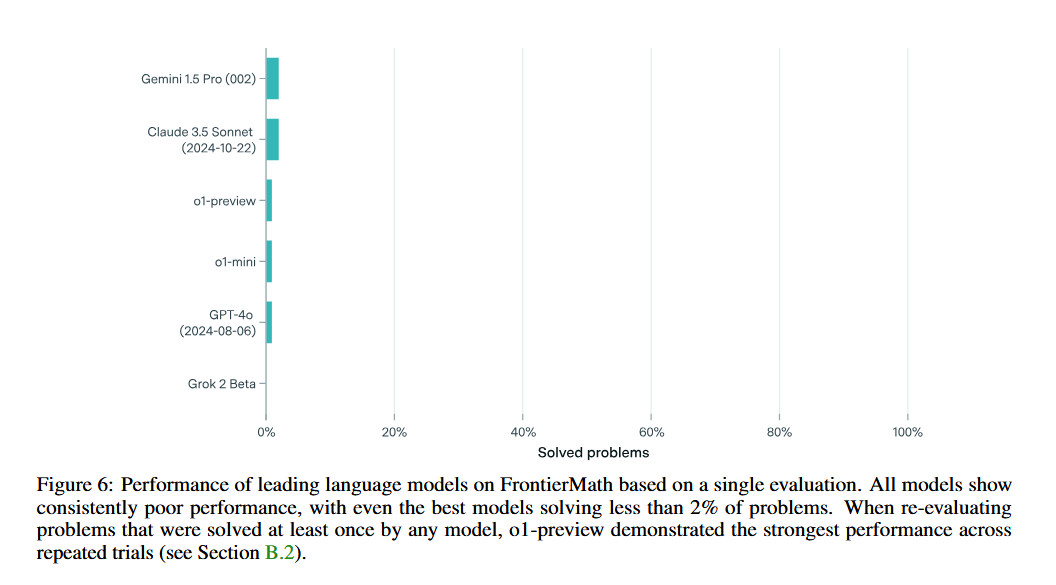
In the race to develop ever-more-capable artificial intelligence, benchmarks have served as the industry's report cards—objective measures of progress that guide development priorities, investment decisions, and deployment strategies. But what happens when these report cards stop providing meaningful grades? A groundbreaking study published on arXiv reveals a troubling reality: nearly half of today's major AI benchmarks have become saturated, losing their ability to distinguish between the best-performing models and potentially misleading the entire field about actual progress.
The Saturation Crisis: More Common Than We Thought
The research, titled "When AI Benchmarks Plateau: A Systematic Study of Benchmark Saturation," analyzed 60 Large Language Model benchmarks selected from technical reports by major AI developers. The findings are sobering: 48% of these benchmarks show clear signs of saturation, meaning they can no longer reliably differentiate between state-of-the-art models. This isn't a minor technical issue—it represents a fundamental challenge to how we measure and understand AI advancement.
Benchmark saturation occurs when models achieve scores approaching the theoretical maximum, creating a ceiling effect where further improvements become invisible. When multiple models cluster near the top of the scale, the benchmark loses its discriminatory power, making it impossible to tell which system is genuinely superior. This phenomenon has been accelerating as benchmarks age, with older evaluations being particularly vulnerable.
What Makes a Benchmark Fail?
The study's most valuable contribution lies in its systematic analysis of what factors contribute to benchmark longevity. Researchers characterized each benchmark along 14 properties spanning task design, data construction, and evaluation format, then tested five specific hypotheses about saturation drivers.
Surprising Finding #1: Hidden Test Data Doesn't Help
One of the most counterintuitive discoveries challenges a common practice in benchmark design. The study found that keeping test data private—a standard technique to prevent "benchmark hacking"—shows no protective effect against saturation. This contradicts the widespread assumption that hiding evaluation data forces models to develop genuine capabilities rather than memorizing specific examples.
Surprising Finding #2: Expert Curation Beats Crowdsourcing
While crowdsourced benchmarks have gained popularity for their scale and diversity, the research reveals they're particularly vulnerable to saturation. Expert-curated benchmarks demonstrated significantly greater longevity, resisting saturation better than their crowdsourced counterparts. This suggests that quality of evaluation design may matter more than quantity of test cases.
Other factors influencing saturation rates include:
- Task complexity: More nuanced, multi-step tasks resist saturation longer
- Evaluation granularity: Fine-grained scoring systems maintain discriminatory power
- Domain specificity: Broad, general-purpose benchmarks saturate faster
The Context: A Benchmark Explosion
This study arrives at a critical moment in AI evaluation. Just days before its publication, three major new benchmarks were announced:
- BrowseComp-V³: A multimodal benchmark testing AI's ability to perform deep web searches
- SkillsBench: The first comprehensive benchmark for AI agent skills
- GT-HarmBench: A safety-focused benchmark using game theory principles
These new evaluations reflect the field's recognition that traditional benchmarks are insufficient, particularly for measuring emerging capabilities like web navigation, agentic behavior, and safety alignment. The simultaneous publication of these three diverse benchmarks suggests the community is already responding to the saturation problem—though perhaps not in a coordinated way.
Implications for AI Development
The saturation crisis has far-reaching consequences:
For Researchers: The study suggests we need a paradigm shift in how we design evaluations. Rather than chasing higher scores on established benchmarks, the field might benefit from more dynamic, adaptive evaluations that evolve alongside model capabilities.
For Companies: Benchmark saturation creates misleading competitive landscapes. When all top models appear equal on paper, distinguishing genuine technological advantages becomes difficult, potentially distorting investment and partnership decisions.
For Policymakers: If benchmarks can't reliably measure AI capabilities, regulatory frameworks based on benchmark performance may be fundamentally flawed. This raises questions about how to establish meaningful safety and capability standards.
For the Public: When benchmarks fail, public understanding of AI progress becomes distorted. Headlines proclaiming "AI beats human performance" on saturated benchmarks create unrealistic expectations about what these systems can actually do.
Toward More Durable Evaluation
The study concludes with recommendations for creating benchmarks that resist saturation:
Embrace complexity: Design evaluations that require multi-step reasoning, integration of multiple knowledge domains, and adaptation to novel scenarios
Prioritize expert design: While diverse input is valuable, expert curation appears essential for creating evaluations that maintain discriminatory power
Develop dynamic benchmarks: Rather than static test sets, consider benchmarks that evolve or generate new challenges based on model performance
Focus on capability, not scores: Shift evaluation philosophy from maximizing scores to demonstrating genuine, transferable capabilities
Establish benchmark retirement criteria: Develop clear guidelines for when a benchmark should be deprecated due to saturation
The Path Forward
The arXiv study represents more than just a technical analysis—it's a wake-up call for the entire AI community. As models grow more capable, our methods for evaluating them must evolve in sophistication. The recent introduction of benchmarks like SkillsBench (focusing on agent skills) and GT-HarmBench (testing safety through game theory) suggests the field is beginning to recognize the need for more nuanced evaluation.
However, without coordinated effort, we risk creating a cycle where new benchmarks quickly become saturated, forcing continuous development of replacement evaluations. What's needed is a fundamental rethinking of evaluation philosophy—moving from static tests of narrow capabilities to dynamic assessments of general intelligence and robustness.
The stakes are high. Inaccurate benchmarks don't just mislead researchers; they shape the trajectory of AI development, influence billions in investment, and affect how society prepares for increasingly capable AI systems. As the study makes clear, fixing our broken report cards isn't just an academic exercise—it's essential for responsible AI advancement.
Source: "When AI Benchmarks Plateau: A Systematic Study of Benchmark Saturation" (arXiv:2602.16763v1, February 2026)