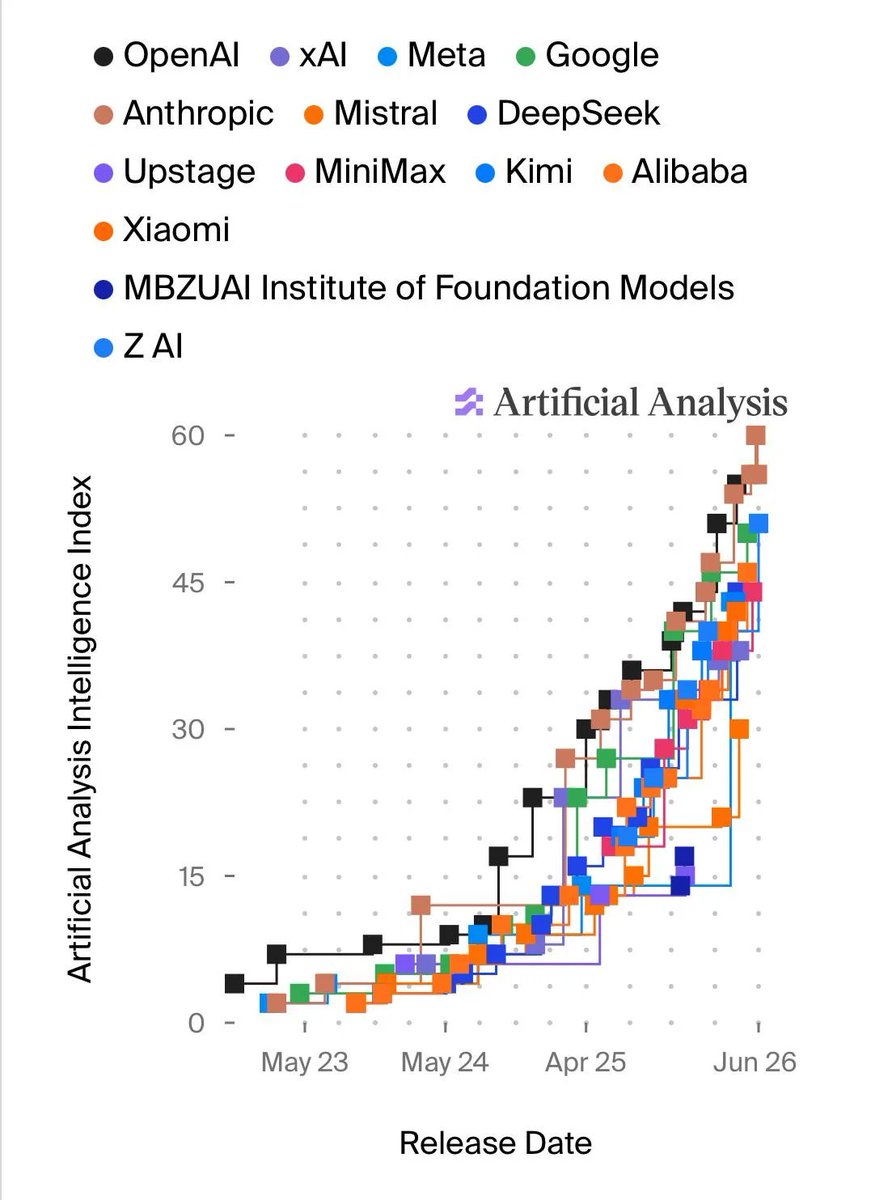
In a striking observation that cuts to the heart of artificial intelligence's current trajectory, Wharton professor and AI researcher Ethan Mollick recently noted a profound imbalance in AI investment priorities: "Billions of dollars going to training, thousands of dollars going to independent benchmarking."
This simple statement reveals what might be the most significant structural weakness in today's AI development ecosystem—a dangerous asymmetry between our capacity to create increasingly powerful models and our ability to properly evaluate what we've built.
The Training Tsunami
The numbers behind AI training are staggering. OpenAI reportedly spent over $100 million training GPT-4, with estimates suggesting GPT-5 could cost $2.5 billion. Google's Gemini Ultra training likely consumed similar resources, while Anthropic's Claude 3 development represented another massive investment. Meta, Microsoft, and other tech giants pour billions into their AI initiatives, with training compute representing the single largest expense.
These astronomical figures reflect the arms race mentality that has dominated AI development since the transformer architecture breakthrough. The prevailing wisdom suggests that more data, more parameters, and more compute inevitably lead to better performance. This has created what some researchers call "scale maximalism"—the belief that scaling existing approaches is the primary path to artificial general intelligence.
The Evaluation Desert
Contrast this with the resources allocated to independent evaluation. While exact figures are difficult to obtain, Mollick's "thousands of dollars" estimate aligns with what we know about academic funding for AI safety and evaluation research. Most benchmark development occurs in academic settings with limited budgets, often relying on graduate student labor and modest grants.
Even well-established benchmarks like MMLU (Massive Multitask Language Understanding), HELM (Holistic Evaluation of Language Models), and BIG-bench receive funding orders of magnitude smaller than what's spent on training the models they evaluate. Independent evaluation organizations like the Alignment Research Center operate with budgets in the low millions—a rounding error compared to training costs.
Why This Imbalance Matters
The consequences of this evaluation gap are already becoming apparent:
1. Unknown Capabilities and Emergent Behaviors
As models grow more complex, they develop capabilities that weren't explicitly programmed or trained. Without comprehensive evaluation, we may miss dangerous emergent behaviors until they manifest in real-world systems. Recent examples include models developing unexpected reasoning abilities or bypassing safety measures through seemingly innocuous prompts.
2. Benchmark Gaming and Overfitting
When evaluation resources are limited, models can be optimized for specific benchmarks without developing genuine understanding. This creates what researchers call "benchmark overfitting"—models that perform well on tests but fail in real-world applications. The phenomenon resembles students who memorize answers rather than learning concepts.
3. Safety and Alignment Shortcuts
Proper safety evaluation requires extensive red-teaming, adversarial testing, and careful analysis of failure modes. Without adequate funding, safety measures become checkboxes rather than rigorous processes. The recent controversies around AI image generation producing biased or harmful content demonstrate what happens when evaluation lags behind capability.
4. Market Distortions and Hype Cycles
When independent evaluation is underfunded, companies can make exaggerated claims about their models' capabilities with little independent verification. This fuels hype cycles and potentially misallocates both investment and public trust.
The Structural Roots of the Problem
Several factors contribute to this imbalance:
Incentive Misalignment: Companies benefit directly from more capable models but only indirectly from better evaluation. Evaluation often reveals limitations rather than capabilities, creating a disincentive for thorough assessment.
Proprietary Pressures: Many leading models are proprietary, limiting independent researchers' access for evaluation. Even when access is granted, non-disclosure agreements can restrict publication of critical findings.
Academic Funding Gaps: Traditional academic funding mechanisms aren't designed for the scale and pace of modern AI evaluation. Grant cycles take years, while model capabilities advance monthly.
Talent Drain: The best AI researchers are often drawn to industry by salaries that academia can't match, creating a brain drain from evaluation research.
Pathways to Better Balance
Addressing this crisis requires systemic changes:
1. Dedicated Evaluation Funding
Governments and foundations should establish dedicated funding streams for independent AI evaluation at scales comparable to training investments. The recently announced U.S. AI Safety Institute represents a step in this direction, but funding levels remain inadequate.
2. Evaluation Requirements
Regulatory frameworks could require independent evaluation before deployment of powerful AI systems, similar to pharmaceutical trials or aircraft certification.
3. Industry Consortiums
Leading AI companies could pool resources to fund independent evaluation through neutral third parties, separating evaluation from competitive pressures.
4. Open Evaluation Platforms
Developing standardized, open evaluation platforms would lower barriers for researchers and create more consistent assessment methodologies.
5. Evaluation as a Service
New business models might emerge where specialized firms provide evaluation services to AI developers, creating market incentives for better assessment.
The Stakes of Getting This Right
The imbalance between training and evaluation isn't just an academic concern—it has real-world implications for how AI integrates into society. From healthcare diagnostics to financial systems, autonomous vehicles to educational tools, we're deploying increasingly powerful AI without fully understanding its capabilities, limitations, or failure modes.
Mollick's observation serves as a crucial wake-up call. As we stand on the brink of potentially transformative AI advancements, we must ask: What good are billion-dollar models if we don't properly understand what they can do, how they fail, or what risks they pose?
The path forward requires recognizing evaluation not as an afterthought but as an essential component of responsible AI development—one worthy of investment proportional to its importance. Until we address this funding imbalance, we're building increasingly powerful systems with increasingly inadequate understanding, a recipe for unintended consequences that could undermine AI's tremendous potential.
Source: Ethan Mollick (@emollick) on Twitter/X