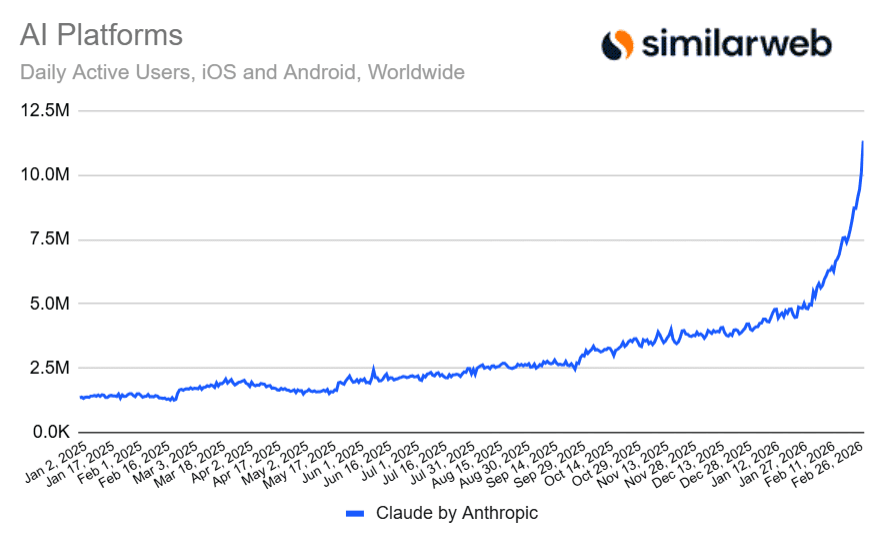
While much of the public attention in the AI race has focused on consumer-facing products like ChatGPT, Anthropic has been quietly building a financial powerhouse through a different path. According to recent analysis, approximately 75% of Anthropic's revenue comes from their API and business tools, revealing a strategic focus that has delivered remarkable financial results largely unnoticed by the general public.
The Numbers Behind the Growth
The scale of Anthropic's expansion is staggering. Their Claude Code product alone demonstrates this trajectory, growing from a $500 million annual run rate in September 2025 to $2.5 billion by February 2026—a fivefold increase in just five months. This explosive growth in enterprise-facing products has created a financial profile that differs dramatically from consumer-focused AI companies.
What makes this particularly noteworthy is the user economics. Anthropic has far fewer regular users than ChatGPT, yet generates 80 to 100 times more revenue per user. This disparity highlights the fundamental difference between consumer subscriptions (typically $20 monthly plans) and enterprise development platforms where developers and corporations pay significantly more to build applications on top of Claude's infrastructure.
The Enterprise-First Advantage
Anthropic's strategy represents a deliberate choice to prioritize business and developer tools over mass consumer adoption. While this approach may limit brand recognition among everyday users, it creates several strategic advantages:
- Higher revenue per user: Enterprise customers have larger budgets and more complex needs
- Sticky integrations: Once businesses build applications on an AI platform, switching costs become substantial
- Predictable revenue streams: Enterprise contracts often involve longer-term commitments than consumer subscriptions
This focus on the developer ecosystem and corporate partnerships has allowed Anthropic to achieve financial scale without needing to win the consumer popularity contest that dominates media coverage of the AI industry.
The Compute Conundrum: High-Stakes Betting on Future Growth
Despite this impressive growth, Anthropic faces what industry observers call the "cone of uncertainty" for AI investments. As explained by Dario Amodei earlier, the company must navigate a critical challenge: chips and data centers take approximately two years to build, yet decisions about future computing capacity must be made—and paid for—today.
This creates a precarious balancing act where investing in massive computing power represents a huge gamble. Missing growth targets by even half could lead to financial collapse, as the fixed costs of compute infrastructure remain regardless of whether the anticipated demand materializes.
The Timing Imperative in AI Development
Success in the AI industry depends heavily on perfect timing, according to industry analysis. A single year of slower-than-expected growth can sink a firm that was otherwise on track for massive valuation. This timing challenge is particularly acute for companies like Anthropic that must:
- Predict enterprise adoption rates years in advance
- Secure and deploy computing resources before demand peaks
- Balance infrastructure investment against revenue projections
- Navigate the rapidly evolving competitive landscape
The pressure to accurately forecast growth creates what might be called the "AI infrastructure paradox": underinvest in compute, and you miss the opportunity; overinvest, and you risk financial ruin if adoption doesn't match expectations.
Implications for the AI Industry
Anthropic's financial trajectory reveals several important trends in the AI sector:
1. Multiple Paths to Success: The AI market is large enough to support different business models—consumer-focused versus enterprise-first approaches can both achieve financial success.
2. Hidden Growth Engines: Significant value creation can occur outside of public visibility, particularly in B2B and developer ecosystems.
3. Infrastructure as Competitive Moats: Computing capacity isn't just an operational requirement—it's becoming a strategic asset that can create barriers to entry for competitors.
4. The Capital Intensity of AI: The sector requires unprecedented levels of investment in physical infrastructure, creating winner-take-most dynamics where only well-funded players can compete at scale.
Looking Ahead: Sustainability and Scale
As Anthropic continues its growth trajectory, key questions emerge about the sustainability of this model. Can the enterprise API market continue to expand at its current pace? How will competition from both established tech giants and emerging AI specialists affect pricing and market share? And perhaps most critically, can Anthropic's infrastructure investments keep pace with demand without overextending financially?
The company's success to date suggests that focusing on developers and businesses—rather than chasing consumer attention—can create substantial financial value in the AI space. However, the massive bets required on future computing capacity mean that Anthropic's story is far from complete, and the next few years will test whether their timing and growth projections align with reality.
Source: Analysis based on data from @rohanpaul_ai/X (formerly Twitter)