Commerce | March 30, 2026
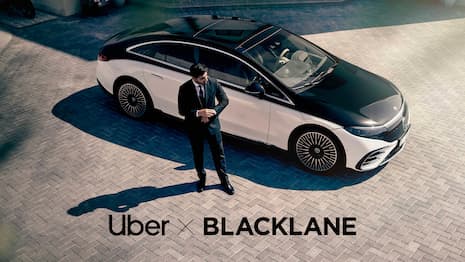
Ridesharing giant Uber is making a decisive move to capture more of the luxury travel market with the acquisition of Blacklane, a premium chauffeur booking service. Launched in Berlin in 2011, Blacklane has grown into a global operator, now present in more than 500 cities across over 60 countries. The deal signals Uber's intensified focus on the high-margin, executive travel business segment.
The Acquisition — Uber's Strategic Push into Premium Mobility
While the financial terms of the acquisition were not disclosed in the source material, the strategic intent is clear. Uber is leveraging Blacklane's established brand, operational network, and clientele in the luxury ground transportation sector. Blacklane's model, which focuses on pre-booked, professional chauffeur services, complements Uber's core on-demand ridesharing and its existing Uber Black premium service.
This acquisition provides Uber with an immediate and significant expansion of its luxury service footprint. Blacklane's presence in 60+ countries, including key markets in Europe, Asia, and the Middle East, offers Uber a ready-made infrastructure for high-end travel without the need for a market-by-market build-out.
Why This Matters for Retail & Luxury — Beyond the Ride
For luxury brands and retailers, premium transportation is not merely a logistics function; it is a critical touchpoint in the customer journey. The integration of a service like Blacklane into a broader ecosystem like Uber's presents several implications:
Seamless End-to-End Luxury Experiences: Imagine a scenario where a high-net-worth individual (HNWI) books a first-class flight, a luxury hotel, and a personal shopping appointment at a flagship store through a single concierge app or travel platform. A deeply integrated, reliable luxury car service is the essential connective tissue for such an experience. Uber's move strengthens its position as a potential partner for luxury hospitality and retail brands looking to offer bundled, white-glove services.
Data Convergence for Hyper-Personalization: The merger of Uber's vast, data-rich mobility platform with Blacklane's specialized luxury client data could create powerful insights. For retail, understanding the movement patterns, airport arrivals, and hotel destinations of luxury travelers enables hyper-targeted marketing and inventory planning. A brand could, in theory, partner to offer exclusive collection previews to clients whose travel data indicates they are in the city for a specific event.
Competitive Pressure on Traditional Concierge Services: Luxury department stores, hotels, and credit card companies often provide chauffeur services as a perk. The scaling of a tech-driven platform like Uber/Blacklane could pressure these traditional models on both cost and reliability, potentially turning luxury mobility into a commoditized utility that brands outsource rather than manage in-house.
Business Impact — Quantifying the Luxury Mobility Market
The source does not provide specific financial metrics for the deal. However, the business impact can be assessed directionally. Uber gains:
- Market Share: Instant leadership in the booked luxury chauffeur segment across dozens of new markets.
- Brand Elevation: Association with a pure-play luxury brand (Blacklane) to bolster the perception of its own premium tiers.
- Revenue Diversification: Access to a clientele less sensitive to economic cycles and more likely to use high-margin, pre-scheduled services.
For the luxury ecosystem, the consolidation suggests a maturation of the "luxury-as-a-service" model, where seamless, digital-first access to premium experiences is becoming table stakes.
Implementation & Integration Challenges
The technical and operational integration will be complex. Key challenges include:
- Platform Unification: Merging Blacklane's booking systems and driver networks with Uber's app and backend infrastructure without degrading the luxury service level.
- Brand Strategy: Determining whether to keep Blacklane as a standalone brand (like Uber's strategy with Drizly in the past) or fully absorb it into "Uber Lux."
- Data Privacy & Exclusivity: Luxury clients expect discretion. The integration must navigate data privacy concerns, ensuring that the detailed travel patterns of HNWIs are not blended into broader Uber analytics without explicit, high-touch consent.
Governance & Risk Assessment
- Maturity Level: High. This is a consolidation of two established, operational businesses, not an experimental technology. The execution risk is in integration, not concept validation.
- Brand Dilution Risk: The primary risk for Uber is mismanaging the Blacklane brand and alienating its core luxury clientele who may perceive Uber as too "mass market."
- Regulatory Scrutiny: Large acquisitions in the mobility sector often attract regulatory attention, though the luxury niche may mitigate some antitrust concerns.
gentic.news Analysis: A Move in the Broader Platform Wars
This acquisition is a clear move in the battle for control over the high-end consumer's digital lifestyle platform. While not a pure AI play, it has significant data implications for AI-driven personalization models that luxury retail is increasingly adopting.
Connecting the Dots with KG Intelligence:
This corporate move occurs against a backdrop of intense competition and investment in the underlying AI infrastructure that powers sophisticated customer platforms. Notably, Google—a key player in cloud services and AI models that could power the recommendation engines for such integrated travel/retail experiences—has been exceptionally active. 📈 Google appeared in 37 articles this week, highlighting its aggressive push. Just days before this acquisition news, Google launched an Agentic Sizing Protocol for retail (March 26), a tool designed to optimize AI agent performance for commerce. Furthermore, Google's massive investments, like its $2B Anthropic investment & data center deal (March 29) and the development of models like Gemini 3.1 Flash Live for real-time agents (March 27), show the industry is building the AI backbone for complex, multi-service platforms.
Uber's acquisition of Blacklane can be seen as assembling the "physical layer" of a luxury experience network. The value of this network will be exponentially increased by integrating it with the "intelligence layer"—AI agents that can orchestrate travel, shopping, and entertainment seamlessly. The competition isn't just Uber vs. Lyft; it's about which ecosystem—be it powered by Google's Cloud Vertex AI, Anthropic's models, or others—can most effectively unify and personalize high-end commerce and mobility.
For luxury retail AI leaders, the lesson is to watch these platform consolidations closely. The data generated by unified luxury mobility services will become a coveted input for training the next generation of hyper-personalized retail recommendation and inventory forecasting agents. The race to own the luxury customer journey is expanding from the store and screen to the curb and the car.