What's New — Faithful summary of the source
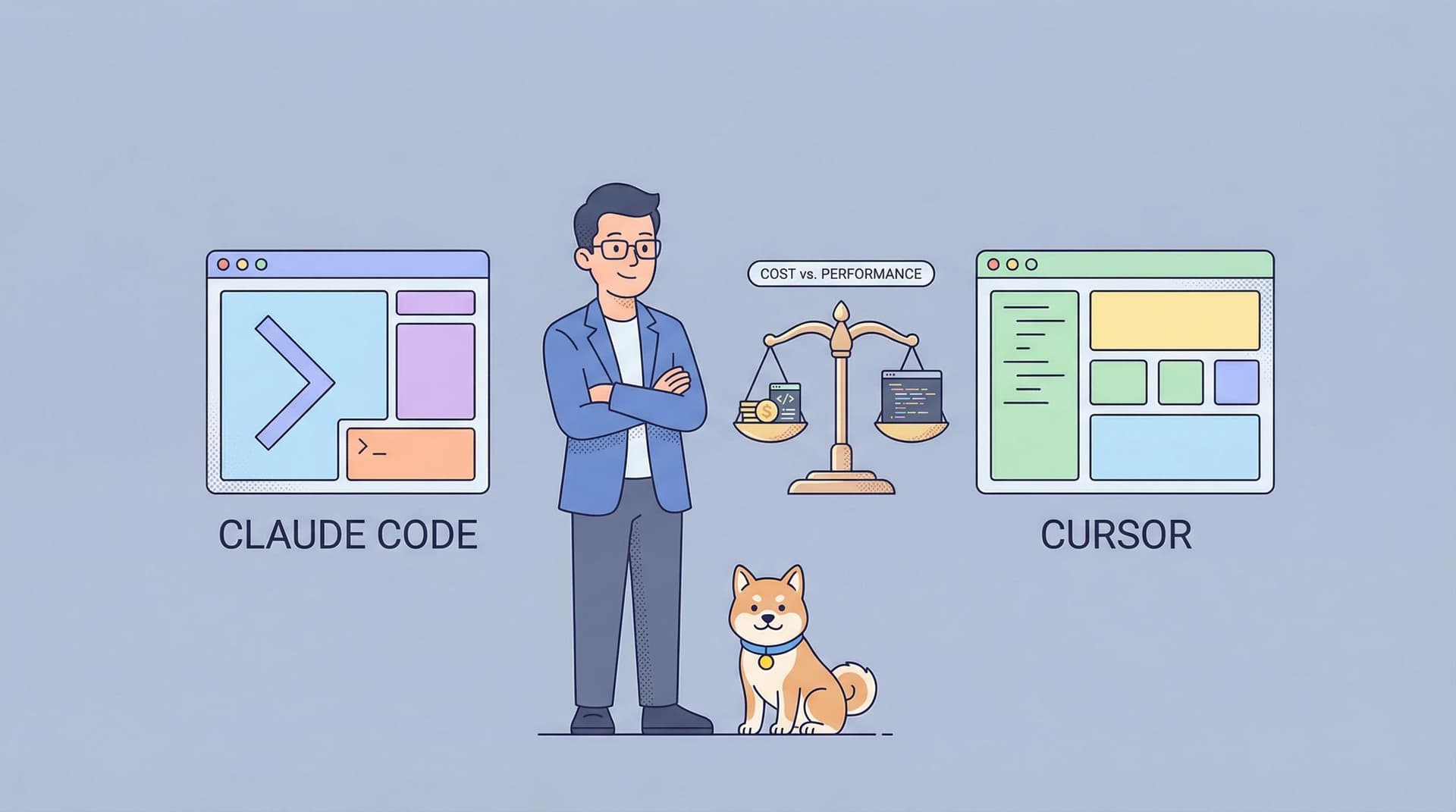
On the "20VC" podcast, Miles Clements, a partner at venture capital firm Accel, pushed back against the narrative of an impending "bloodbath" in the AI-assisted coding tool market. His core argument: the market is expanding rapidly enough that multiple major players—specifically Anthropic's Claude Code and Cursor—can thrive simultaneously without one cannibalizing the other.
This commentary comes amid public debate on platforms like X, where some developers have declared they are "ditching Cursor" for Claude Code following the release of Anthropic's powerful Opus 4.6 model. Clements, whose firm co-led Cursor's $2.3 billion Series D round in November 2025, acknowledges Claude Code as an "amazing product" but sees two primary growth drivers insulating the market:
- New User Cohorts: Tools are enabling people who "would not have been software developers a year ago" to enter the field, constantly adding fresh demand.
- Increased Consumption: Existing users are doing more with the tools, deepening their reliance and usage over time.
How It Works — Technical details, API changes, workflow impact
This isn't about a specific API version or feature drop; it's about the underlying economic and adoption dynamics that shape how these tools evolve and compete. For developers, the practical implication is that competition will remain fierce, but the battlefield is the entire potential market of code creation, not just stealing each other's current power users.
From a technical strategy perspective, this suggests we'll see:
- Continued rapid iteration: Both Anthropic and Cursor will push frequent, significant updates (like Opus 4.6) to capture new users and increase engagement from existing ones.
- Focus on onboarding and accessibility: Lowering the barrier to entry for "new cohort" developers will be a priority, potentially through better documentation, starter templates, and simplified interfaces.
- Depth over breadth in workflows: To increase "consumption per customer," tools will aim to become indispensable within specific, deep workflows—whether that's full-stack app generation, complex refactoring, or legacy system modernization.
Practical Takeaways — What developers should do differently
- Stop treating it as a binary choice. The VC perspective suggests the ecosystem will support multiple top-tier tools. It's rational to evaluate and potentially use both Claude Code and Cursor for different tasks. Claude Code might excel at complex reasoning and greenfield design, while Cursor's deep IDE integration might be better for daily refactoring and navigation.
- Factor tool evolution into your long-term bets. The market's growth means the tools you use today will be radically different in 12-18 months. Avoid over-optimizing your workflow or infrastructure for one tool's current limitations. Build adaptable patterns.
- Contribute to the "consumption" metric. The more you push these tools—using them for larger refactors, more complex system designs, or testing their limits—the more you directly influence the product roadmap. Your usage patterns are the training data for the next generation of features.
Broader Context — How this fits into the AI coding tools landscape
Clements' view contrasts with other VC opinions, such as an Insight Partners cofounder's claim that "Cursor is falling behind." This highlights a strategic divide: is the market a winner-take-most platform war (like operating systems or social networks) or an expanding pie where specialization and execution can support several giants (like cloud providers or design tools)?
The evidence leans toward expansion. The total addressable market for "writing code" is growing as AI lowers the skill floor. Furthermore, developer workflows are not monolithic. A tool optimized for exploratory data science (like a Jupyter AI assistant) differs from one built for enterprise Java refactoring, which differs from a tool for rapid web prototyping. There's room for variance in model philosophy (Claude's constitutional AI vs. others), integration depth (full IDE vs. chat interface), and target user (novice vs. expert).
The wildcard is platform consolidation. Google's recent moves—removing Gemini API rate limits and launching new embedding models—signal its intent to be the foundational infrastructure layer. If the future is a handful of core model providers (Anthropic, Google, OpenAI) with many specialized tools (Cursor, others) built atop them, then the competition shifts from "which tool" to "which stack." For now, Clements' analysis suggests developers are the beneficiaries of this expansion, with more capital and innovation chasing their productivity.