What Happened

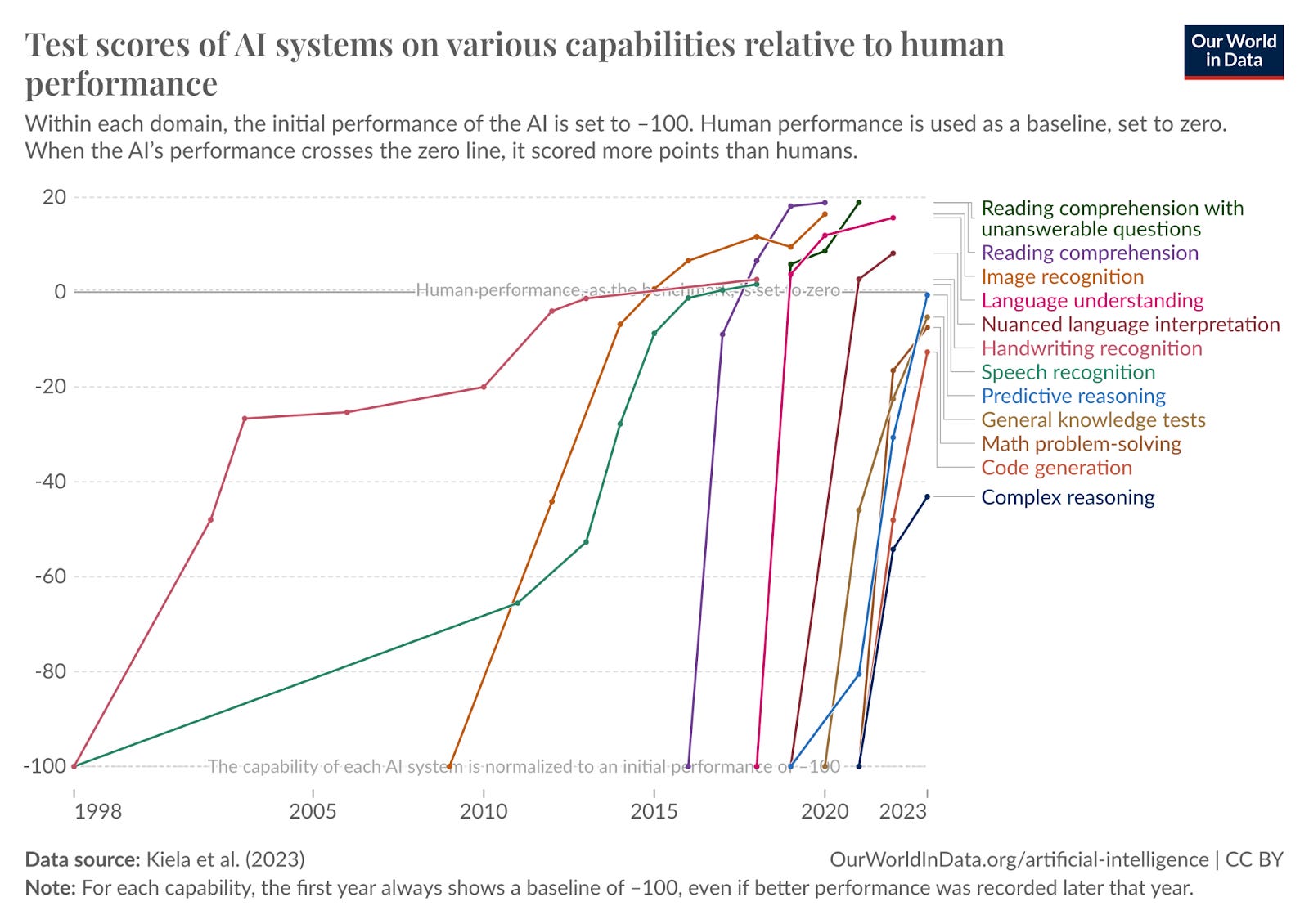
A new opinion piece from Level Up Coding tackles a persistent problem in applied AI: the gap between benchmark performance and production reliability. The author poses a deceptively simple question—"If a model scores well on a benchmark, is it ready for production?"—and answers with a firm no.
Benchmarks have long been the gold standard for comparing models. Leaders in retail, from LVMH to Farfetch, often cite benchmark scores when selecting recommendation engines or vision models. Yet the article argues that relying on static benchmarks can lead to costly failures when models encounter real-world data shifts, latency constraints, and unpredictable user behavior.
Technical Details
The article identifies several reasons why benchmarks fall short:
- Distribution shift: Benchmarks are static; production data evolves. A model that excels on ImageNet may fail when store lighting changes or new product categories emerge.
- Latency and throughput: Benchmarks rarely measure inference speed under load. A luxury e-commerce site with high traffic during a drop can crash if the model is too slow.
- Data quality drift: Benchmarks assume clean, curated inputs. Production data often has missing values, outliers, or adversarial noise.
- Monitoring gaps: Without continuous monitoring, a model can degrade silently until revenue is impacted.
The article advocates for a holistic MLOps approach: version control for models (echoing Git workflows), feature stores (as covered in our recent article on Redis Feature Form), and drift detection systems.
Retail & Luxury Implications
For luxury and retail AI leaders, this is a crucial wake-up call. Consider a personalization model used by a brand like Gucci: it may score 0.98 AUC on a benchmark but cause a 10% drop in conversion if it fails to adapt to seasonal trends or new customer segments. The real cost isn't just lost sales—it's brand erosion when recommendations feel irrelevant.
Retail-specific scenarios where benchmarks mislead:
- Visual search: Benchmarks test on curated product images; production images vary wildly in lighting, angle, and background.
- Demand forecasting: A model that performs well on historical data may struggle during supply chain disruptions or viral trends.
- Dynamic pricing: Benchmark success doesn't account for competitor moves or economic shifts.
The article's message aligns directly with our previous coverage on drift detection ("Catching Drift Before It Catches You") and the evolution toward AgentOps ("From MLOps to AgentOps: A Vision for AI Production in 2026"). Retailers must invest in robust MLOps pipelines, not just model accuracy.
Business Impact
While the article doesn't provide specific metrics, the cost of production AI failures in retail is well-documented. A single model failure during a flash sale can lose millions. Downtime from an unmonitored recommendation model cost one major retailer an estimated $2M in one hour.
Implementation Approach
To move beyond benchmark scores, retail AI teams should:
- Adopt version control for models (using Git-based workflows as streamlined by Git worktrees discussed in our related article).
- Implement continuous monitoring for drift in data and model performance.
- Use feature stores (like Redis Feature Form) to manage data quality and reproducibility.
- Run shadow deployments before full rollout to compare production vs. benchmark behavior.
- Create feedback loops from business metrics (conversion, AOV) to model retraining triggers.
Governance & Risk Assessment
Benchmark-only evaluation introduces significant risk: regulatory issues (e.g., biased recommendations), brand damage, and financial loss. Maturity level: low for most retailers (still relying on offline metrics). The article underscores the need for a governance framework that ties model performance to business outcomes.
gentic.news Analysis
This article reinforces a growing consensus in the AI industry: benchmarks are necessary but not sufficient. The MLOps trend (appearing in 7 of our articles, including 3 this week) signals that practitioners are finally prioritizing production reliability over academic leaderboards.
The reference to Git workflows is apt—just as version control transformed software engineering, the same discipline is needed for AI. Our prior article "How Git Worktrees Fix Multi-Instance Claude Code Chaos" shows how these tools are being adapted for AI teams. Similarly, the push for feature stores (as seen in our Redis coverage) addresses the data management side of the problem.
For retail and luxury, the takeaway is clear: invest in MLOps infrastructure now, or pay the cost later. The next generation of AI-powered retail experiences depends on models that work not just on paper, but in the unpredictable real world.