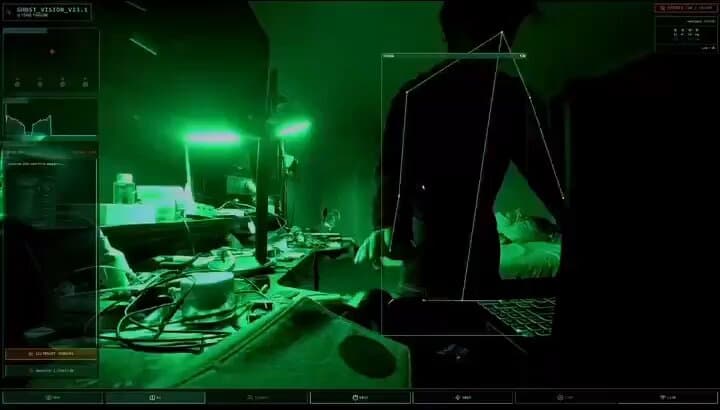
A remarkable open-source project gaining rapid attention on GitHub is demonstrating how ordinary WiFi signals can be repurposed to track human movement through solid barriers like walls. Named WiFi-DensePose, this technology has already garnered over 32,000 stars on the platform, signaling significant interest from both the developer community and privacy advocates.
How WiFi-DensePose Works
The core innovation of WiFi-DensePose lies in its ability to interpret how WiFi signals interact with the human body as they pass through physical spaces. Unlike traditional motion detection systems that rely on cameras, infrared sensors, or specialized equipment, this approach utilizes the radio frequency signals already being broadcast by standard home routers.
When WiFi signals encounter moving human bodies, they scatter and reflect in predictable patterns that can be analyzed to reconstruct movement. The system employs advanced machine learning algorithms to interpret these signal perturbations, effectively "seeing" through walls and other obstacles that would block visual surveillance methods.
The Technical Breakthrough
What makes WiFi-DensePose particularly noteworthy is its adaptation of computer vision techniques to the radio frequency domain. The project builds upon previous research in WiFi sensing but advances the field significantly by achieving pose estimation—the ability to detect specific body positions and movements rather than just presence detection.
This represents a substantial leap from earlier WiFi-based motion detection systems that could only determine whether someone was present in a room. WiFi-DensePose can theoretically identify specific activities, gestures, and body configurations, all while requiring no additional hardware beyond what most households already possess.
Privacy Implications and Concerns
The emergence of this technology raises immediate questions about privacy in an increasingly connected world. While the developers have made the project 100% open source—allowing transparency and community scrutiny—the underlying capability could potentially be exploited for surveillance purposes.
On one hand, the technology offers promising applications for elderly care (monitoring falls without intrusive cameras), home security (detecting intruders through walls), and smart home automation (adjusting environments based on occupant activity). On the other hand, the same capability could enable unprecedented forms of surveillance that bypass traditional privacy protections.
Unlike camera-based systems that are visibly obvious and subject to legal restrictions in private spaces, WiFi-based tracking operates invisibly and could potentially be deployed without consent or awareness. This creates a new category of privacy concern that existing regulations may not adequately address.
Accessibility and Democratization
By being open source and requiring only standard WiFi equipment, WiFi-DensePose dramatically lowers the barrier to entry for motion sensing technology. This democratization could spur innovation across multiple sectors while simultaneously making sophisticated tracking capabilities available to anyone with basic technical knowledge.
The project's popularity on GitHub suggests strong interest from researchers, developers, and hobbyists who may explore applications ranging from healthcare monitoring to interactive gaming systems that respond to player movements detected through walls.
Future Development and Ethical Considerations
As WiFi-DensePose continues to evolve, several critical questions emerge:
- Consent mechanisms: How can systems ensure users are aware of and consent to this form of monitoring?
- Security safeguards: What prevents malicious actors from exploiting this capability for unauthorized surveillance?
- Regulatory frameworks: How should governments address this new surveillance capability that operates outside traditional privacy paradigms?
The open-source nature of the project provides some protection through transparency, but also means the technology could be adapted for purposes its original developers never intended.
The Broader Context
WiFi-DensePose arrives at a time when ambient sensing technologies are rapidly advancing. From radar-based presence detection in smartphones to ultrasonic room mapping, our environments are becoming increasingly aware of human activity. This project represents perhaps the most accessible implementation yet of what researchers call "RF sensing"—using radio waves to perceive the physical world.
The technology builds upon academic research that has demonstrated WiFi's potential for activity recognition for nearly a decade, but packages these capabilities in an accessible, implementable form that moves from laboratory settings to real-world applications.
Conclusion
WiFi-DensePose represents both a remarkable technical achievement and a significant privacy milestone. By transforming ordinary WiFi signals into motion tracking systems capable of seeing through walls, it opens new possibilities for assistive technology, security, and human-computer interaction while simultaneously creating new challenges for privacy protection.
As with many dual-use technologies, the impact of WiFi-DensePose will depend largely on how society chooses to develop, regulate, and deploy it. The project's open-source nature offers hope for transparent development and democratic oversight, but also underscores the need for ongoing ethical discussion about the boundaries of ambient sensing in our daily lives.
Source: Based on reporting from @rohanpaul_ai on X/Twitter about the WiFi-DensePose GitHub repository.