A new AI-powered platform called Y2 is launching with an ambitious goal: to replicate the core functions of the $27,000-per-year Bloomberg Terminal for a subscription fee of $20 per month. The platform, described as a "real-time AI intelligence platform," aggregates data from over 200 live sources and processes it through more than 40 different AI models to generate verified, real-time reports.
The announcement, made via social media, positions Y2 as a "personal Situation Room," aiming to democratize access to the kind of high-speed, synthesized intelligence typically reserved for hedge funds, institutional investors, and geopolitical analysts.
What Y2 Actually Does
According to the announcement, Y2's primary function is to monitor a vast array of live data sources—presumably including financial markets, news wires, regulatory filings, and possibly alternative data streams—and use a suite of AI models to analyze, verify, and summarize the information in real time. The core promise is delivering actionable intelligence with the speed and depth required for professional decision-making, but at a consumer-grade price point.
The platform's architecture suggests a heavy reliance on retrieval-augmented generation (RAG) and multi-agent AI systems. One model might scan for news breaks, another could cross-reference data points for verification, while others might generate summaries, sentiment analysis, or flag potential market-moving events.
The Bloomberg Terminal Context
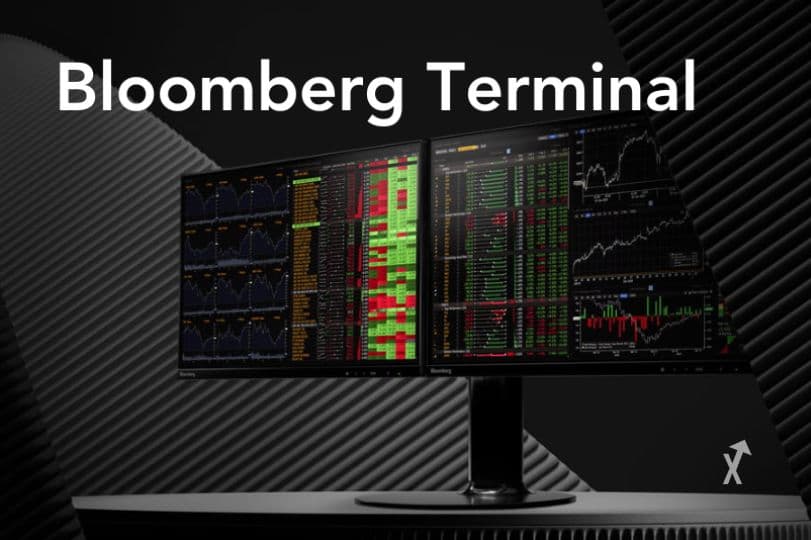
The Bloomberg Terminal, a mainstay of the global financial industry for decades, is far more than a data feed. It is an integrated ecosystem combining real-time market data, news, analytics, communication tools (Bloomberg Messaging), and trading execution. Its $27,000 annual cost per user is justified by its unparalleled depth, reliability, and the network effect of its professional user base.
Y2's claim to do "the same job" is almost certainly focused on the intelligence and news aggregation aspect of the Terminal's offering, not its full suite of transactional and communication tools. The challenge for any newcomer is not just aggregating data, but achieving the latency, accuracy, and institutional trust that Bloomberg has built over 40 years.
Technical & Market Implications
Y2's model represents the latest front in the "AI-native" disruption of established SaaS industries. If successful, it could signal a shift in how professional intelligence tools are priced and distributed. The use of 40+ AI models points to a highly modular, task-specific approach, where different models are orchestrated to handle verification, summarization, trend-spotting, and data fusion.
Key questions remain unanswered in the initial announcement:
- Data Sources: What are the "200+ live sources," and what are the licensing agreements?
- Latency: What is the actual delay from event occurrence to report generation?
- Verification Process: How does the AI achieve "verified real-time reports"? What is the error rate?
- API & Integration: Does Y2 offer API access for integrating its intelligence into other trading or research systems?
gentic.news Analysis
This launch is a direct shot across the bow of not just Bloomberg LP but the entire high-cost financial data oligopoly, which includes Refinitiv (now part of the London Stock Exchange Group) and S&P Global Market Intelligence. The attempt to use modern AI stacks to unbundle and commoditize a segment of their offering follows a familiar tech disruption playbook.
It aligns with a broader trend we've covered extensively: the rise of agentic AI systems tasked with real-time information synthesis. For instance, our analysis of Multi-Agent Debate systems showed how multiple AI models arguing over data can improve verification—a technique Y2 likely employs. Furthermore, this follows increased venture activity in AI for financial intelligence, such as the funding rounds for companies like AlphaSense and Sentieo, which also use AI to parse financial documents, though at a higher price point than Y2's proposed model.
The critical hurdle for Y2 will be institutional adoption. Bloomberg's terminal is a standard partly because everyone else uses it; its chat function alone creates a powerful network lock-in. Y2 would need to demonstrate not just cost savings but superior, reliable intelligence to break that cycle. Its success may initially be in adjacent markets—geopolitical analysis, competitive intelligence for corporations, or serving smaller hedge funds and active retail traders—before ever challenging Bloomberg's core institutional base.
Frequently Asked Questions
How can Y2 be so much cheaper than a Bloomberg Terminal?
Y2 is almost certainly a more focused product. It appears to target the news aggregation, data synthesis, and intelligence reporting functions of a Terminal, while omitting the direct trading capabilities, extensive historical databases, proprietary analytics suites, and the embedded communication network (Bloomberg Messaging) that are central to the Terminal's value and cost.
What are the "40+ AI models" used for?
In a platform like this, different AI models would be specialized for different tasks. For example, some models would be for real-time text summarization of news articles, others for sentiment analysis on social media or news, some for extracting key data points (like earnings figures) from SEC filings, others for cross-referencing reports to verify facts, and yet others for detecting anomalies or emerging trends across the data streams.
Is Y2 a direct replacement for a Bloomberg Terminal for a professional trader?
Almost certainly not for most institutional professional traders in the near term. The Bloomberg Terminal is deeply integrated into trading workflows, includes direct execution capabilities, and has a decades-long reputation for reliability. Y2 could serve as a supplementary intelligence tool or potentially as a primary tool for roles focused more on research and analysis rather than live trading execution.
What is the biggest risk for a user relying on Y2?
The primary risks are latency and hallucination. In financial markets, milliseconds matter, and any delay in processing could make intelligence stale. Furthermore, even "verified" AI systems can make errors or confabulate information, especially when processing breaking news from unstructured sources. A critical mistake in a financial report could lead to significant losses.