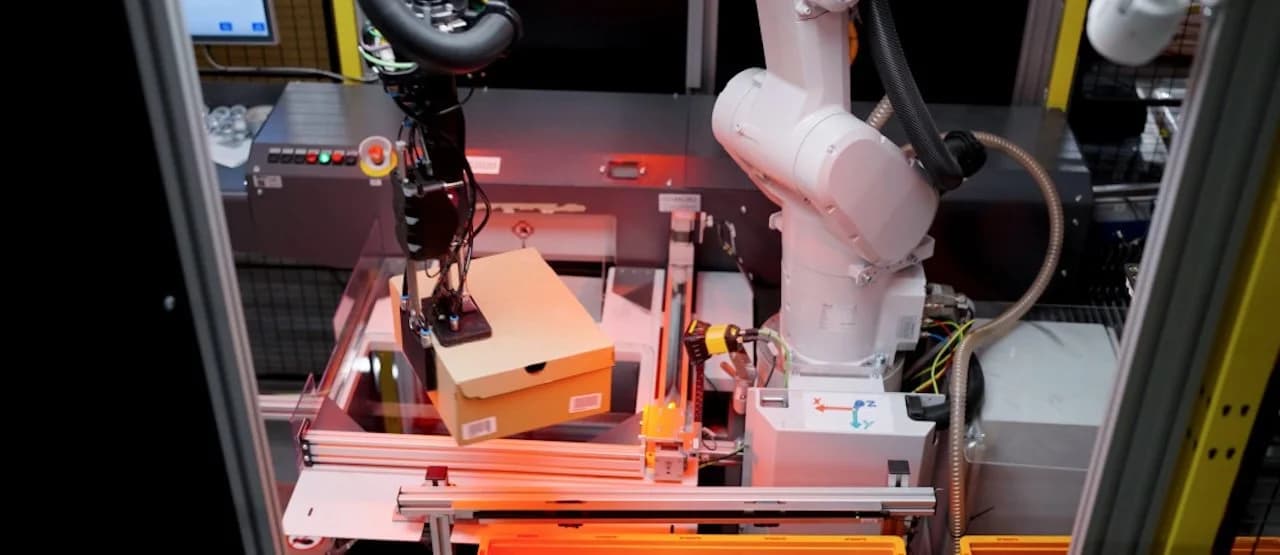
The Innovation — AI-Powered Robotic Picking at Scale
European fashion and lifestyle e-commerce giant Zalando has announced a significant expansion of its warehouse automation capabilities. The company plans to install up to 50 AI-powered robotic picking systems from Nomagic across its European fulfillment network. This deployment represents one of the largest-scale implementations of AI-driven item-picking robots in the fashion retail logistics sector.
Nomagic's robots are designed to handle the "pick-and-place" process in warehouses—one of the most labor-intensive and complex steps in fulfillment. Unlike fixed automation systems, these robots use advanced computer vision and machine learning to identify, grasp, and place individual items from bins or conveyors into shipping containers or sortation systems. They are built to manage the high variability inherent in fashion retail, where items differ widely in size, shape, material (from delicate silk to rigid shoes), and packaging.
Why This Matters for Retail & Luxury Logistics
For a retailer of Zalando's scale—carrying thousands of brands and millions of SKUs—manual picking is a major bottleneck. Human pickers must navigate vast warehouses, locate correct items, and handle them appropriately to avoid damage, all while maintaining speed and accuracy. Seasonal peaks and sales events put immense pressure on these operations.
AI-powered robots like Nomagic's address several critical challenges:
- Scalability and Labor Constraints: They provide a predictable, scalable workforce that can operate 24/7, mitigating reliance on seasonal labor and reducing strain during peak periods like Black Friday or holiday seasons.
- Handling Complexity: Fashion items are notoriously difficult for robots. A system that can reliably pick a flimsy t-shirt, a pair of jeans, a fragile jewelry box, or an irregularly shaped handbag demonstrates a significant advancement in robotic dexterity and perception.
- Accuracy and Damage Reduction: Mis-picks and damaged goods are costly. AI vision systems can verify items with high accuracy, potentially reducing errors and returns due to wrong items shipped.
- Operational Data Generation: Each pick generates data on item handling, time, and success rates. This data can feed back into warehouse design, inventory placement, and packaging optimization.
Business Impact: Efficiency, Speed, and Flexibility
While the source material does not provide specific quantified ROI metrics, the strategic investment in up to 50 units signals Zalando's confidence in the technology's business case. The expected impacts are multi-faceted:
- Throughput Increase: Robots can work continuously, potentially increasing the number of orders processed per hour, especially during off-hours when human staffing is lower.
- Reduced Operational Cost: Although the capital expenditure is high, the long-term total cost of ownership may be favorable compared to manual labor, considering recruitment, training, turnover, and wage inflation.
- Improved Service Levels: Faster and more accurate picking directly translates to shorter order processing times, contributing to next-day or same-day delivery promises—a key competitive battleground in e-commerce.
- Space Optimization: Robotic systems can be integrated into dense storage configurations, potentially improving storage density and reducing the warehouse footprint required per item.
For luxury logistics, where handling precision and care are paramount, the underlying technology is particularly relevant. While luxury brands may have lower volumes, the need for flawless, damage-free handling is even higher. The AI's ability to recognize delicate materials and adjust grip strength accordingly is a foundational capability that could later be tailored for high-value goods.
Implementation Approach & Technical Requirements
Deploying 50 robots across multiple fulfillment centers is a complex integration project, not just a procurement exercise. Zalando's approach likely involves:
- Phased Rollout: Starting with pilot installations in specific centers or zones to validate performance, then scaling to full deployment.
- Systems Integration: Connecting the robots to the Warehouse Management System (WMS) and Warehouse Control System (WCS) is critical. The robots must receive real-time picking instructions and confirm task completion.
- Environment Adaptation: Each fulfillment center has a unique layout. The system must be adapted to local conveyor heights, bin sizes, and workflow patterns.
- Staff Training & Change Management: This is a transformation of the workplace. Staff roles will evolve from manual pickers to robot supervisors, technicians, and exception handlers. Successful implementation requires significant upfront training and change management.
Technically, the Nomagic system relies on a stack of technologies:
- Advanced Computer Vision: To identify and locate items in cluttered bins, often under variable lighting.
- Reinforcement Learning & Simulation: Robots are trained in digital simulations on thousands of virtual items before encountering real-world objects, allowing them to generalize to new, unseen items.
- Adaptive Gripper Technology: Mechanical grippers or suction systems that can adjust to different materials and weights.
- Edge Computing: Processing vision and control algorithms locally on the robot or a nearby server to ensure low latency and real-time responsiveness.
Governance & Risk Assessment
Maturity & Reliability: While the scale of this deployment suggests the technology is moving past the pure R&D phase, it remains an advanced application. The key risk is achieving consistent reliability ("pick success rate") across the enormous and ever-changing SKU assortment of a fashion retailer. Downtime or a drop in accuracy during peak season could be disastrous.
Workforce Transformation: The social and ethical implications of automation are significant. A transparent strategy for reskilling and transitioning affected warehouse staff is essential for corporate responsibility and maintaining operational morale.
Data Security & Privacy: The robots' vision systems process images of products, potentially including customer-returned items. Governance must ensure this visual data is not stored or used beyond its immediate operational purpose to avoid privacy concerns.
Vendor Lock-in: A large-scale deployment with a single robotics vendor creates dependency. Zalando must ensure it retains control over its operational data and workflow logic, and that the system adheres to open integration standards where possible.
This deployment positions Zalando at the forefront of practical AI and robotics in retail logistics. Its success or failure will be closely watched by the entire industry as a bellwether for the viability of flexible robotic automation in complex, variable-goods environments.