Key Takeaways
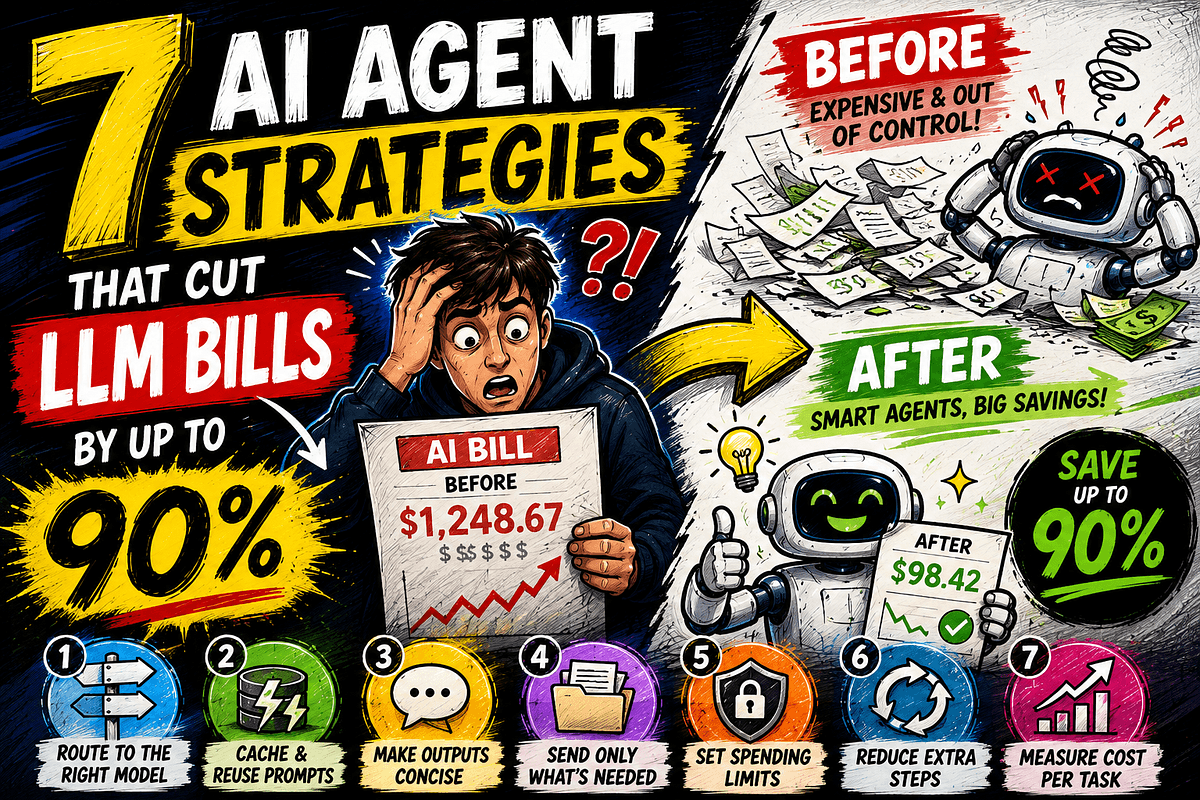
- The source outlines seven cost optimization strategies for AI agents, including prompt compression and model routing, that can reduce LLM bills by up to 90%.
- This matters for retail and luxury brands deploying AI at scale where inference costs can become prohibitive.
What Happened
A new article on Towards AI outlines seven cost optimization strategies for AI agents that can reduce LLM bills by up to 90%. The strategies address the growing challenge of inference costs as AI agents are deployed in production, particularly for enterprises scaling their AI operations.
The Seven Strategies
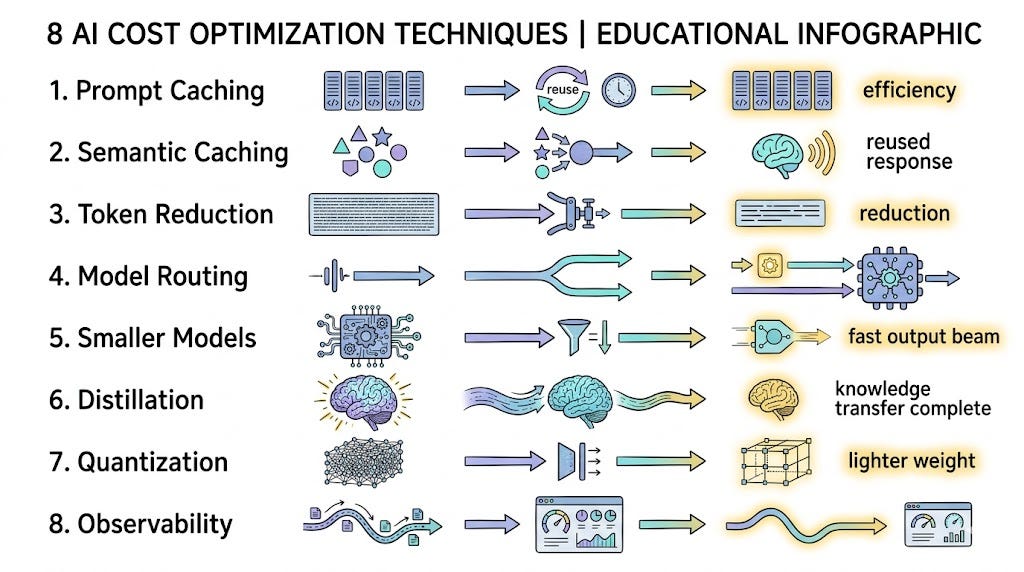
Prompt Compression: Reduce token usage by up to 90% without significant accuracy loss by removing redundant or irrelevant parts of prompts.
Caching: Store frequently used responses to avoid redundant API calls. This works well for common queries or static knowledge.
Model Routing: Use a classifier to send simple queries to cheaper, smaller models (e.g., GPT-3.5) and complex ones to more expensive models (e.g., GPT-4).
Batch Processing: Combine multiple requests into single API calls, which often have lower per-token costs.
Speculative Decoding: Use a draft model to generate tokens quickly, then have the larger model verify them, reducing latency and cost.
Fine-Tuning Smaller Models: Train smaller models on domain-specific data to match the performance of larger models for specific tasks.
Using Cheaper Providers: Switch to lower-cost LLM providers (e.g., open-source models via self-hosting or APIs from Anthropic, Cohere, or others) for non-critical tasks.
Technical Details
The article emphasizes that these strategies are not mutually exclusive and can be combined for maximum savings. For example, an agent could use prompt compression on user queries, route them to appropriate models, and cache results for repeated questions. The key is to profile the agent's usage patterns and apply the most relevant strategies.
Retail & Luxury Implications
For retail and luxury brands deploying AI agents for customer service, personalized recommendations, or inventory management, inference costs can quickly become a significant line item. These strategies are directly applicable:
- Customer Service Bots: Caching can handle frequently asked questions about return policies or shipping times, while model routing can escalate complex inquiries to more capable models.
- Personalized Recommendations: Fine-tuning smaller models on customer purchase history can reduce reliance on expensive general-purpose models.
- Inventory Management: Batch processing can combine multiple inventory queries into single API calls.
However, the article does not provide specific retail case studies or quantified savings for retail scenarios. The 90% figure is a general claim that may vary depending on implementation and use case.
Implementation Approach
Implementing these strategies requires:
- Usage Profiling: Analyze token consumption and response patterns to identify cost drivers.
- Model Selection: Choose appropriate models for different tasks based on complexity.
- Caching Infrastructure: Set up a caching layer (e.g., Redis) for storing responses.
- Prompt Engineering: Develop prompt compression techniques specific to the domain.
- Monitoring: Track cost savings and accuracy trade-offs over time.
Governance & Risk Assessment
- Accuracy vs. Cost Trade-off: Aggressive cost reduction may degrade response quality, especially for sensitive tasks like customer interactions.
- Data Privacy: Caching user-specific data raises privacy concerns, particularly for luxury brands handling personal information.
- Model Routing Risks: Incorrect routing could send complex queries to underpowered models, leading to poor user experiences.
- Maturity Level: These are proven techniques in production at companies like OpenAI and Anthropic, but their application in retail is still emerging.
Source: pub.towardsai.net