What Happened
A new technical article, published on Medium in Korean, provides a foundational guide to two core techniques for controlling large language model (LLM) behavior: prompt engineering and context engineering. The article is part of a series focused on the engineering practices required to effectively utilize LLMs. While the full text is behind a paywall, the summary indicates the piece examines why it is crucial to carefully manage what is requested from a model and what information is provided to it.
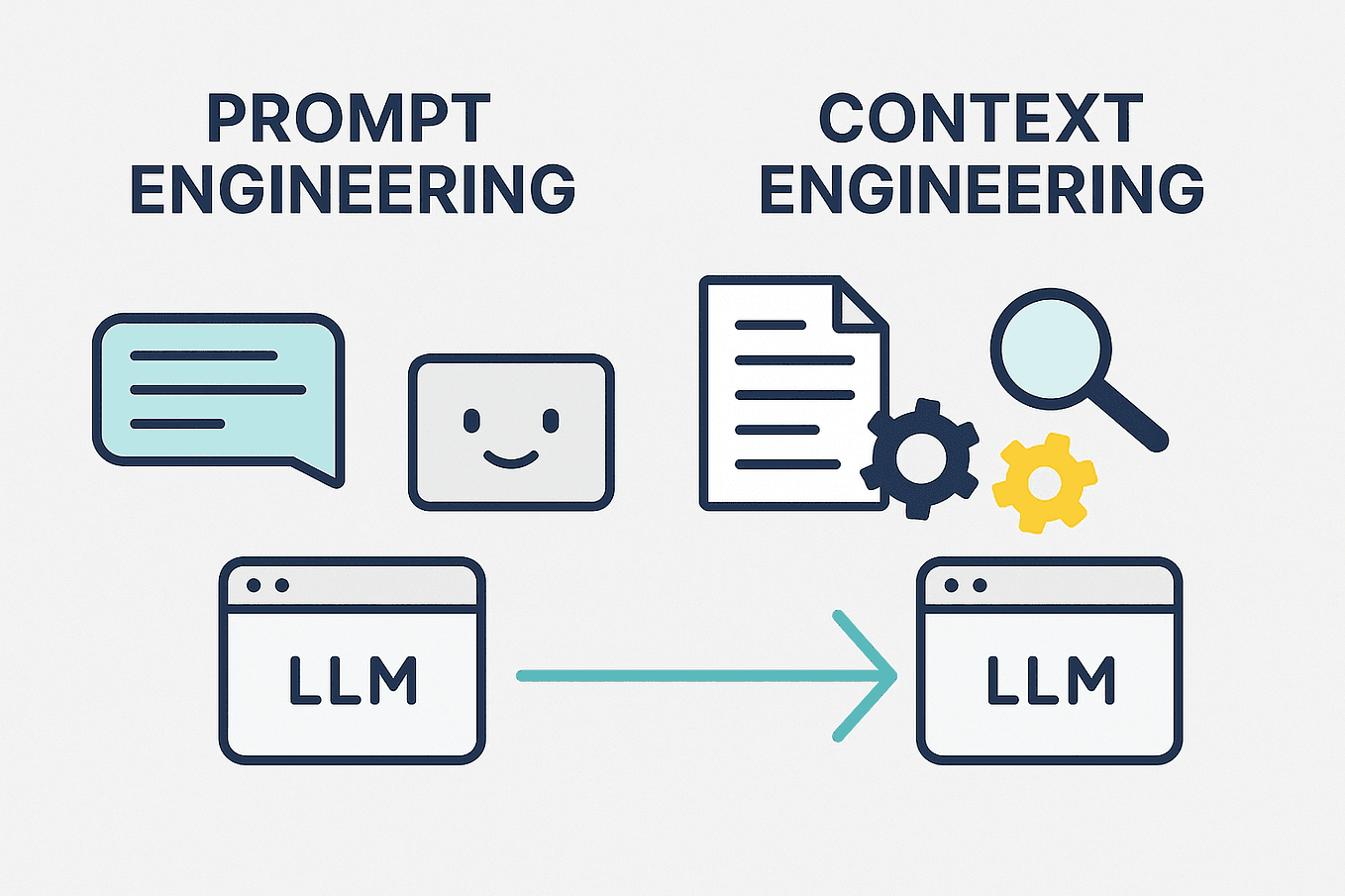
The core argument is that if prompt engineering defines the model's role and the format of its output, then context engineering determines the specific knowledge and information the model uses to generate that output. This framing establishes context engineering—which includes techniques like Retrieval-Augmented Generation (RAG)—as a direct complement to crafting effective prompts.
Technical Details: The Two Pillars of LLM Control
While we cannot access the article's full depth, the summary points to a standard and vital dichotomy in applied LLM work:
- Prompt Engineering: This is the art of designing the initial instruction or query to the LLM. It sets the task, defines the persona (e.g., "You are a helpful customer service agent for a luxury brand"), and can specify the desired output structure (e.g., "Provide a summary in bullet points"). A well-crafted prompt is essential for steering the model toward useful and consistent behavior.
- Context Engineering: This encompasses the methods used to supply the LLM with relevant, external information it was not trained on. The most prominent method is Retrieval-Augmented Generation (RAG), where a retrieval system fetches pertinent documents or data chunks from a knowledge base (like product catalogs, internal style guides, or customer history) and inserts them into the model's context window. This grounds the LLM's responses in factual, up-to-date, and proprietary information, mitigating hallucinations and enabling domain-specific expertise.
The article's positioning suggests it treats these not as isolated tricks but as interconnected, systematic engineering disciplines necessary for building robust LLM applications.
Retail & Luxury Implications
For technical leaders in retail and luxury, this framework is directly applicable to virtually every high-value AI use case. The combination of prompt and context engineering is the bedrock of creating specialized, reliable, and brand-aligned AI agents.
- Hyper-Personalized Customer Service: A prompt defines the agent's tone (e.g., "empathetic, knowledgeable, and discreet"). Context engineering via RAG pulls in the specific customer's purchase history, preferences, and open service tickets, allowing the agent to provide truly personalized support.
- Intelligent Product Discovery & Styling: Prompts can instruct a model to act as a personal stylist. Context engineering supplies it with the entire current season's catalog, fabric details, sustainability credentials, and inventory levels to make accurate, sellable recommendations.
- Internal Knowledge Management: Prompts can frame queries for market analysis or competitor summaries. Context engineering retrieves the latest internal reports, market research, and past campaign data, enabling analysts to query a consolidated knowledge base in natural language.
The critical insight is that success depends on both pillars. A perfect prompt with no relevant context leads to generic, ungrounded responses. Perfect context with a poorly defined prompt leads to inconsistent or off-brand outputs. Engineering both is the path to production-ready systems.
Implementation Approach
Building systems based on this framework involves clear technical steps:
- Define the Objective: Start with the business use case (e.g., reduce customer service resolution time).
- Design the Prompt Framework: Create system prompts that encapsulate brand voice, task rules, and output formats. This often involves iterative testing and refinement.
- Build the Knowledge Backbone: This is the core of context engineering. It requires:
- Data Ingestion: Consolidating data from siloed sources (PIM, CRM, CMS, ERP).
- Chunking & Embedding: Breaking documents into logically retrievable segments and converting them into numerical vectors using embedding models.
- Vector Database: Storing these embeddings for fast similarity search. The choice of chunking strategy and embedding model is critical, as covered in our prior analysis of RAG chunking performance.
- Orchestrate the Flow: Implement the RAG pipeline: take user query, convert to embedding, retrieve top-k relevant chunks, inject them into a final prompt with the original instruction, and send to the LLM.
- Evaluate Rigorously: Move beyond simple accuracy checks. Implement evaluation for hallucination rates, retrieval precision/recall, and brand tone adherence. As noted in recent coverage, many RAG systems fail in production due to evaluation pitfalls that miss subtle grounding errors.
Governance & Risk Assessment
Deploying these systems requires careful governance:
- Data Privacy & Security: Customer data used in RAG contexts must be governed by strict access controls and compliance frameworks (GDPR, CCPA). The retrieval step must be designed to avoid leaking sensitive information.
- Bias & Brand Safety: The knowledge base itself can contain biases. Regular audits of source data and model outputs are necessary to ensure recommendations or service responses align with brand values and ethical standards.
- System Hallucination: Even with RAG, models can occasionally ignore provided context or conflate information. Implementing confidence scoring, citation requirements, and human-in-the-loop review for high-stakes interactions is prudent.
- Operational Complexity: A RAG system adds moving parts—embedding models, vector databases, retrieval logic—compared to a simple LLM API call. This increases the surface area for failures, requiring robust MLOps monitoring and, as one recent developer story highlighted, potentially self-healing capabilities.