The Rise of Autonomous Shopping Agents
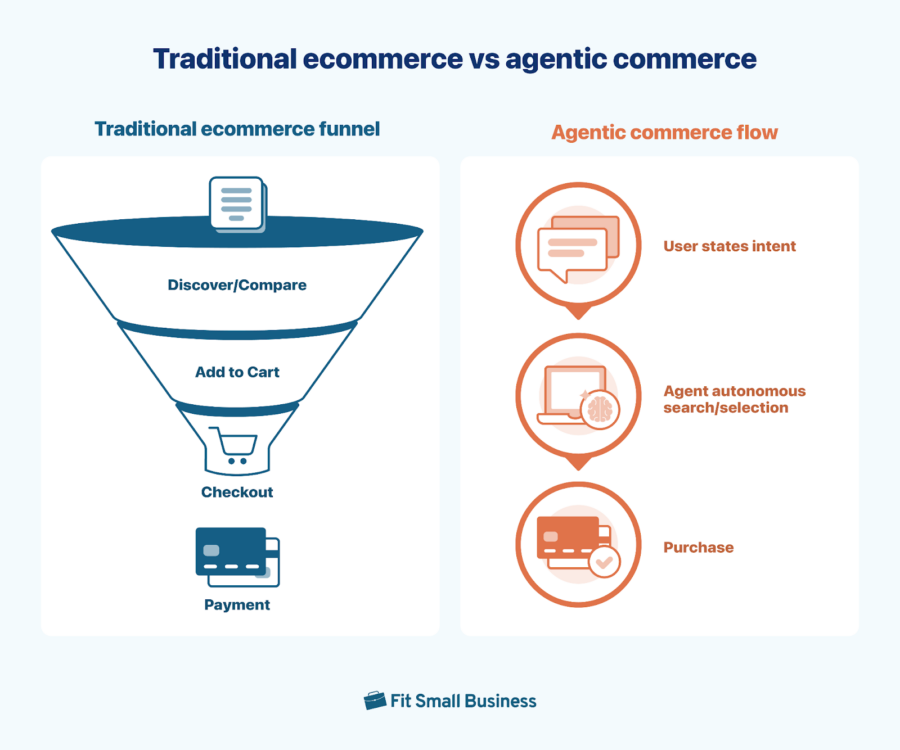
According to analysis from The Fashion Law, AI-powered software is no longer just a recommendation engine or a chatbot. It is evolving into agentic AI—systems capable of operating autonomously to research products, select vendors, place orders, and complete transactions on a consumer's behalf. This represents a fundamental shift from AI as a tool to AI as an active, decision-making agent in the commercial process.
If projections from management consulting firm Bain & Company hold true, this technology is poised to transition from a novel experiment to a core feature of modern e-commerce. The implication is that a significant portion of online transactions could soon be initiated and completed not by humans clicking "buy," but by AI agents executing pre-defined or learned objectives.
The Legal Frontier: Uncharted Territory for Commerce
The central question posed by the source material is not about the technology's capability, but its governance: Is the law ready? The deployment of agentic AI in commerce creates a complex web of legal and regulatory challenges that existing frameworks are ill-equipped to handle.
Key areas of concern include:
- Liability and Accountability: When an AI agent makes a purchasing error—buying the wrong item, from a non-compliant vendor, or at an unauthorized price—who is liable? Is it the consumer who deployed the agent, the developer who created the AI system, the platform hosting it, or the vendor whose systems interacted with it? Traditional concepts of agency law and consumer protection are strained by non-human actors.
- Contract Formation: A legally binding contract requires offer, acceptance, and consideration between parties with the capacity to contract. Does an AI agent have the legal "capacity" to accept an offer on behalf of a human? Can its actions constitute valid acceptance, creating an enforceable agreement? This challenges centuries of contract law.
- Consumer Protection & Transparency: Regulations often require clear disclosure of terms, rights to cancel, and protection against unfair practices. How are these rights enforced when the purchasing decision is made by a black-box algorithm? Consumers must understand what authority they have delegated and how to audit or override an agent's decisions.
- Data Privacy & Security: Autonomous agents will require broad access to personal data (payment info, preferences, calendars) and corporate systems (vendor databases, inventory APIs). This amplifies risks related to data breaches, unauthorized data sharing, and compliance with regulations like GDPR or CCPA.
- Intellectual Property & Brand Safety: An agent sourcing products could inadvertently engage with counterfeiters or unauthorized distributors. Who is responsible for policing this supply chain? Brands may find their products being sourced and promoted by AI in ways that damage brand equity or violate distribution agreements.
Why This Matters for Retail & Luxury
For luxury and high-end retail, where brand integrity, customer trust, and controlled distribution are paramount, the stakes are particularly high.
- The VIP Concierge, Automated: Imagine an AI agent acting as a personal shopper for a top client. It monitors new collections, considers the client's past purchases and stated preferences, checks size availability across global inventory, and autonomously purchases a selection of items for approval. This offers incredible service but also immense risk if the agent misinterprets style, breaches exclusivity agreements, or makes a highly visible purchasing error.
- Supply Chain & Procurement Agents: On the B2B side, agentic AI could be deployed by brands to autonomously manage relationships with material suppliers, manufacturers, and logistics partners. While optimizing for cost and speed, it must also adhere to stringent sustainability, ethical sourcing, and quality standards—a complex set of constraints for any AI.
- The Battle for the Agent Ecosystem: The platform that hosts or becomes the default "agent ecosystem" will wield enormous influence. Will it be a tech giant's assistant (e.g., evolved Google/Alexa/Siri), a social platform's commerce tool, or an independent agent platform? Luxury brands must decide whether to develop their own branded agents, integrate with third-party platforms, or restrict agent access to their digital storefronts entirely.
Business Impact & Strategic Imperatives
The business impact is twofold: massive efficiency and personalization potential versus existential legal and reputational risk. Early movers who solve the governance puzzle could lock in high-value customers with flawless automated service. One misstep, however, could lead to regulatory action, loss of consumer trust, and costly litigation.
This is not a distant future scenario. The foundational technologies—large language models, reasoning engines, and API-integration platforms—are actively being developed and integrated, as seen in Google's recent launches of Gemini models and AI agent integrations into services like Maps.
Implementation Approach: Governance First, Technology Second
For technical leaders in retail, the implementation priority must flip. The focus cannot solely be on building the most capable agent.
- Develop the Agentic Policy Framework First: Before writing a line of code, legal, compliance, and technology teams must collaboratively define the boundaries of agent authority. What decisions can it make autonomously? What always requires human-in-the-loop approval? What are the immutable rules (e.g., "never source from these vendors")?
- Engineer for Auditability and Control: The AI system must be designed with immutable logging, explainable decision trails, and easy-to-use override functions. Every action an agent takes must be traceable and justifiable.
- Redefine "Compliance by Design": Regulatory compliance cannot be a bolt-on. Data privacy principles, consumer rights (like cancellation), and financial controls must be core architectural components of the agentic system.
- Partner with Legal Pioneers: Engage with regulators and industry bodies now. The rules will be written; it is far better to be at the table helping shape pragmatic, innovation-friendly frameworks than to be reacting to punitive regulations later.
Governance & Risk Assessment: A High-Stakes Balancing Act
- Maturity Level: Early. The technology is in rapid development (as indicated by Google's frequent model launches), but the legal and operational frameworks are nascent.
- Primary Risks: Legal liability (contract, tort), regulatory non-compliance, brand damage from agent errors, erosion of consumer trust, and ethical risks around algorithmic bias in sourcing or purchasing.
- Privacy & Bias: These are amplified risks. An autonomous agent has a much larger "surface area" for data collection and action, potentially ingesting biased data that leads to discriminatory commercial outcomes.
The message from The Fashion Law is clear: Agentic AI is coming to commerce. For the luxury sector, where reputation is everything, the question is not just "Can we build it?" but "Have we built the legal and ethical guardrails to survive it?" The companies that prosper will be those that treat governance as a core competitive advantage, not a compliance afterthought.