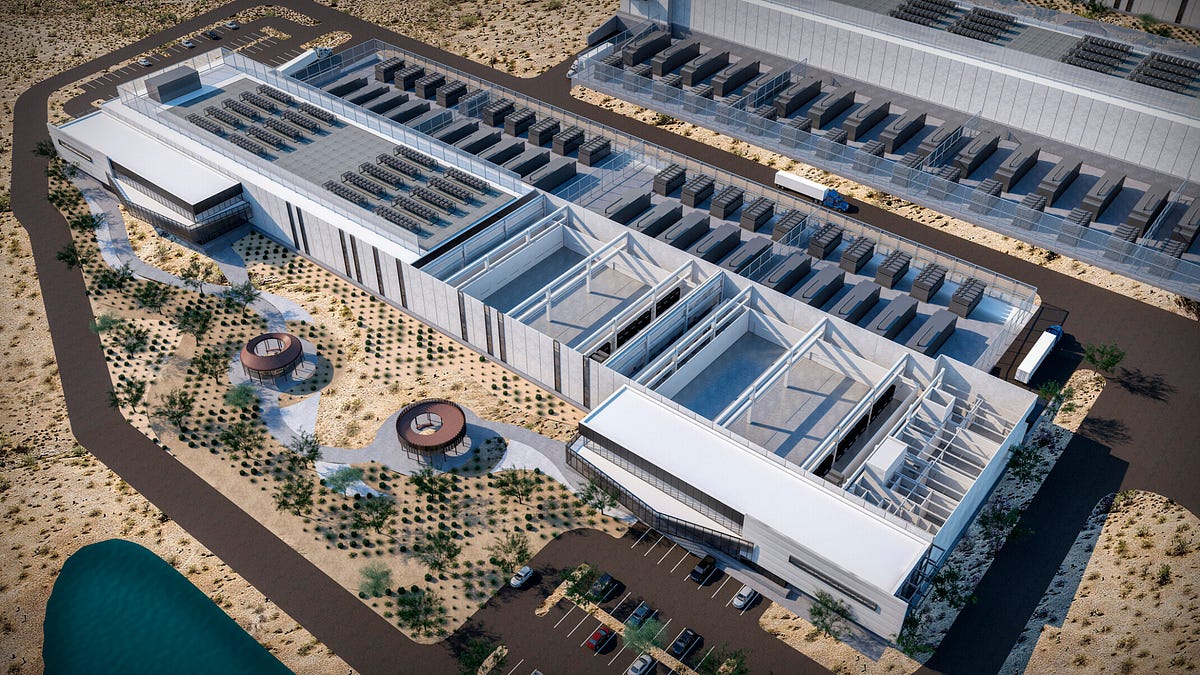
California's largest AI data center project is suing for 287 million gallons of Colorado River water. The amount is 0.03% of Imperial Valley's supply, with plaintiffs arguing it equals a 160-acre farm's usage.
Key facts
- 287 million gallons of Colorado River water requested.
- 0.03% of Imperial Valley's total annual water supply.
- Equivalent to water use of a 160-acre farm.
- First known legal challenge over AI data center water rights in region.
- Data centers used 1.7 billion gallons US-wide in 2024.
A California AI data center project, the largest in the state, has filed a lawsuit seeking access to 287 million gallons of water from the Colorado River. According to @tomshardware, the plaintiffs argue the request is modest: 0.03% of Imperial Valley's annual water allocation, equivalent to what a 160-acre farm would consume. The lawsuit frames the water as critical for job creation and reallocation of farmland to tech infrastructure.
Water Rights and AI Infrastructure
This legal action marks an escalation in the tension between AI data center expansion and water scarcity in the American Southwest. Data centers used an estimated 1.7 billion gallons of water in 2024 across the US, [per industry reports], with cooling accounting for the bulk. The Colorado River, already over-allocated, supplies 40 million people and 5.5 million acres of farmland. The project's attorneys contend that denying water would stifle economic growth, while environmental groups warn of precedent-setting diversions.
The Numbers at Stake
287 million gallons would support the project's cooling systems for roughly one year, based on typical data center water usage of 3-5 million gallons per 100 megawatts per day. Imperial Valley's total allotment is approximately 3.1 trillion gallons annually, meaning the request is 0.03% — a figure the lawsuit emphasizes. The court filing does not disclose the project's total power capacity or completion timeline, [per the source].
Broader Implications
This case is the first known legal challenge over AI data center water rights in the region. It follows a pattern: in 2024, Meta faced protests over water use in Arizona, and Google committed to water-positive operations by 2030. If the lawsuit succeeds, it could open a floodgate of similar claims from data center operators seeking Colorado River water, potentially reshaping water allocation priorities in drought-prone states.
What to watch
Watch for the court's ruling on the water rights motion, expected within 90 days. Also monitor if other AI data center projects in Nevada and Arizona file similar lawsuits. The outcome could set precedent for how Colorado River water is allocated between agriculture and tech infrastructure.