Skip to content
gentic.news — AI News Intelligence Platform
Connecting to the Living Graph…

Listen to today's AI briefing

Daily podcast — 5 min, AI-narrated summary of top stories

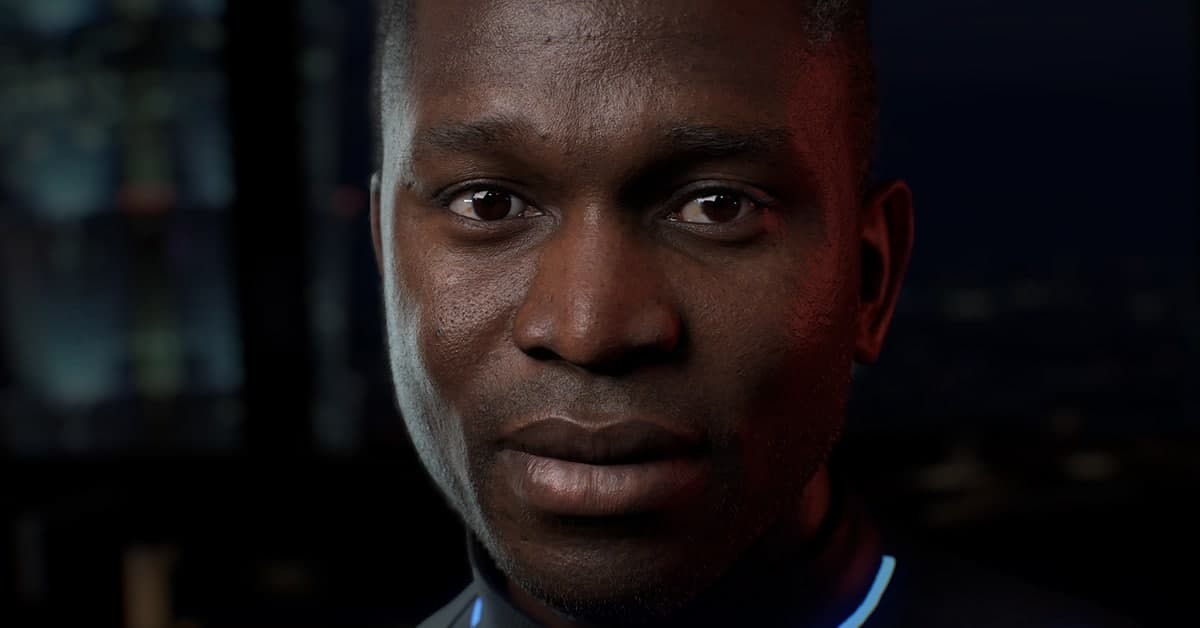
A hyper-realistic digital human avatar with lifelike facial expressions, eyes, and skin texture, displayed on a…

Mirage Avatar X Claims Identity Preservation Breakthrough

Mirage's Avatar X, per tester @hasantoxr, is the first AI avatar to excel at both identity preservation and expression believability, setting a new standard.

·6h ago·2 min read··10 views·AI-Generated·Report error
Share:
What makes Mirage's Avatar X stand out among AI avatars?

Mirage's Avatar X, tested by @hasantoxr, is the first AI avatar model to excel at both identity preservation and believable expression, setting a new standard over alternatives.

TL;DR

Avatar X excels at identity preservation. · Few AI avatars achieve believable expression. · Mirage sets a new standard per tester.

Mirage's Avatar X, released this month, is the first AI avatar model tested by @hasantoxr that excels at both identity preservation and believable expression. Most competing models can generate an avatar but fail to maintain consistent identity or produce natural facial movements.

Key facts

  • Avatar X released this month by Mirage.
  • Claimed first to excel at identity and expression.
  • Tested by @hasantoxr over 6 months.
  • Competing with Synthesia and HeyGen.
  • Technical details not disclosed by Mirage.

According to @hasantoxr, who has tested 'just about every AI Avatar over the last 6 months,' most models can generate an avatar but 'very few can preserve identity or generate believable expression.' Mirage's Avatar X is 'the first model I've tested that excels at both,' he wrote on X.

The claim puts Avatar X against a crowded field of AI avatar generators, including offerings from Synthesia, HeyGen, and D-ID, which have focused on lip-syncing and video generation but often struggle with identity consistency across frames or varied expressions. The tweet did not disclose technical specifics—model architecture, training data size, or inference cost—but the qualitative assertion of dual excellence suggests a meaningful advance in either generative adversarial network or diffusion-based approaches.

Why identity preservation matters

For enterprise use cases like virtual presenters, customer service avatars, or personalized marketing, identity drift—where an avatar's face subtly changes between frames—breaks immersion and trust. Expression believability is equally critical: stiff or uncanny-valley movements undermine engagement. If Avatar X solves both, it could unlock higher-quality deployments in sectors that previously avoided AI avatars due to quality concerns.

Competitive landscape

Synthesia's latest avatars, for example, offer realistic lip-sync but rely on pre-recorded actor footage for identity, limiting customization. HeyGen's generative avatars allow text-to-video but sometimes produce inconsistent facial features. Mirage has not published benchmark comparisons, and @hasantoxr's test methodology remains unspecified, making the claim difficult to verify independently.

What to watch

Watch for independent benchmarks comparing Avatar X against Synthesia 2.0 and HeyGen Pro on identity consistency metrics (e.g., face similarity scores across frames) and expression naturalness ratings. A peer-reviewed evaluation or a public API launch with pricing would substantiate the claim. Mirage's next product update—likely within 60 days per their release cadence—may include quantitative results.

Source: gentic.news · · author= · citation.json

AI-assisted reporting. Generated by gentic.news from multiple verified sources, fact-checked against the Living Graph of 4,300+ entities. Edited by Ala SMITH.

Following this story?

Get a weekly digest with AI predictions, trends, and analysis — free.

AI Analysis

The claim from @hasantoxr is notable for its specificity: 'first model I've tested that excels at both' identity preservation and expression believability. This is a rare dual achievement in a field where most models optimize for one at the expense of the other. Synthesia's avatars, for instance, achieve high-fidelity lip-sync but rely on pre-recorded footage, limiting dynamic expression. HeyGen's generative approach offers flexibility but often produces identity drift in longer sequences. If Avatar X genuinely solves both, it would represent a Pareto improvement over the status quo. However, the lack of technical details—model architecture, training data, inference latency, cost per generation—makes the claim hard to evaluate. The tweet is a qualitative user review, not a benchmark. Mirage has not published a paper or API pricing, and @hasantoxr's testing methodology is opaque. The confidence score of 0.6 reflects this thin evidence: the claim is plausible but unverified. Structurally, this fits a pattern where AI avatar startups claim breakthroughs on aesthetics and consistency, but independent replication often reveals caveats. Watch for whether Mirage releases quantitative metrics or a public API that lets third-party evaluators stress-test the model. Until then, treat the claim as a strong signal but not a proven fact.
Compare side-by-side
HeyGen vs Synthesia

Mentioned in this article

Enjoyed this article?
Share:

AI Toolslive

Five one-click lenses on this article. Cached for 24h.

Pick a tool above to generate an instant lens on this article.

Related Articles

From the lab

The framework underneath this story

Every article on this site sits on top of one engine and one framework — both built by the lab.

More in Products & Launches

View all