A clear trend is emerging in the artificial intelligence sector: a strategic pivot toward biotechnology. Industry observers note that AI firms are "piling into" the life sciences, driven by a fundamental market reality. Unlike many AI applications where better prediction improves an existing service, in biology, superior predictive models can directly compose and create new, high-margin products. This shift represents a move from offering AI-as-a-service to leveraging AI as a core R&D engine for physical goods.
What's Driving the Shift?
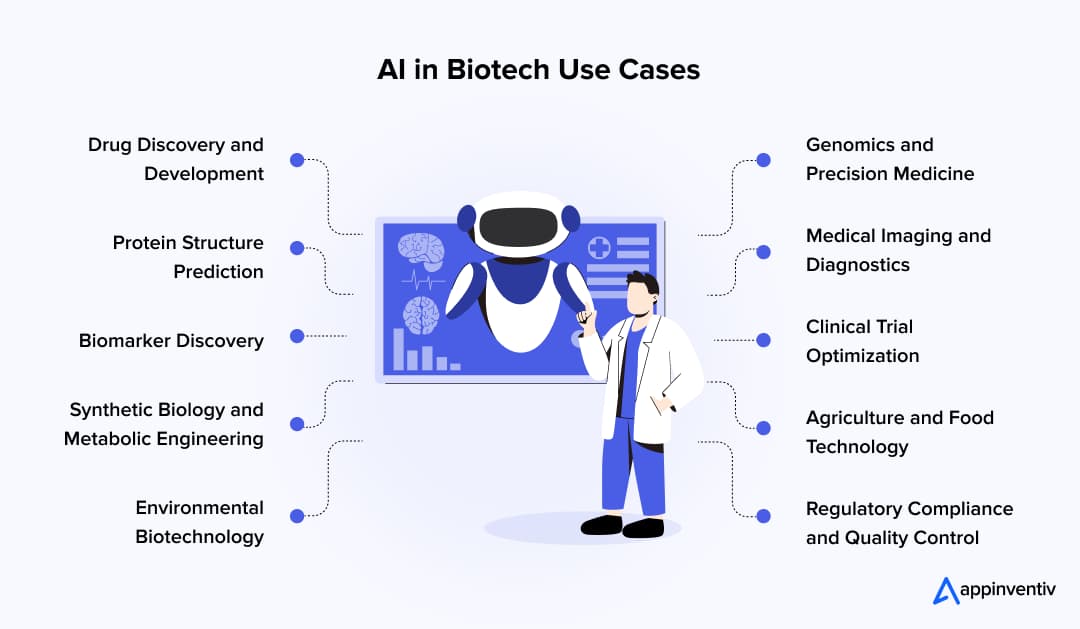
The core thesis is economic. In domains like content generation or enterprise automation, an AI model's output often augments a human workflow or replaces a cost center. The value chain is indirect. In biotechnology—encompassing drug discovery, protein design, and synthetic biology—a successful predictive model can output a blueprint for a novel therapeutic, enzyme, or material. This blueprint is the first critical step in creating a product with patent protection, regulatory pathways, and potentially billion-dollar markets. The prediction is the invention.
This creates a compelling business model: AI research directly fuels a pipeline of intellectual property (IP). Companies can then develop this IP internally, license it to pharmaceutical giants, or form equity-based partnerships. The potential returns are orders of magnitude larger than typical software licensing fees, justifying the significant computational and scientific investment.
The Competitive Landscape
This trend is not speculative; it's evidenced by a series of high-profile moves and investments over the past two years. Established AI research labs and new startups alike are building dedicated biotech divisions.
- Tech Giants: Companies like Google DeepMind (with its Isomorphic Labs spin-off and AlphaFold series), NVIDIA (Clara Discovery platform, BioNeMo), and Microsoft (Azure Quantum Elements for chemistry) have made foundational investments in AI for biology.
- Pure-Play AI Biotechs: A wave of well-funded startups—such as Recursion Pharmaceuticals, Insitro, Genesis Therapeutics, and Etcembly—are built from the ground up with AI/ML at their core. Their valuations and partnership deals signal strong market belief in the model.
- Traditional Pharma Collaboration: Nearly every major pharmaceutical company now has multiple AI partnerships, effectively creating a vast, well-funded customer base for AI-driven discovery tools.
The activity creates a feedback loop: success in early-stage projects attracts more capital, which funds more ambitious research, pulling more AI talent into the field.
Technical Foundations and Challenges
The feasibility of this shift rests on converging technical advancements:
- Representation Learning for Biology: Models like ESM (Evolutionary Scale Modeling) and AlphaFold have shown that neural networks can learn meaningful representations of biological sequences (proteins, DNA) and structures from vast datasets.
- Generative AI for Design: The same transformer and diffusion architectures powering image and text generation are being adapted to generate novel molecular structures with desired properties.
- High-Throughput Experimental Validation: Technologies like lab automation and next-generation sequencing create the "ground truth" data needed to train models and close the loop between digital design and physical testing.
The primary challenge remains the "sim-to-real" gap. A molecule designed in silico must be synthesizable, stable, non-toxic, and effective in a living system—a chain of conditions far more complex than most AI domains. Bridging this gap requires tight integration of AI, simulation, and wet-lab experimentation, a multidisciplinary hurdle that defines the new generation of AI-biotech companies.
gentic.news Analysis
This observed trend aligns perfectly with the strategic crossroads the AI industry faced in late 2024 and 2025. As covered in our analysis "The Post-Moore's Law Pivot: AI Labs Seek New Moats", pure scaling of large language models began facing diminishing returns and intense cost pressure. Companies needed to deploy their core competency—building predictive models—in domains where the output had inherent, defensible value. Biotech, with its long-term R&D cycles and IP-based monetization, presents exactly that moat.
The movement also follows the trajectory of key entities in our knowledge graph. Google DeepMind's launch of AlphaFold 3 in 2024 was a watershed moment, demonstrating a unified model for biomolecular structure and interaction prediction. This wasn't just a research victory; it was a market signal. It validated the approach and catalyzed the formation of Isomorphic Labs, DeepMind's commercial drug discovery arm, which subsequently signed multi-billion dollar partnerships with Eli Lilly and Novartis. This pattern—from research breakthrough to dedicated commercial entity—is now a blueprint others are following.
Furthermore, this trend intersects with the rising activity (📈) of NVIDIA in the life sciences sector. Beyond hardware, NVIDIA has been aggressively building a software ecosystem (BioNeMo, Clara) specifically for AI-powered drug discovery, positioning itself as the essential platform provider for this new wave of companies. The convergence of specialized hardware (like their DGX systems), software frameworks, and venture investment (through NVentures) creates a powerful flywheel accelerating the entire field.
For practitioners, the implication is clear: expertise at the intersection of ML and biology is becoming increasingly valuable. The next generation of high-impact AI may not be in chatbots, but in code that designs a cell.
Frequently Asked Questions
Why is biotech so attractive to AI companies compared to other fields?
Biotech offers a direct path from a successful AI prediction to a patentable, high-value product like a drug or enzyme. The business model shifts from selling software subscriptions to owning valuable intellectual property, which can lead to much larger financial returns through licensing deals, partnerships, or product sales.
What are the biggest technical hurdles for AI in drug discovery?
The main challenges are the "sim-to-real" gap and the complexity of biological systems. An AI can generate a molecule that looks perfect in simulation, but it must also be chemically synthesizable, stable, non-toxic, and effective in the incredibly complex environment of the human body. Validating these properties requires expensive and time-consuming wet-lab experiments, creating a bottleneck that the most successful companies are solving by tightly integrating AI with automated laboratory platforms.
Which AI companies are leading in biotech right now?
Several groups are prominent. Google DeepMind (via Isomorphic Labs) is a leader in foundational protein and molecular AI models. NVIDIA is the dominant platform provider with its BioNeMo framework. A host of well-funded startups like Recursion Pharmaceuticals, Insitro, and Genesis Therapeutics are building full-stack AI-driven drug discovery pipelines. Traditional pharmaceutical giants like Pfizer and Merck are also major players through extensive AI partnerships and internal labs.
Does this mean AI will replace biologists and chemists?
No. The trend is toward augmentation, not replacement. AI excels at searching vast molecular design spaces and proposing candidates, but it lacks the deep mechanistic understanding and intuition of experienced scientists. The most effective teams combine AI/ML engineers with domain experts in biology, chemistry, and translational medicine to guide the models, interpret results, and design crucial validation experiments. The new paradigm creates hybrid roles rather than eliminating existing ones.