Ed Zitron warns the AI industry's $500 billion in data center debt is the subprime mortgage crisis of the AI bubble. The comparison highlights systemic risk if AI demand growth stalls.
Key facts
- $500B in data center debt outstanding
- Ed Zitron compares to subprime crisis
- Debt is non-recourse, tied to AI workload projections
- Major banks and private credit funds underwrite loans
- Over $200B in new data center projects announced in 2025
Ed Zitron's newsletter draws a direct parallel between the AI industry's $500 billion in data center debt and the subprime mortgage crisis that triggered the 2008 financial collapse. According to @edzitron, this debt is largely non-recourse, secured against projected revenue from AI workloads—a bet on continued exponential demand for compute.
Major banks and private credit funds have underwritten the bulk of these loans, with terms that assume near-full utilization of data centers over multi-year periods. If AI demand growth stalls—due to model commoditization, regulatory crackdowns, or a shift to edge computing—these assets could become stranded, triggering a cascade of defaults.
The comparison is not merely rhetorical. The 2008 crisis saw mortgage-backed securities fail when housing prices stopped rising; today's AI debt is similarly tied to a single underlying assumption: that AI workloads will grow unbounded. Zitron's argument is that the structure—debt backed by future revenue projections, not current cash flows—creates the same fragility.
The AI industry's $500bn in data center debt is the subprime mortgage crisis of the AI bubble, he writes, a claim that has drawn attention from tech investors and policymakers alike. The debt load is concentrated among a handful of hyperscalers and data center REITs, but the exposure spreads through bank balance sheets and credit funds.
Zitron's warning arrives as data center construction hits record levels, with over $200 billion in new projects announced in 2025 alone. Reuters reports that lenders are beginning to tighten terms, a sign that the risk is already being priced in.
The Unique Take
What makes Zitron's comparison more than a scare headline is the structural similarity: both crises involve debt instruments whose value depends on a single, unhedged bet—housing prices then, AI compute demand now. The difference is that AI data center debt is far more concentrated, with a handful of players (Microsoft, Amazon, Google) accounting for the majority of exposure. A default at one hyperscaler could ripple through the entire system.
What to watch
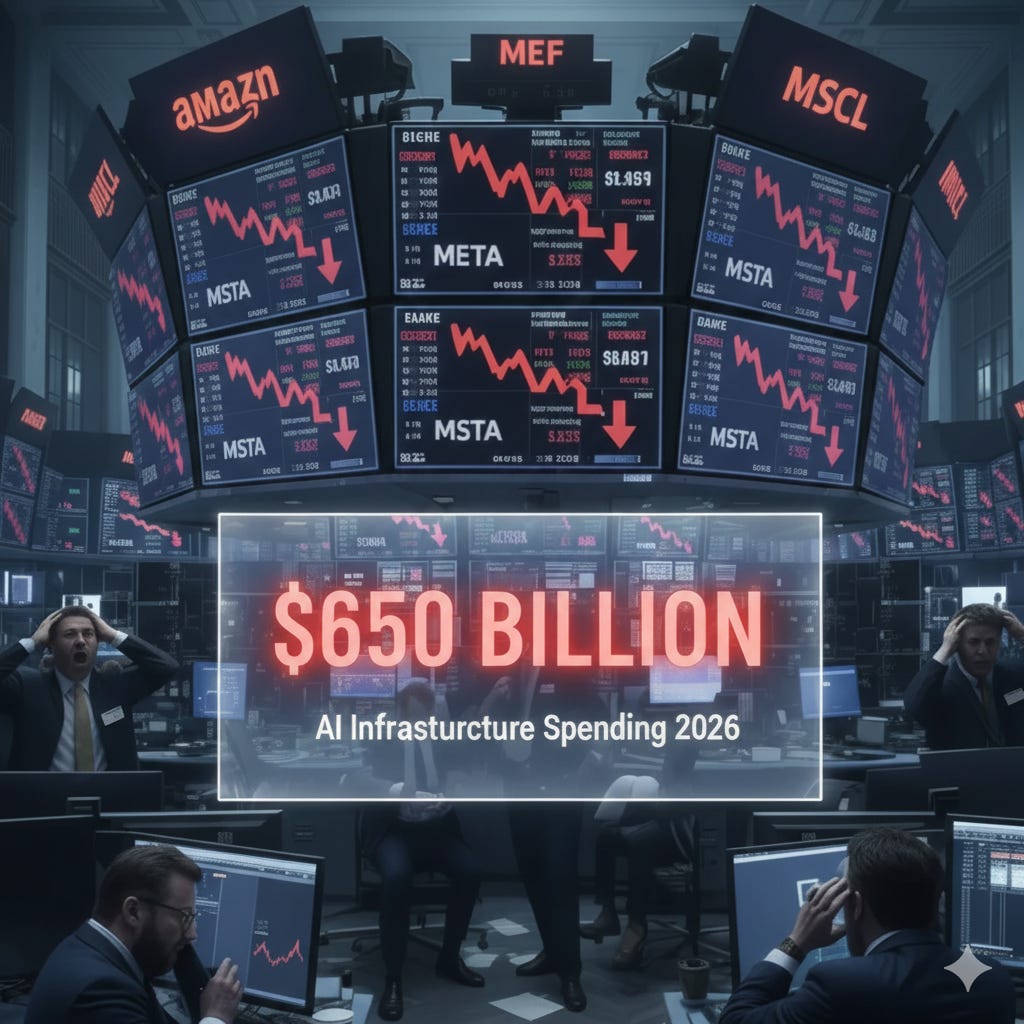
Watch for Q2 2026 earnings from data center REITs and hyperscalers for any mention of utilization rates dropping below 70%, or lenders publicly tightening terms—both would signal the start of a correction.