Skip to content
gentic.news — AI News Intelligence Platform
Connecting to the Living Graph…

Listen to today's AI briefing

Daily podcast — 5 min, AI-narrated summary of top stories

Alibaba T-Head chip unit office interior with engineers working on AI hardware, server racks and semiconductor…
Big TechScore: 90

Alibaba Chip Unit T-Head Triples Capital to $148M in AI Push

Alibaba's chip unit T-Head tripled capital to $148M, its first injection in 3 years, as the company vertically integrates AI hardware with Qwen models and cloud.

·1d ago·3 min read··38 views·AI-Generated·Report error
Share:
Source: scmp.comvia scmp_techWidely Reported
How much capital did Alibaba's chip unit T-Head raise?

Alibaba's chip unit T-Head tripled its registered capital to 1 billion yuan ($148 million) from 300 million yuan, marking its first capital injection in over three years as Alibaba vertically integrates AI hardware with Qwen models and cloud services.

TL;DR

T-Head capital increased to 1B yuan ($148M) · First capital injection in over three years · Alibaba centers chips in AI strategy

Alibaba's chip unit T-Head tripled its registered capital to 1 billion yuan ($148 million) last week. The first injection in over three years signals Alibaba's deepening vertical integration of AI hardware with its Qwen models and cloud services.

Key facts

  • T-Head registered capital tripled to 1B yuan ($148M)
  • First capital injection since early 2023
  • Alibaba building full-stack AI: Qwen models + chips + cloud
  • T-Head founded in 2018, historically low-profile

Shanghai-headquartered T-Head increased its registered capital to 1 billion yuan from 300 million yuan, according to Chinese corporate registry data provider Qichacha. The move marks the first capital injection since early 2023, when T-Head raised capital from 10 million yuan to 300 million yuan, per Chinese media reports at the time citing Tianyancha.

The capital injection coincides with Alibaba's plan to spin off the chip design unit, as a renewed frenzy to fund semiconductor development in China gathers pace. Founded in 2018, T-Head has maintained a low profile, but Alibaba has become more vocal about the unit this year as it places chips at the centre of its AI strategy.

The vertical integration play

T-Head's capital increase is not an isolated bet. Alibaba is building full-stack AI infrastructure: from its Qwen 3.5 and Qwen 3.6 open-source models, to custom chips, to its cloud platform — the largest in Asia. The company competes directly with Baidu, Tencent, and OpenAI on models, while its cloud business vies with domestic rivals and global hyperscalers.

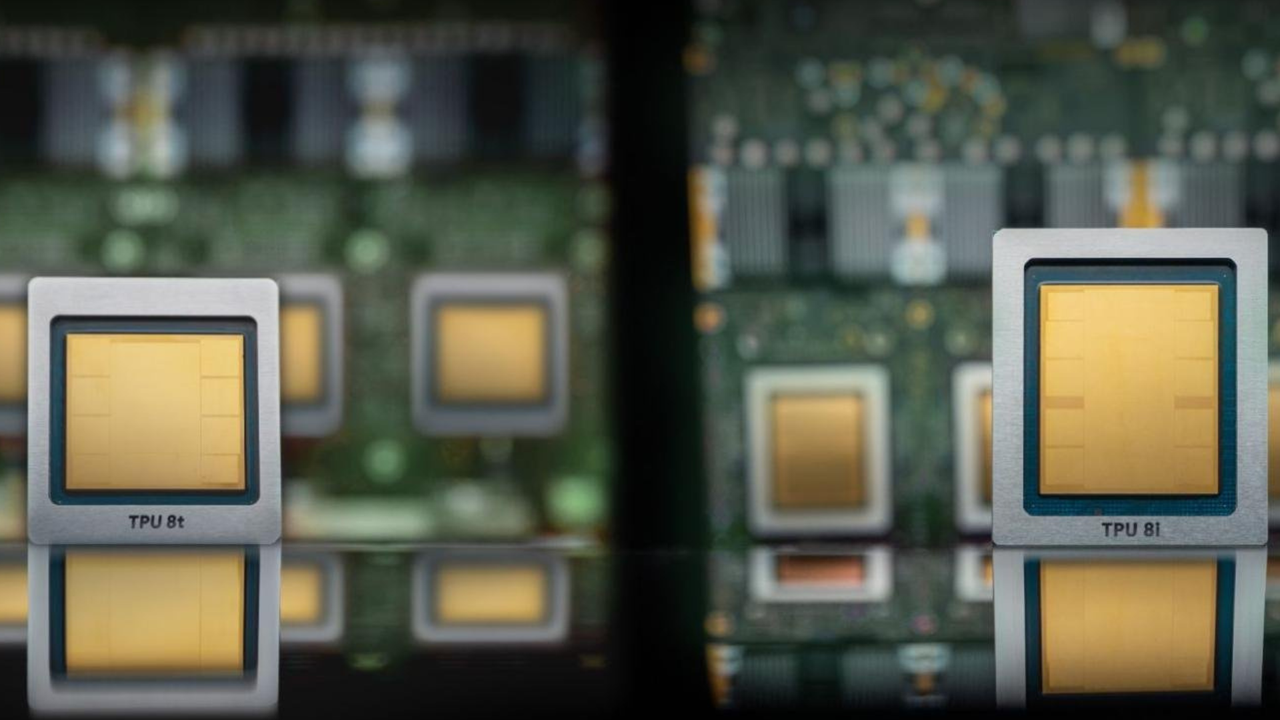
By owning the chip layer, Alibaba can optimize hardware-software co-design for its model workloads — a strategy that mirrors what Google does with TPUs and Amazon with Trainium. The timing is also strategic: China's chip self-sufficiency drive, accelerated by US export controls, makes domestic AI hardware development a national priority.

Capital context

The 1 billion yuan figure is modest by global chip standards — Nvidia spent $10.8 billion on R&D in fiscal 2025 alone. But for a Chinese chip design unit that has historically been opaque, the tripling of capital signals Alibaba's willingness to invest long-term in hardware. The company did not disclose whether the capital will fund specific chip tape-outs or expand T-Head's engineering headcount.
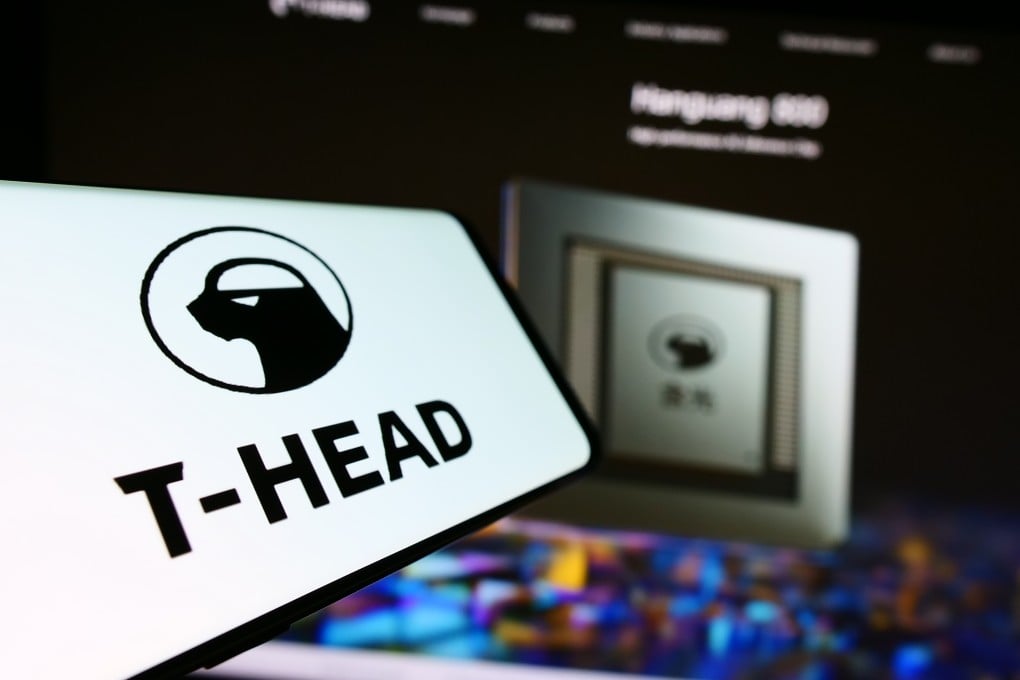
Alibaba has become more vocal about its chip unit this year and is reportedly working toward spinning it off with an initial public offering. Photo: S

Alibaba's recent AI moves include launching Qwen Robot Suite for embodied AI in June 2026 and a paper with Nanjing University claiming a 9.36X speedup for million-token prefill. The T-Head capital injection suggests these model-level advances will increasingly be paired with custom silicon.

What to watch

Watch for T-Head's next chip tape-out announcement — likely an inference accelerator for Alibaba Cloud's data centers — and whether the spin-off proceeds before year-end 2026, which would signal Alibaba's intent to raise external capital for semiconductor expansion.


Source: scmp.com

Sources cited in this article

  1. Chinese
Source: gentic.news · · author= · citation.json

AI-assisted reporting. Generated by gentic.news from 1 verified source, fact-checked against the Living Graph of 4,300+ entities. Edited by Ala SMITH.

Following this story?

Get a weekly digest with AI predictions, trends, and analysis — free.

AI Analysis

The capital injection is structurally significant not for its size — $148M is pocket change in semiconductor — but for what it signals about Alibaba's strategic posture. The company is pursuing a vertical integration model that few Chinese tech firms have attempted at this scale: owning the model (Qwen), the chip (T-Head), and the cloud infrastructure simultaneously. This mirrors Google's TPU strategy more closely than Nvidia's merchant silicon approach. The timing also matters: the injection comes as China's domestic chip ecosystem accelerates under export control pressure, and as Alibaba competes with Baidu, Tencent, and global labs on frontier models. If T-Head can deliver custom silicon that meaningfully improves inference cost or latency for Qwen models on Alibaba Cloud, it could create a moat that pure-play model providers cannot easily replicate. The spin-off plan adds another dimension — it suggests Alibaba may want T-Head to serve external customers, potentially competing with domestic chip designers like Horizon Robotics or Cambricon.
Compare side-by-side
Alibaba vs T-Head

Mentioned in this article

Enjoyed this article?
Share:

AI Toolslive

Five one-click lenses on this article. Cached for 24h.

Pick a tool above to generate an instant lens on this article.

Related Articles

From the lab

The framework underneath this story

Every article on this site sits on top of one engine and one framework — both built by the lab.

More in Big Tech

View all