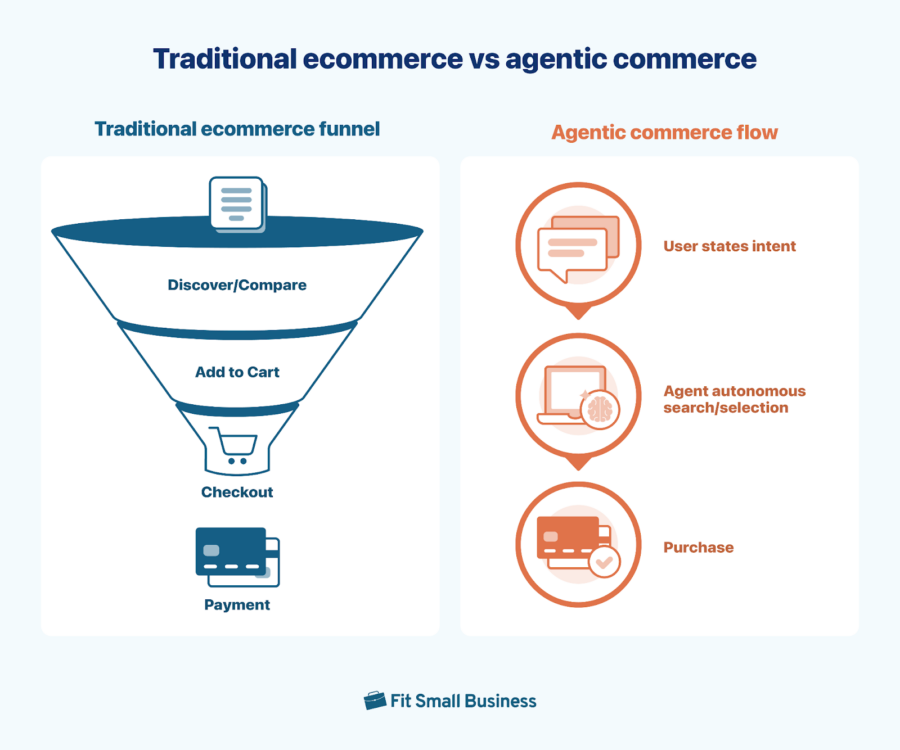
In a recent statement highlighted by AI commentator Rohan Paul, former Tesla AI director and OpenAI founding member Andrej Karpathy has articulated a fundamental shift he sees coming for the artificial intelligence industry. Karpathy contends that the industry must undergo substantial reconfiguration because "the customer is not the human anymore, it's agents who are acting on behalf of humans."
What Karpathy Said
The core assertion is straightforward but carries profound implications: the primary users of AI systems are transitioning from direct human interaction to autonomous AI agents that operate on human instructions. This isn't merely about building better chatbots—it's about restructuring entire technical stacks, business models, and development priorities around entities that think, act, and consume computational resources differently than people do.
Karpathy describes this transition as requiring "substantial" refactoring across the industry. The term "refactoring" is particularly telling—borrowed from software engineering, it implies restructuring existing code without changing its external behavior. In this context, it suggests the industry must rebuild its internal architectures while maintaining outward functionality, a complex and expensive undertaking.
The Technical Implications of Agent-First Design
Building AI systems for agents rather than humans involves several fundamental shifts:
1. Different Interaction Patterns: Human users tolerate latency, enjoy conversational interfaces, and provide feedback through natural language. Agents operate programmatically, make rapid sequential decisions, and require structured APIs with predictable response formats.
2. Different Failure Modes: When a human misunderstands an AI output, they might ask for clarification. When an agent misunderstands, it might take incorrect actions at scale. This demands higher precision, better error handling, and more robust verification systems.
3. Different Scaling Requirements: Human users have natural limits—they sleep, take breaks, and interact at human timescales. Agents can operate 24/7, making millions of API calls per second, fundamentally changing load patterns and cost structures.
4. Different Evaluation Metrics: Human-facing systems are often evaluated on user satisfaction, engagement, or conversation quality. Agent-facing systems need reliability, uptime, cost-per-task, and task completion rates.
Industry Movement Toward Agent-Centric Architectures
This perspective aligns with several observable trends in the AI industry:
- Specialized Agent Frameworks: Projects like LangChain, LlamaIndex, and AutoGPT have emerged specifically to help developers build and orchestrate AI agents.
- API Design Shifts: Major AI providers like OpenAI and Anthropic have been expanding their function-calling capabilities, structured outputs, and parallel processing options—features more valuable to agents than to human users.
- Infrastructure Investments: Companies are building specialized infrastructure for agent workloads, including vector databases for agent memory, orchestration layers for multi-agent systems, and evaluation platforms for autonomous performance.
The Business Model Implications
If Karpathy's prediction holds, several business model transformations become inevitable:
Pricing Models: Current per-token pricing might shift toward per-task or per-outcome pricing when agents are the primary consumers.
Product Design: Instead of optimizing for user interface aesthetics, companies will optimize for API reliability, documentation clarity, and integration simplicity.
Support Systems: Technical support will need to cater to developers building agents rather than end-users experiencing problems.
Challenges in the Transition
The "substantial refactoring" Karpathy mentions isn't trivial. Legacy systems designed for human interaction patterns may struggle to adapt. Companies face the classic innovator's dilemma: do they rebuild their systems for an agent-first future at the risk of alienating current human users, or do they maintain human-centric designs and risk being disrupted by native agent platforms?
Additionally, the shift raises questions about accountability, security, and control. When agents act on behalf of humans, who is responsible for their actions? How do we prevent malicious use at scale? These aren't just technical questions but legal and ethical ones that will shape regulatory approaches.
gentic.news Analysis
Karpathy's comments reflect a maturation in how leading AI practitioners are thinking about the technology's evolution. This isn't about incremental improvements to existing systems but about recognizing that AI is becoming infrastructure rather than application. His perspective aligns with trends we've been tracking across multiple domains.
This follows Karpathy's own career trajectory—from pioneering work on deep learning at OpenAI, to building real-world autonomous systems at Tesla, to his current focus on AI education and infrastructure. His unique position spanning research, product development, and education gives him a comprehensive view of the industry's evolution.
The agent-centric future Karpathy describes connects directly to developments we've covered extensively. OpenAI's continued enhancement of function calling capabilities in GPT models, Anthropic's work on constitutional AI for safer autonomous systems, and the emergence of specialized agent frameworks all point toward this transition. When we reported on the growing investment in AI agent startups in Q4 2025, we noted that venture capital was flowing toward infrastructure that enables reliable agent operation, not just better chatbots.
Practically, this means engineers should be investing in skills around API design, system reliability, and agent orchestration rather than just prompt engineering. Companies should be evaluating whether their AI offerings are optimized for programmatic consumption. The winners in this next phase won't necessarily be those with the best conversational AI but those with the most reliable, cost-effective, and scalable systems for autonomous operation.
Frequently Asked Questions
What does Andrej Karpathy mean by "agents acting on behalf of humans"?
He's referring to autonomous AI systems that can perform tasks without continuous human supervision. These aren't just chatbots that respond to questions but systems that can plan, execute, and adapt to complete complex objectives. Examples include AI assistants that manage your calendar and communications, research agents that gather and synthesize information, or coding agents that implement features based on high-level specifications.
How will this shift from human to agent customers change AI products?
AI products will increasingly prioritize reliability, scalability, and structured outputs over conversational polish. APIs will become more important than user interfaces. Pricing will likely shift from per-token models to per-task or subscription models that better align with agent usage patterns. Evaluation metrics will focus on task completion rates and cost efficiency rather than user satisfaction scores.
Is this transition already happening in the AI industry?
Yes, though unevenly across sectors. Developer tools and infrastructure companies are already building for agent-first use cases, with frameworks like LangChain and LlamaIndex seeing rapid adoption. Major AI providers are enhancing their APIs with better function calling, structured outputs, and reliability features specifically valuable to agents. However, many consumer-facing AI applications still prioritize human interaction patterns.
What should AI engineers focus on to prepare for this agent-centric future?
Engineers should develop expertise in building reliable, fault-tolerant systems; designing clean, well-documented APIs; implementing agent memory and state management; and creating evaluation frameworks for autonomous performance. Skills in orchestration tools, vector databases, and monitoring systems for AI agents will become increasingly valuable compared to pure prompt engineering skills.