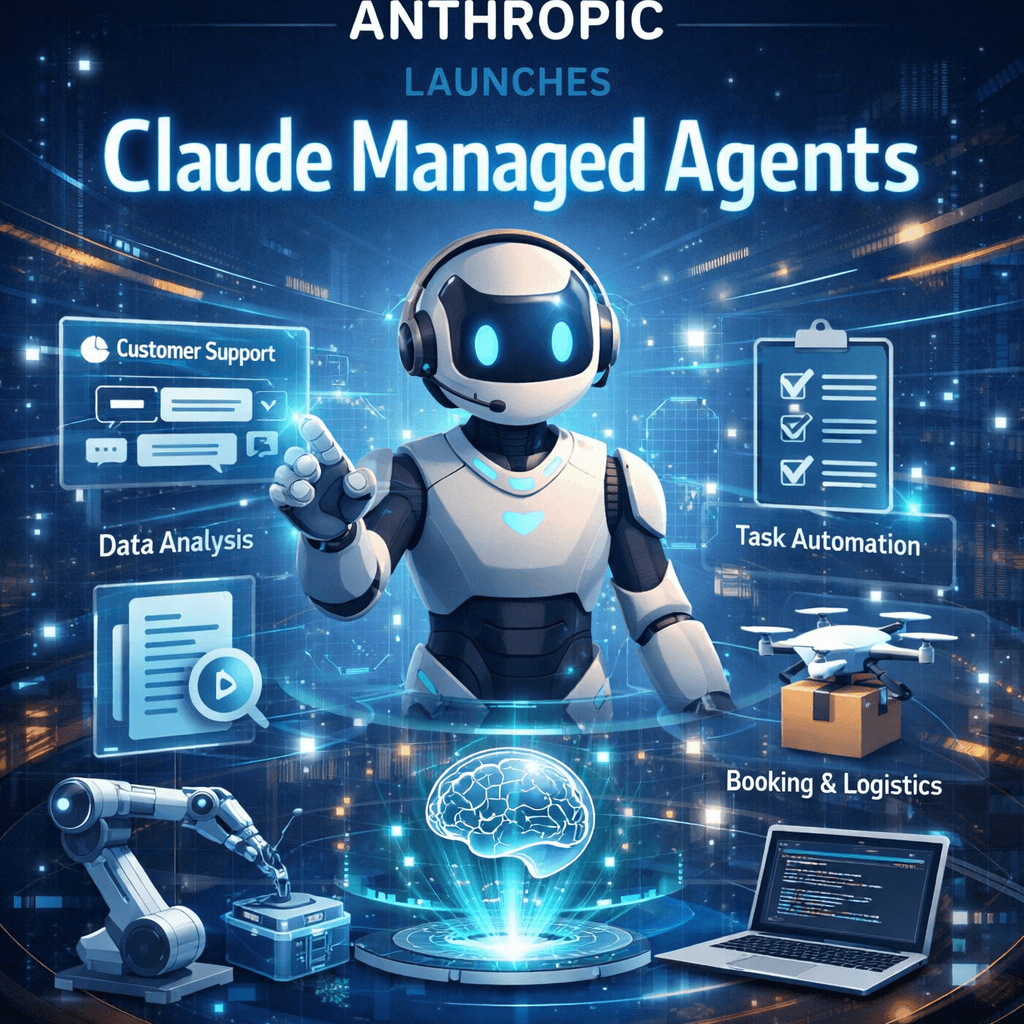
Anthropic released Claude Tag on June 23, a Slack-native agent that acts as a shared virtual employee for teams. The product, which breaks tasks into stages and works independently across channels, already approves 65% of Anthropic's internal code changes.
Key facts
- Claude Tag released June 23, 2026 as a Slack-native agent.
- Approves 65% of Anthropic's internal code changes.
- Anthropic leads OpenAI in enterprise adoption: 34.4% vs 32.3%.
- Anthropic targets 2026 IPO at $1 trillion+ valuation.
- Micron signed multi-year memory supply deal with Anthropic.
Anthropic is heading toward a likely IPO this year and is keen to court enterprise customers. The company released Claude Tag, a version of its chatbot that operates like a virtual employee within Slack, on June 23 According to Fortune.
Unlike Anthropic's existing agentic tools—Claude Code and Cowork—which are single-user experiences, Claude Tag is designed for multiplayer collaboration. After an employee directs Claude Tag to complete a task, the bot breaks it down into stages and works through them independently, delivering the final result to a team via Slack. A single Claude identity spans the entire company, so employees can hand off half-finished tasks to one another.
"We see Claude Tag as an evolution of Claude Code," Cat Wu, Anthropic's head of product for Claude Code and Cowork, told Fortune. "Claude Code, Cowork, and chat are very single-player, whereas Claude Tag is built to be interactive and multiplayer. When Claude Tag works in a channel, everyone can see it, and everyone can jump in, engage, and steer it in the right direction."
The tool learns from the company it's embedded in over time, getting up to speed on company information across channels without every user having to explain the context of each task. Within Anthropic, Claude Tag is already approving and incorporating 65% of the code changes the product team submits, according to Wu.
The enterprise adoption gap
Some enterprises have been struggling to integrate AI into workflows across sprawling organizations. Among the reasons cited for the adoption lag are a lack of employee training; a struggle to consolidate company data often spread across siloed teams; and safety concerns about access to and leaking of sensitive company data. With Claude Tag, Anthropic hopes to ease some of these burdens by simplifying the product and embedding it where companies already operate day-to-day.
In response to the safety concerns, Anthropic says Claude Tag's access to sensitive data and task-specific tools can be "very tightly scoped." System administrators can specify which tools, information, and memories Claude should have access to and in which channels.
Market momentum
Anthropic has been making recent gains in the enterprise market despite fierce competition from fellow AI labs like OpenAI and Big Tech companies such as Google. According to Ramp's May AI Index, which draws on corporate spending data across more than 50,000 U.S. companies, Anthropic had pulled ahead of OpenAI in business adoption for the first time, with 34.4% of firms paying for its services against OpenAI's 32.3%. Claude Code, Anthropic's agentic coding tool, was the primary driver of that shift.
The release of Claude Tag comes amid a flurry of pre-IPO activity. On June 24, Anthropic was reported to be targeting a $1 trillion-plus valuation for its 2026 IPO, and the company announced a multi-year memory supply deal with Micron covering HBM, DRAM, and SSDs. The enterprise push is central to building a predictable revenue base ahead of the public offering.
Key Takeaways
- Anthropic released Claude Tag, a Slack-native agent for teams.
- The tool already approves 65% of internal code changes as Anthropic pushes enterprise adoption ahead of its 2026 IPO.
What to watch
Watch for Anthropic's S-1 filing, expected later in 2026, which will disclose enterprise revenue growth and seat counts. Also track Ramp's June AI Index to see if Claude Tag widens the enterprise adoption lead over OpenAI beyond the current 2.1-point margin.

Source: fortune.com
[Updated 30 Jun via mit_tech]
Anthropic also unveiled Claude Science, a flagship AI workbench for researchers, at a pharmaceutical event on June 30. The product offers over 60 preconfigured skills in fields like genomics and computational chemistry, with a verification agent that automatically checks citations and calculations. Claude Science runs locally or on HPC clusters, ensuring sensitive data never leaves a lab's infrastructure [per The Decoder]. Anthropic plans to use the tool for its own research into drugs for rare, neglected diseases, signaling a major push into life sciences alongside enterprise expansion.