OpenAI published Apple emails showing employees sought help from ex-engineer Chang Liu after his departure. The messages undercut Apple's offboarding claims while leaving its core trade-secret allegations intact.
Key facts
- OpenAI published Apple emails showing post-departure help requests
- Engineer Chang Liu is central to Apple's trade-secret lawsuit
- One Apple employee called Liu 'the best' after he left
- Apple's lawyer mistakenly thanked OpenAI GC for a call that never happened
- Apple has not publicly responded to the release
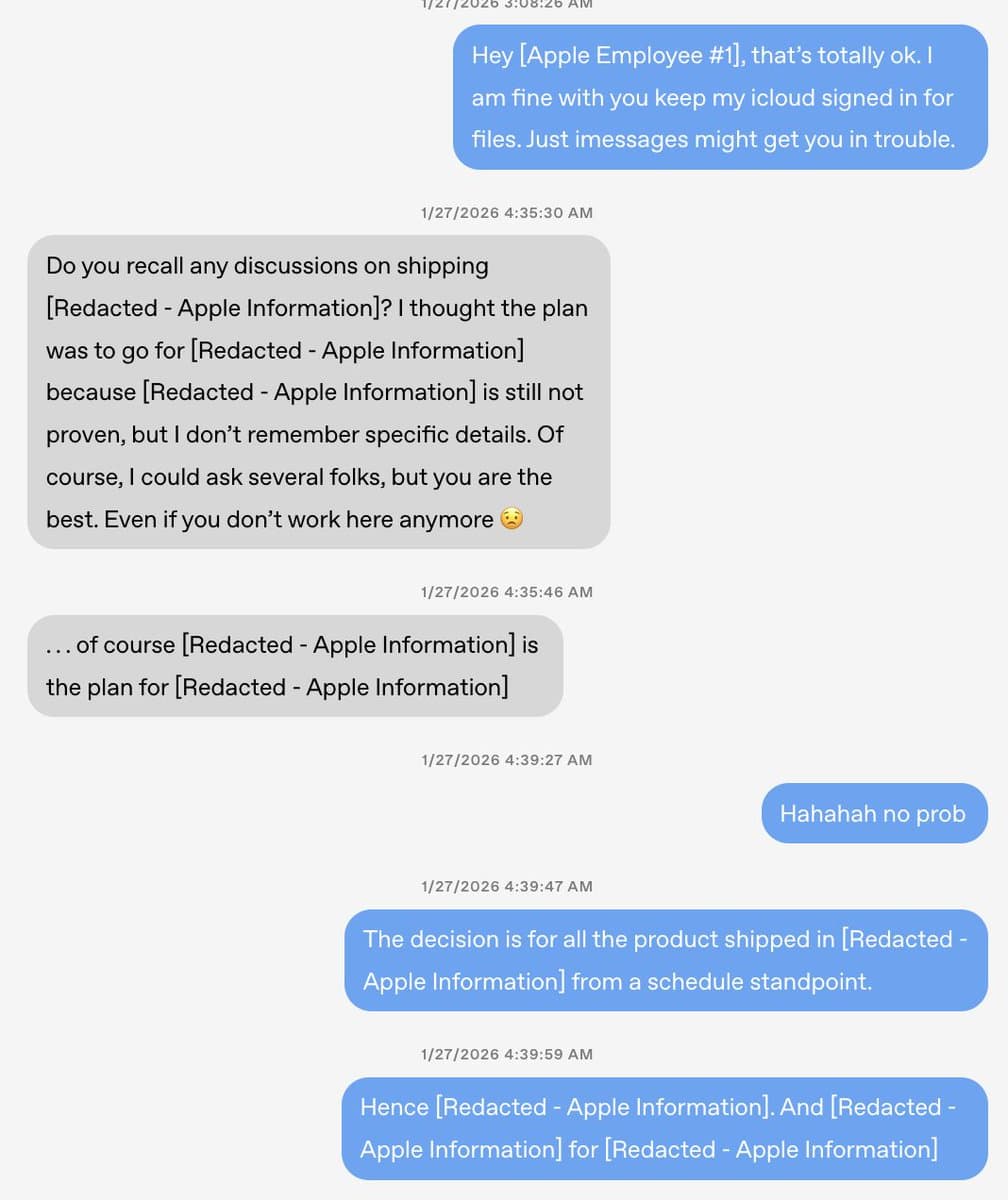
OpenAI has released internal Apple messages that appear to show Apple employees continuing to rely on a former engineer weeks after he left the company, according to a post by @kimmonismus per the X post. The engineer, Chang Liu, is central to Apple's trade-secret lawsuit against OpenAI, which alleges he stole hardware secrets before joining the AI firm.
The published messages show Apple staff asking Liu to locate internal files, explain product decisions, and help with technical questions. One employee wrote: "Of course, I could ask several folks, but you are the best. Even if you don't work here anymore." The emails appear to span weeks after Liu's departure, though OpenAI did not disclose the exact dates or number of messages.
OpenAI also claims Apple falsely stated it had contacted the company and received no response. The emails reportedly show Apple's outside lawyer mistakenly thanking OpenAI's General Counsel for a phone call that never happened, followed by an apology.
What the emails do and don't prove
The release is a sharp counter-punch in the legal fight, but it does not dismantle Apple's broader case. Apple's lawsuit, filed earlier this year, alleges Liu took confidential hardware specifications and schematics before leaving for OpenAI. The emails show post-departure contact, which could embarrass Apple on offboarding discipline, but they do not address whether Liu actually misappropriated secrets before he left.
Apple has not yet responded publicly to the release, and OpenAI has not provided the full email chain. The company said it published the messages to correct the record, but the selective release leaves room for spin on both sides.
Legal strategy implications
For OpenAI, the move is a classic litigation tactic: shift focus from the substance of the theft claim to the accuser's own conduct. For Apple, the immediate task is to explain why employees kept asking a departed engineer for confidential help—a fact that could undermine its narrative of strict internal controls.
Neither side has disclosed the next hearing date, and the case is likely to drag on through discovery. The emails may surface again in motions, but they are unlikely to end the suit outright. Apple's core allegations—that Liu took specific hardware secrets—remain untested in court.
What to watch
Watch for Apple's formal response in court filings and whether OpenAI releases the full email chain. The next discovery hearing—likely within 60 days—will test whether the emails move the case toward settlement or push both sides deeper into litigation.