Anthropic launched Claude Opus 5 on July 24, 2026, at $5/$25 per million tokens, undercutting Fable 5 on price while matching it on CursorBench. The mid-tier Opus model posts a 3x ARC-AGI 3 lead over the next-best model and ships as the default in Claude Code v2.1.219.
Key facts
- Launched July 24, 2026, at $5/$25 per million tokens.
- ARC-AGI 3 score 3x higher than next-best model.
- CursorBench 3.2 within 0.5% of Fable 5 at half cost.
- Safety classifiers intervene ~85% less than Fable 5.
- Claude Code v2.1.219 adds strict network allowlist, depth-3 subagents.
Anthropic launched Claude Opus 5 on July 24, 2026, at $5/$25 per million tokens, undercutting Fable 5 on price while matching it on CursorBench. The mid-tier Opus model posts a 3x ARC-AGI 3 lead over the next-best model and ships as the default in Claude Code v2.1.219.
Key Takeaways
- Anthropic launched Claude Opus 5 at $5/$25 per million tokens, matching Fable 5 on CursorBench at half cost.
- ARC-AGI 3 score 3x next-best; Claude Code v2.1.219 adds ops features.
What Opus 5 changes for coding agents
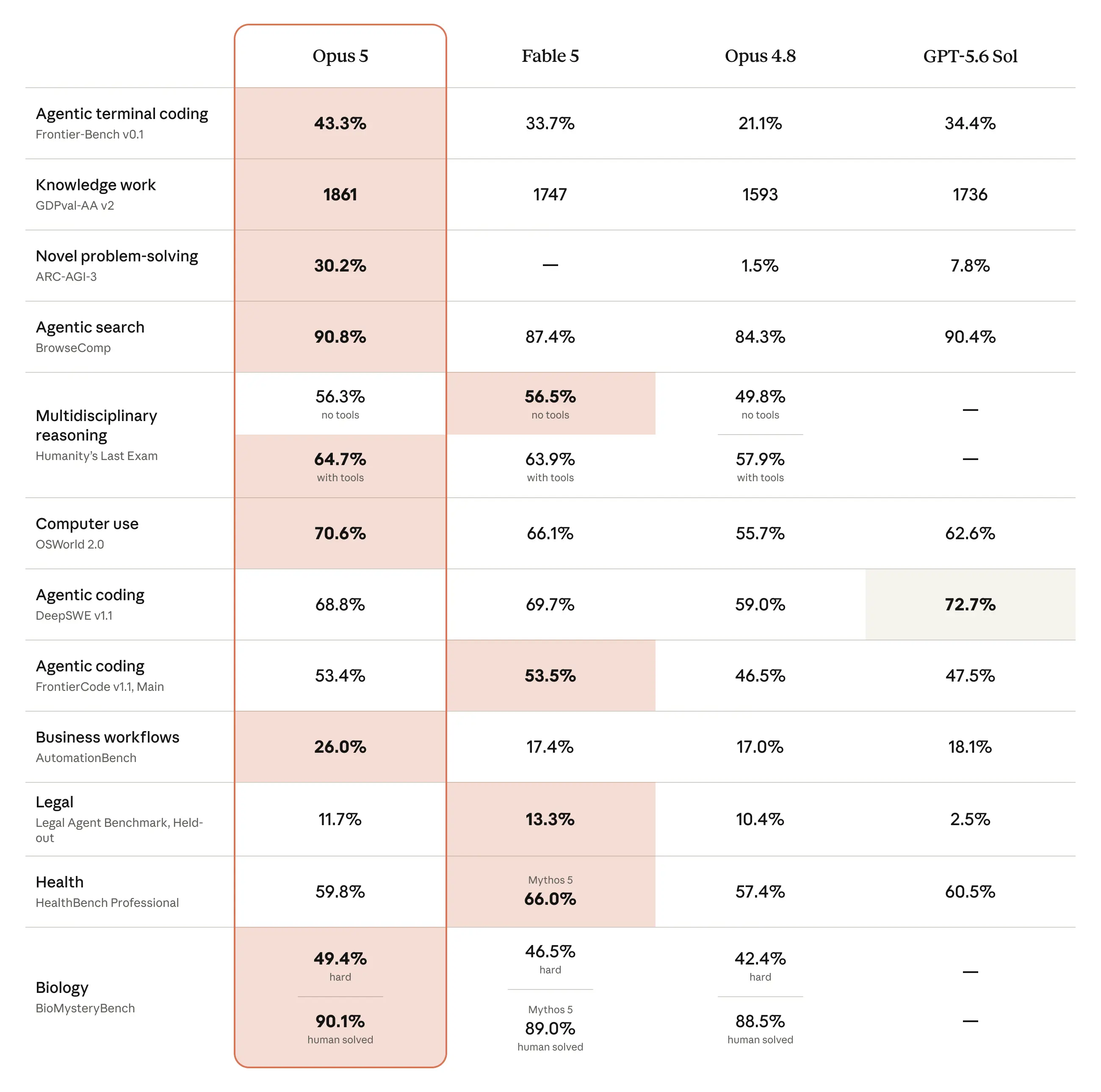
Opus 5 sits between Sonnet and Fable 5 in Anthropic's lineup, but its benchmark profile is anything but mid-tier. According to the release report, on CursorBench 3.2 at max effort, Opus 5 lands within 0.5% of Fable 5's peak score — at half the cost per task. On ARC-AGI 3, which tests novel problem-solving, Opus 5 scores three times higher than the next-best model. Zapier AutomationBench pass rates run ~1.5x the next-best at equal cost, and OSWorld 2.0 computer-use results beat Fable 5's best at roughly one-third the cost.
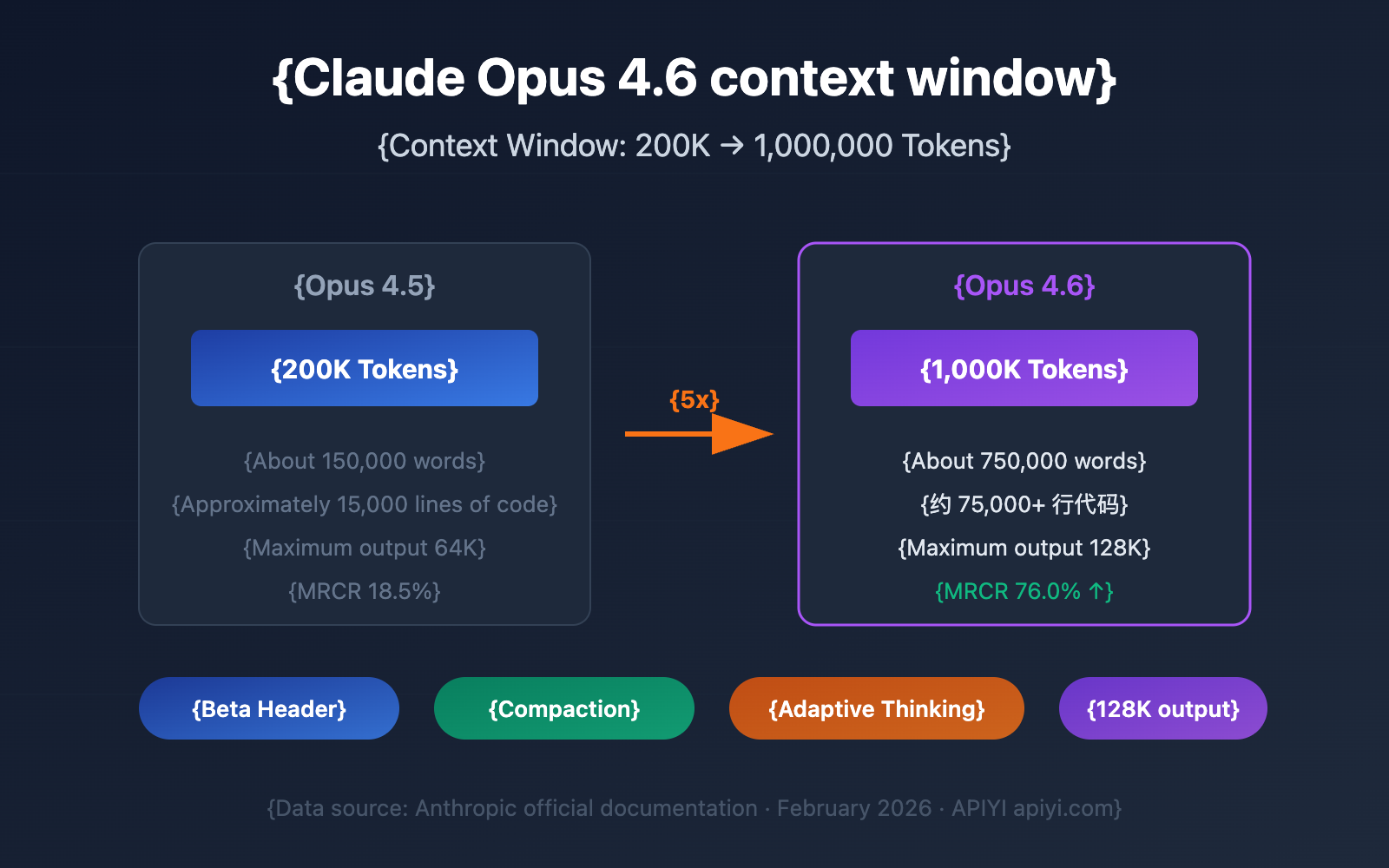
The pricing is the same as Opus 4.8 — $5 per million input tokens, $25 per million output tokens — with a 1M token context window and a fast mode at 2.5x speed for 2x the base price. What's genuinely new: safety classifiers intervene ~85% less often than Fable 5's, which matters for long autonomous coding sessions where permission prompts kill momentum. Fable 5 and Mythos 5 carry 30-day data retention policies; Opus 5 has no such requirement, making it the strongest model for Copilot users who want to avoid retention triggers.
Early-access customers confirm the pattern. Cursor calls Opus 5 "just under Fable 5" on CursorBench with similar behaviors. Lovable reports a 22% improvement over Opus 4.7 on their hardest agentic tasks, with less run-to-run variance. A trading firm built a market data feed in a single session — a task previous models couldn't complete even with extensive plans.
Claude Code v2.1.219: operational depth
The same-day Claude Code update makes claude-opus-5 the default Opus model and adds features that target production workflows. sandbox.network.strictAllowlist denies non-allowlisted hosts for sandboxed commands without prompting — the network egress control teams have wanted for CI and shared infrastructure. A DirectoryAdded hook fires after /add-dir or SDK register_repo_root registers a new working directory mid-session. mcp_server_errors in headless stream-json surfaces which --mcp-config entries were skipped by validation, ending silent MCP failures in CI.
Subagents can now spawn nested subagents up to depth 3 (was depth 1), settable via CLAUDE_CODE_MAX_SUBAGENT_SPAWN_DEPTH=1 to revert. Dynamic workflows default to medium size, aiming for fewer than 15 agents. Fixes include claude -p no longer dropping output on mid-stream API errors, permissions persisting across self-hosted runner restarts, and claude mcp list showing HTTP status and error text for failed servers.
Ecosystem adoption and the agent calculus

Pi moved fast: v0.82.1 (July 25) added Opus 5 on Anthropic and Amazon Bedrock with adaptive thinking and prompt caching; v0.83.0 (July 29) added Opus 5 through GitHub Copilot and a credential export feature (pi auth print-api-key) for piping credentials into other tools. The 1M context window and no-retention stance make Opus 5 the strongest model available through Copilot without Fable 5's 30-day retention policy.
For teams evaluating agents, the 85% reduction in classifier interventions versus Fable 5 directly addresses the pain of long autonomous runs being interrupted by safety prompts. Opus 5 is the fix Anthropic built for that problem — and at half Fable 5's cost per task, the math on agent adoption changes.
What to watch
Watch for independent verification of Opus 5's ARC-AGI 3 score — a 3x lead over the next-best model is the kind of claim that invites scrutiny. Also track whether Opus 4.8 gets deprecated from fast mode in upcoming Claude Code releases, and whether Copilot's model picker surfaces Opus 5 with the full 1M context window as advertised.
Source: dev.to