BeliefDiffusion, published on arXiv (2606.18888) on June 17, 2026, combines diffusion models with Model Predictive Control for robot navigation in partially observable environments. The framework explicitly characterizes multimodal belief distributions to outperform model-free reinforcement learning and other generative approaches in synthetic map experiments.
Key facts
- Published on arXiv on June 17, 2026 (ID: 2606.18888).
- Uses diffusion models to characterize multimodal belief distributions.
- Combines with Model Predictive Control (MPC) for planning.
- Outperforms model-free RL and other generative approaches in synthetic maps.
- Two-step pipeline: imagine configurations, then plan across them.
Navigation in partially observable environments remains a core challenge for autonomous agents, especially when sensory information is limited and perceptual aliasing is high. Traditional belief-based methods, often relying on neural networks to approximate the belief space, fail to capture the inherent multimodality of these spaces. According to the arXiv preprint, BeliefDiffusion addresses this by leveraging diffusion models to explicitly characterize multimodal belief distributions and uses Model Predictive Control (MPC) for planning.
Two-Step Pipeline
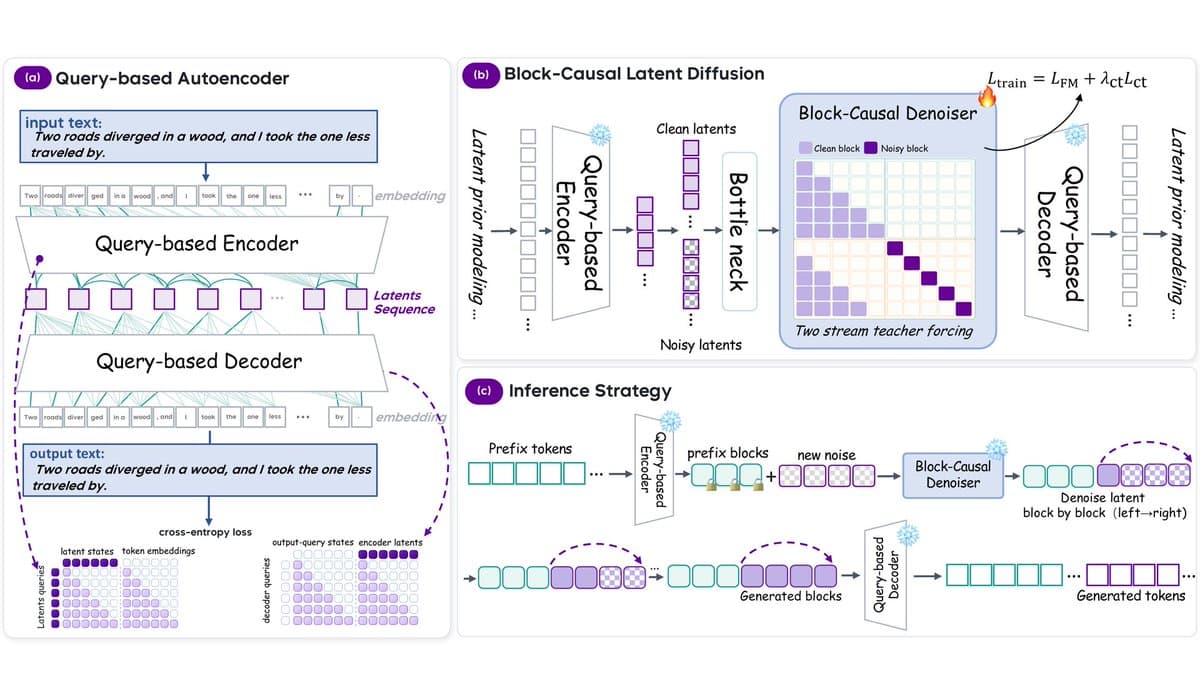
The framework operates in two stages. First, it generates plausible environment configurations based on the agent's observation history. Second, it plans efficient navigation strategies across an aggregated set of these configurations. This design allows the agent to simultaneously imagine multiple possible worlds and choose actions robust to uncertainty.
Experimental Results
In synthetic map environments, BeliefDiffusion significantly outperformed both model-free reinforcement learning baselines and other generative approaches in navigation success rate and path efficiency. The paper does not disclose the exact percentage improvement or the specific RL baselines used, but claims the results validate that explicitly incorporating multimodal belief representations into planning enables more robust navigation. The experiments were conducted on synthetic maps, so generalization to real-world settings remains unproven.

Unique Take: Diffusion as a Bridge Between Generation and Planning
What sets BeliefDiffusion apart is that it treats belief representation as a generative modeling problem rather than a compression one. Instead of approximating a single belief state, it generates a distribution of possible worlds, then plans across them. This is a structural departure from prior work that either used deterministic belief approximations or required large amounts of expert demonstrations. The approach is reminiscent of how diffusion models have been used in trajectory prediction, but applied here to the belief space itself.

What to watch
Watch for follow-up work that tests BeliefDiffusion on real-world robotic platforms, particularly in cluttered indoor environments or with noisy sensor data. The synthetic map results are promising, but real-world generalization will determine whether the approach gains adoption in autonomous navigation stacks.

Source: arxiv.org