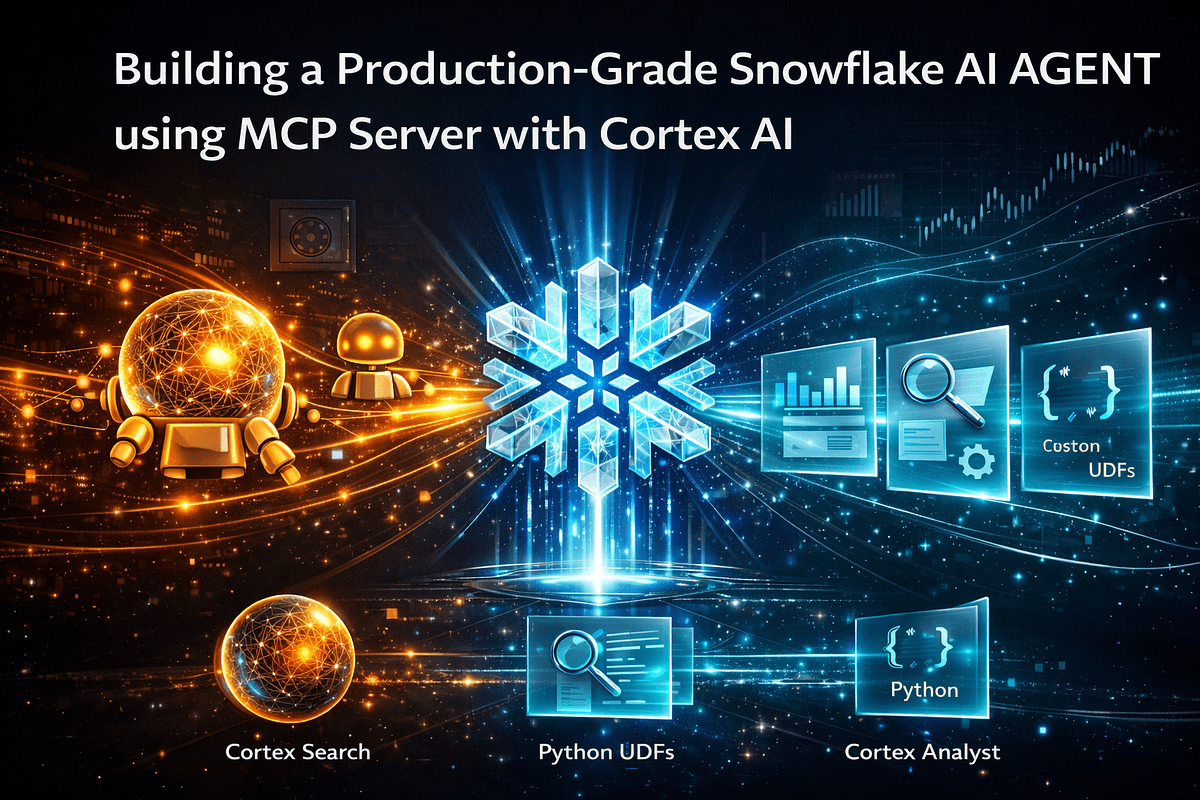
Anthropic's Model Context Protocol (MCP) now has a production-ready Snowflake server guide. The technical walkthrough covers OAuth 2.0 authentication, schema filtering, and rate limiting for enterprise AI agent integrations.
Key facts
- MCP introduced by Anthropic in November 2024.
- Snowflake MCP server requires OAuth 2.0 for production.
- Rate limiting defaults to 10 queries per minute.
- Schema filtering prevents access to sensitive tables.
- OpenTelemetry tracing provides observability.
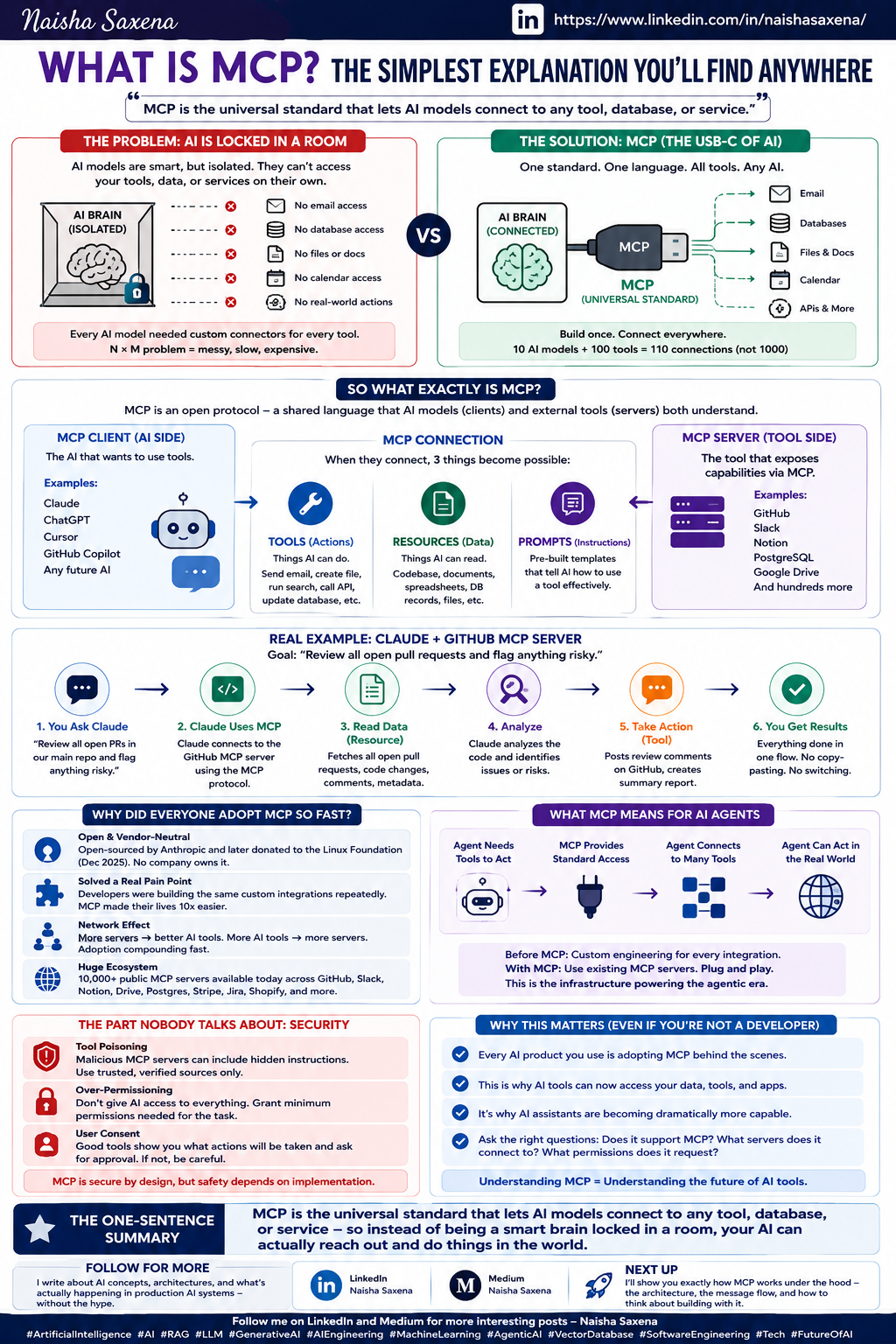
The Model Context Protocol (MCP) is an open standard introduced by Anthropic in November 2024 to standardize how AI systems connect to external data sources. Since then, the ecosystem has grown to over 50 servers, including databases, APIs, and file systems. The Snowflake MCP server is one of the most requested for enterprise deployments, given Snowflake's dominance in data warehousing.
Authentication: OAuth 2.0 Over API Keys

A production-ready Snowflake MCP server requires OAuth 2.0 authentication, not just API keys. The guide recommends using Snowflake's OAuth integration with a service principal, which allows fine-grained access control and token rotation. API keys are fine for development but expose the system to credential leakage in production. The OAuth flow uses the client_credentials grant type, with the token cached and refreshed automatically.
Schema Filtering and Rate Limiting
Schema filtering limits the exposed tables to only those relevant to the AI agent. The server uses a configuration file that lists allowed schemas and tables, preventing the agent from accessing sensitive data like HR.PAYROLL or FINANCE.REVENUE. This is implemented as a middleware layer that intercepts list_resources and read_resource calls.
Rate limiting prevents runaway queries that could cost thousands of dollars. The guide implements a token bucket algorithm per user session, with configurable limits: 10 queries per minute by default, with a burst capacity of 20. Queries exceeding the limit return a JSON-RPC error with code -32000 and a retry-after header.
Error Handling and Observability

Error handling must return structured JSON-RPC errors, not raw Snowflake exceptions. The server maps common Snowflake errors (e.g., SQL compilation error, Statement performed on behalf of current session ) to MCP error codes. Observability is provided via OpenTelemetry tracing, with spans for each query execution, including query text, duration, and row count.
The guide also covers connection pooling, query timeout (default 30 seconds), and result caching with a 5-minute TTL. Deployment options include Docker and Kubernetes, with health check endpoints at /health and /ready.
MCP Ecosystem Context
This guide arrives as MCP adoption accelerates. According to prior reporting, MCP has become the de facto standard for AI-tool connections, with support from GitHub, Cursor, and Claude Code. The Snowflake server joins a growing list of enterprise integrations, including PostgreSQL, Salesforce, and SAP.
Google, a competitor to Anthropic in the AI space, has invested $14B in Anthropic as of June 2026 [per Knowledge Graph]. Google Cloud also competes with Snowflake in the data warehousing market via BigQuery. The Snowflake MCP server thus sits at the intersection of multiple competitive dynamics: Anthropic's MCP standard vs. Google's proprietary APIs, and Snowflake vs. Google Cloud in data platforms.
What to watch
Watch for Anthropic's upcoming MCP specification v1.0, expected in Q3 2026, which may standardize auth, rate limiting, and error handling across all servers. Also monitor Snowflake's own AI agent integrations via Snowpark Container Services, which could compete with or complement the MCP approach.
Source: news.google.com
[Updated 25 Jun via gn_mcp_protocol]
A new open-source security gateway, mcp-guard, now provides auth, rate limits, spend caps, and approval queues for any MCP server in under five minutes. It supports OAuth2 with PKCE, per-agent rate limits, tool allow/deny lists, and Prometheus metrics [per devto_mcp]. This fills a critical gap as many current MCP setups lack any security layer.