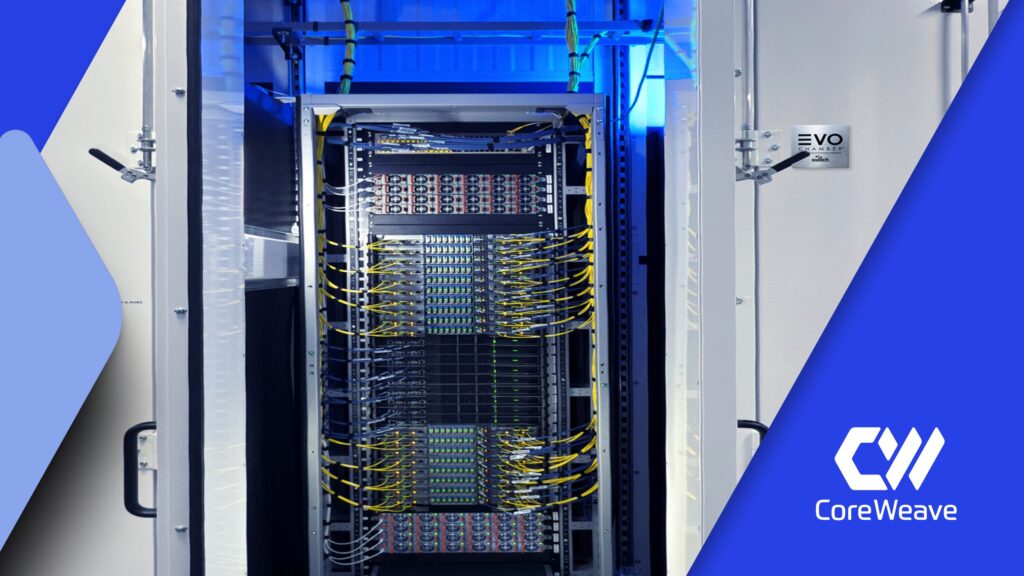
A developer's simple attempt to rent modern AI computing power in Canada has exposed a critical and embarrassing infrastructure gap for a country that positions itself as a global AI leader. The findings, shared by developer George Pu, reveal that despite billions in policy commitments and world-class research labs, procuring current-generation AI hardware from major cloud providers in Canada is nearly impossible.
What Happened: A Search for Modern AI Chips

George Pu, a developer, systematically checked every major cloud provider for available AI compute instances in Canada. His goal was straightforward: rent powerful, modern GPUs like NVIDIA's H100, A100, or even last-generation V100s to run training or inference workloads.
His findings were stark:
- Google Cloud's Montreal region offered the NVIDIA Tesla P100 as its best available chip. This GPU was first released in 2017 and is two full architectural generations behind current data center offerings (Ampere, Hopper).
- Other major providers told a similar story: the available hardware was either outdated or simply not provisioned in Canadian data centers.
- The sole exception was DigitalOcean, a provider traditionally known for affordable web hosting, which reportedly had more current hardware available in Toronto.
Pu concluded that the U.S. state of Iowa likely has more AI GPUs than all of Canada combined, a damning comparison for a G7 nation.
The Core Contradiction: Sovereignty Talk vs. Hardware Reality
Canada has been a vocal proponent of AI sovereignty—the idea that nations should develop and control their own AI capabilities, including the underlying compute infrastructure. The Canadian government has made repeated policy commitments and investments, notably through the Pan-Canadian AI Strategy and the Global Innovation Clusters program.
This public ambition clashes violently with the on-the-ground reality for builders. As Pu stated: "Canada talks about AI sovereignty every week, but when you try to build here - there's no hardware. The ambition is real. The hardware is not."
For AI engineers and startups, this means either:
- Accepting severely outdated hardware, crippling training speeds and efficiency.
- Renting compute from U.S. regions, incurring higher latency, potential data residency concerns, and sending capital and innovation south.
- Attempting to procure and host physical hardware—a capital-intensive and complex barrier for most.
Why This Compute Gap Matters
AI development is intensely compute-bound. The difference between a 2017 P100 and a 2022 H100 is not incremental; it's transformative.
FP16 Tensor Core TFLOPS ~21 ~1,979 ~94x faster training for large models Memory Bandwidth 732 GB/s 3.35 TB/s 4.6x faster data loading, larger model support Interconnect NVLink 1.0 (160 GB/s) NVLink 4.0 (900 GB/s) Drastically better multi-GPU scaling Architecture Pascal Hopper (w/ Transformer Engine) Built-in optimization for modern AI modelsUsing P100s in 2026 to train or run inference on contemporary models is akin to building a modern web application on a server from 2005. It renders many state-of-the-art techniques practically infeasible due to time and cost.
The Broader Context: A Global Scramble for Compute
Canada's situation is a specific case of a global phenomenon: AI compute is the new strategic commodity. The United States, through its CHIPS Act and dominant companies (NVIDIA, AMD, Intel, CSPs), controls the leading edge. Other regions are scrambling.
- The European Union has launched initiatives like the European Chips Act and the Joint Undertaking on High Performance Computing to boost sovereign capacity.
- Japan and South Korea are making massive public-private investments in semiconductor manufacturing.
- Even U.S. cloud providers face allocation shortages and multi-month waitlists for the latest chips.
Canada's problem is that its policy rhetoric has not been matched by the capital expenditure and logistical execution required to secure and deploy physical hardware. Cloud providers allocate their newest chips to regions with the highest demonstrable demand and strategic importance. Canada, despite its research pedigree, appears to be losing that allocation battle.
What This Means for Builders in Canada
For the AI engineers and researchers who are gentic.news's core audience, this is a direct impediment:
- Startups: Face a severe competitive disadvantage. A startup in San Francisco can spin up 100 H100s in minutes; a peer in Toronto cannot. This will inevitably drive talent and company formation to where the compute is.
- Researchers: Academic labs, even those affiliated with famed institutions like the Vector Institute or Mila, may find their cloud credits or institutional partnerships are only usable on subpar hardware, slowing the pace of experimentation.
- Enterprise Adoption: Companies seeking to fine-tune or deploy large models may be forced to process data outside Canadian borders, complicating compliance with privacy laws.
The workaround—using U.S. regions—solves the technical problem but defeats the stated goal of sovereignty, creating a dependent, extractive relationship with U.S. tech infrastructure.
gentic.news Analysis
This report is not an isolated complaint; it's a symptom of a structural failure in Canada's otherwise laudable AI strategy. The country successfully bet early on fundamental AI research, producing architectural pioneers and attracting global talent. However, it has failed to make the subsequent, more expensive bet on the industrial-scale infrastructure required to translate research into commercial and strategic advantage.
This gap was predictable. For years, industry voices have warned that algorithms and papers are not enough without compute. The National Research Council of Canada and Innovation, Science and Economic Development Canada have funded compute initiatives, but they seem dwarfed by the scale of investment needed to compete for allocation in a hyper-constrained global market.
The DigitalOcean footnote is particularly revealing. Larger cloud providers operate at a scale where standardizing regional offerings is key to profitability. If the projected demand in Canada doesn't meet a high threshold, they won't deploy their scarcest, most valuable assets there. A smaller, more agile provider like DigitalOcean can potentially be more responsive to niche demand, but it cannot fill a national strategic gap.
Looking forward, Canada's options are hard and expensive: commit billions to directly subsidize cloud providers to deploy cutting-edge clusters in-country, invest in sovereign AI cloud ventures, or double down on niche, less compute-intensive AI sectors. The current path of celebrating research excellence while ignoring the foundational hardware layer is unsustainable for any nation serious about AI sovereignty.
Frequently Asked Questions
What is the NVIDIA Tesla P100 chip mentioned in the article?
The NVIDIA Tesla P100 is a GPU based on the Pascal architecture, launched in 2016 for data center and high-performance computing. While revolutionary at its release, it is now two major generations behind (succeeded by Volta, Ampere, and Hopper). It lacks dedicated Tensor Cores for accelerated AI math and has significantly less memory bandwidth than modern AI chips, making it poorly suited for training or running today's large language and diffusion models.
Why don't cloud providers put the latest chips in Canada?
Cloud providers allocate their most advanced and scarce hardware (like NVIDIA H100s) to regions with the highest, most consistent demand to maximize utilization and return on investment. This demand is driven by a concentration of large-scale AI companies, hyperscalers, and well-funded startups. If the provider's data suggests Canadian demand is fragmented or insufficient to justify a full cluster deployment, they will prioritize other regions. It's a brutal market-driven calculation.
Can't Canadian researchers just use supercomputers instead?
National research supercomputers, like those operated by the Digital Research Alliance of Canada, provide vital capacity for academic science. However, they are typically shared resources with competitive allocation processes, long wait times, and usage limits. They are not designed for the rapid, on-demand, scalable, and commercially-oriented development cycle of an AI startup or an enterprise product team. They are a complement to, not a replacement for, readily available commercial cloud compute.
What are the implications for data privacy and sovereignty?
If Canadian developers and companies are forced to use U.S. cloud regions for AI work, the data used for training and inference—which could include sensitive commercial, personal, or government information—resides on foreign servers subject to U.S. laws like the CLOUD Act. This directly contradicts the goal of digital and AI sovereignty, which includes maintaining jurisdictional control over data.