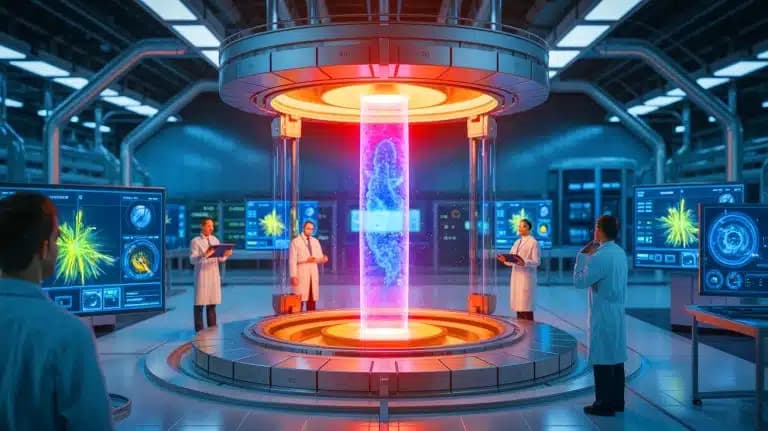
China is pioneering a revolutionary nuclear reactor design that could fundamentally transform global energy systems. According to recent reports, Chinese scientists are developing an advanced reactor capable of burning existing nuclear waste as fuel while providing stable energy output for approximately 1,000 years. This breakthrough represents a potential solution to two of nuclear energy's most persistent challenges: radioactive waste disposal and long-term fuel sustainability.
The Technology Behind the Breakthrough
The reactor employs what's known as a "fast reactor" or "breeder reactor" design, which differs significantly from conventional nuclear reactors. Traditional reactors use slow neutrons and primarily consume uranium-235, leaving behind substantial amounts of radioactive waste. The Chinese design utilizes fast neutrons to transmute long-lived radioactive isotopes in nuclear waste into shorter-lived or stable elements while generating energy in the process.
Artificial intelligence plays a crucial role in this system, managing the complex nuclear reactions and ensuring optimal fuel utilization. AI algorithms monitor and control the reactor's operations in real-time, adjusting parameters to maintain stability while maximizing waste consumption. This intelligent control system represents a significant advancement over traditional reactor management approaches.
Addressing Nuclear Waste Challenges
Nuclear waste disposal has been one of the most contentious issues facing the nuclear industry worldwide. Current approaches involve storing spent fuel in specialized facilities for thousands of years, creating both environmental concerns and significant costs. The Chinese reactor design offers a transformative alternative by actively consuming this waste material.
According to preliminary estimates, this technology could potentially reduce the radioactive lifetime of nuclear waste from hundreds of thousands of years to just a few hundred years. This dramatic reduction in hazard duration could fundamentally change public perception of nuclear energy and its environmental impact.
Energy Security Implications
The reactor's potential to provide stable energy for approximately 1,000 years addresses another critical concern: fuel sustainability. Conventional nuclear reactors rely on finite uranium reserves, but this new design could extend nuclear fuel availability by orders of magnitude. By utilizing existing waste stockpiles and depleted uranium, the technology creates what amounts to a nearly inexhaustible energy source.
For China, this development aligns with broader energy security goals and climate commitments. As the world's largest energy consumer and carbon emitter, China faces mounting pressure to transition from fossil fuels while maintaining economic growth. This advanced reactor technology could provide the stable baseload power necessary to support renewable energy integration while reducing dependence on imported fuels.
Global Competitive Landscape
China's progress in advanced nuclear technology comes amid renewed global interest in next-generation reactors. Several countries, including the United States, Russia, and France, are developing their own advanced reactor designs. However, China's substantial investment in nuclear research and development, combined with its centralized decision-making structure, may give it a competitive advantage in bringing such technologies to market.
The integration of AI into nuclear reactor management represents a particularly innovative approach that could set new standards for safety and efficiency in the industry. As artificial intelligence continues to advance, its applications in complex systems like nuclear reactors are likely to expand, potentially leading to even more sophisticated energy solutions.
Safety Considerations and Challenges
While the potential benefits are substantial, significant challenges remain. Fast reactor technology presents unique safety considerations, particularly regarding coolant systems and potential reactivity accidents. The Chinese program will need to demonstrate that its AI-enhanced control systems can reliably manage these risks under all operating conditions.
Additionally, the economic viability of such reactors remains unproven at commercial scale. Previous attempts at commercializing fast reactor technology have encountered substantial cost overruns and technical difficulties. The integration of AI systems adds another layer of complexity and potential cost to an already challenging engineering endeavor.
Environmental and Geopolitical Implications
If successfully developed and deployed, this technology could reshape global energy geopolitics. Countries currently dependent on energy imports might gain greater energy independence through domestic nuclear programs utilizing their own waste stockpiles. This could particularly benefit nations with existing nuclear infrastructure but limited natural energy resources.
Environmentally, the technology offers the potential for a truly sustainable nuclear energy cycle, addressing both waste and resource concerns simultaneously. This could make nuclear power more palatable to environmental advocates who have traditionally opposed nuclear energy due to waste disposal issues.
The Road Ahead
Chinese researchers have not provided a specific timeline for when this technology might reach commercial deployment. Developing, testing, and certifying new nuclear reactor designs typically takes decades, even with accelerated research programs. The integration of AI systems, while promising, introduces additional validation requirements to ensure reliability and safety.
International collaboration and oversight will be crucial as this technology develops. Given the global implications of advanced nuclear technology, transparent information sharing and international safety standards will help ensure that such breakthroughs benefit humanity broadly while minimizing potential risks.
Source: Rohan Paul AI via X/Twitter