A new set of 15 prompts for Anthropic's Claude AI model claims to automate the creation of a complete, tailored job application—including a CV, cover letter, and interview preparation guide—in under two minutes. The prompt pack, shared by a prompt engineer on X, is designed to take a single job description as input and produce a coherent, professional-grade application package.
What Happened
The source is a social media post from a prompt engineer sharing a curated list of prompts. The core claim is that by feeding a job description into Claude alongside these structured prompts, the AI can generate:
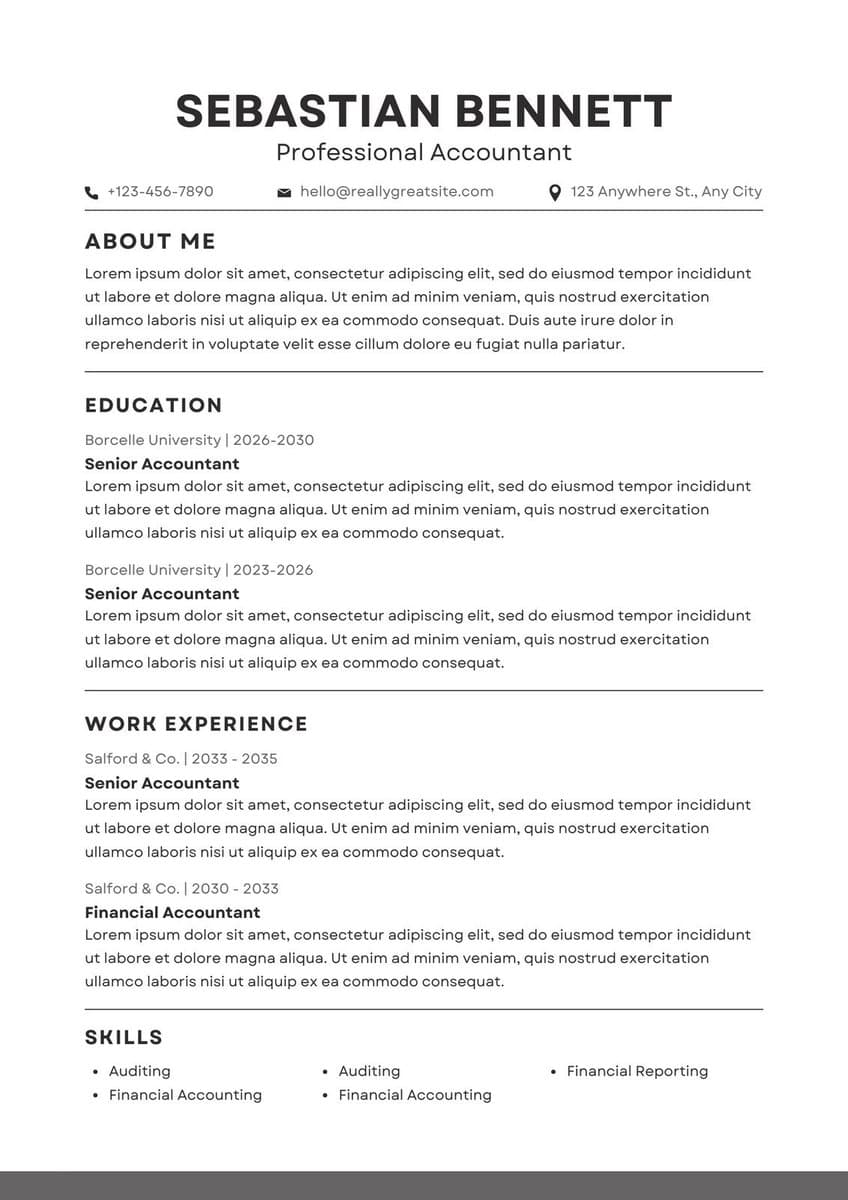
- A tailored CV/Resume: Reformats and highlights relevant experience from a user's existing CV to match the job description.
- A custom cover letter: Drafts a persuasive letter connecting the candidate's background to the role's specific requirements.
- An interview preparation guide: Generates potential interview questions and suggested answers based on the job description and the tailored application materials.
The process is framed as a significant time-saver, compressing hours of manual tailoring into a sub-two-minute workflow. The prompts are presumably designed to guide Claude through a multi-step reasoning process, extracting key requirements from the job description, mapping them to the user's provided experience, and structuring professional documents.
Context & Technical Implications
This development is not a new feature release from Anthropic but a community-built workflow leveraging Claude's existing capabilities. It highlights several key trends in the practical use of large language models (LLMs):
- The Rise of Prompt Engineering as a Product: Complex, multi-step tasks are being productized through curated prompt sequences. This turns a general-purpose model like Claude into a specialized tool for a specific professional domain.
- LLMs as Workflow Automators: The prompts orchestrate a complete workflow—analysis, synthesis, and document generation—that traditionally requires switching between multiple tools and mental frameworks.
- Focus on High-Value, Repetitive Tasks: Job application tailoring is a near-universal, high-stakes, and tedious task, making it a prime target for AI automation. The quality of output is critically important, pushing models to demonstrate not just fluency but persuasive and strategic writing.
For this to work effectively, Claude must execute several non-trivial NLP tasks: semantic understanding of the job description, intelligent extraction and prioritization of candidate experience points, and the generation of stylistically appropriate business documents that avoid generic phrasing.
Limitations and Considerations
While promising, practitioners should be aware of inherent limitations:
- Garbage In, Garbage Out: The quality of the generated application is heavily dependent on the detail and quality of the input job description and the user's base CV.
- Lack of Personal Nuance: An AI-generated cover letter may lack the authentic personal anecdotes or specific project details that resonate with human recruiters.
- Over-Optimization Risk: There is a potential for applications to become overly homogenized if many candidates use similar prompt templates, possibly making genuinely tailored applications stand out more.
- Verification is Essential: AI-generated content must be meticulously fact-checked and reviewed by the candidate. Hallucinations of skills or experiences would be catastrophic in a job application.
This prompt pack represents a use-case-specific optimization of a general model. Its success depends entirely on Claude's underlying ability to follow complex instructions and produce high-quality, context-aware text—a core competency Anthropic has emphasized in Claude's development.
gentic.news Analysis
This prompt engineering feat is a direct application of the advanced instruction-following and role-playing capabilities that Anthropic has been refining with Claude since its launch. It follows the company's strategic focus on building a "helpful, harmless, and honest" assistant capable of complex, multi-turn tasks, as detailed in our previous coverage of Claude 3.5 Sonnet's release. The ability to act as a "top recruiter" aligns with Anthropic's demonstrations of Claude excelling in nuanced, knowledge-worker scenarios like contract review and technical documentation.
This development also intersects with a broader trend we've tracked: the productization of AI prompts. This mirrors movements around OpenAI's GPTs and custom instructions, where community-shared prompts create de facto micro-apps. However, it places the onus of precision on the user's initial input and the model's consistency, rather than on a fine-tuned, dedicated model. It's a competitive jab in the ongoing assistant wars, showcasing Claude's proficiency in a structured, professional writing task against rivals like ChatGPT and Google's Gemini.
Critically, this use case tests the model on a task with real-world consequences. A poorly written CV or cover letter can cost a user a job opportunity. Therefore, community validation of these prompts will serve as a practical, high-stakes benchmark for Claude's reliability in professional settings—a more tangible metric than many abstract academic benchmarks.
Frequently Asked Questions
Can Claude actually write a good job application?
Based on the capabilities demonstrated by Claude 3.5 Sonnet, it is technically capable of generating well-structured, grammatically correct, and tailored application documents. The quality of a "good" application is subjective and depends on the depth of input provided (your raw CV details) and the model's ability to persuasively match them to the job description. It should be used as a powerful first draft that requires human refinement and fact-checking.
Is using AI to write a job application ethical?
Using AI as a tool to assist in drafting and tailoring application materials is generally considered ethical, similar to using a spell-checker or grammar tool. However, it is unethical and risky to have an AI completely invent experiences, skills, or qualifications you do not possess. The final application must be an accurate representation of your own background, and you are responsible for all information within it.
How does this compare to dedicated job application AI tools?
Dedicated platforms like Teal or Jobscan offer structured workflows and ATS (Applicant Tracking System) optimization features specifically for job applications. This prompt-based method using a general AI like Claude is more flexible and free-form but requires more manual setup and lacks the integrated job market data and ATS simulation features of dedicated SaaS tools. It's a more generalized, DIY approach.
Do I need to be a prompt engineer to use this?
No. The value of the shared prompt pack is that the complex prompt engineering has been done for you. A user likely only needs to copy the prompt sequence, paste in their base CV information, and insert the target job description, then run the interaction with Claude. The technical complexity is hidden within the pre-written prompts.